


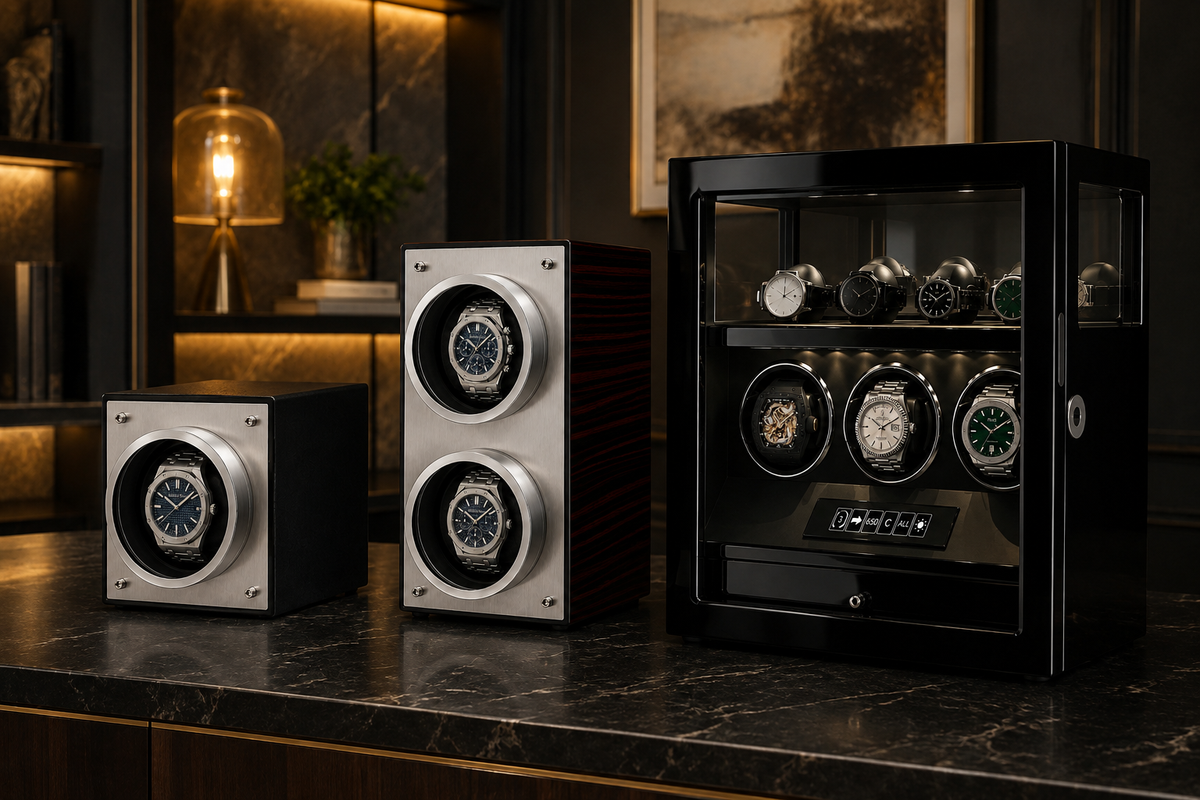
How to Choose a Watch Winder: Complete Buying Guide (2026)
How to Choose a Watch Winder: Complete Buying Guide (2026)
Choosing a watch winder is not simply about finding a box that rotates your watch. The right winder should match the needs of your automatic movement while providing secure support, controlled rotation, quiet operation, and a design that fits your collection.
Whether you own one automatic watch or rotate between several pieces, this guide explains the key factors to consider before choosing a watch winder.
Quick Answer: What Should You Look for in a Watch Winder?
A good watch winder should offer adjustable Turns Per Day (TPD), suitable rotation directions, intermittent winding with rest periods, secure watch cushions, and quiet operation. For collections with different watches, independently controlled winding positions are particularly useful.
The correct winding program ultimately depends on the movement inside your watch, so movement-specific requirements should always take priority over a universal setting.
1. Choose the Right TPD Settings
TPD stands for Turns Per Day and describes approximately how many rotations a watch winder performs during a 24-hour period.
Automatic movements do not all have identical winding requirements. This is why adjustable TPD is one of the most useful features to look for when choosing a winder.
Rather than assuming that one setting works for every automatic watch, identify your watch reference and movement whenever possible.
If you need more information about winding requirements, read our Watch Winder TPD Guide: Settings by Watch Brand & Movement.
2. Check the Available Rotation Directions
Watch winders commonly offer three types of rotation:
- Clockwise (CW)
- Counterclockwise (CCW)
- Bidirectional or alternating rotation
The appropriate direction depends on the movement.
A versatile watch winder therefore gives you greater control over the winding program instead of forcing every watch to use the same rotation direction.
3. Look for Rest Cycles
A watch winder does not need to rotate continuously.
Well-designed winding programs alternate periods of rotation with periods of rest. This better replicates the intermittent movement an automatic watch experiences when worn throughout the day.
Rest cycles also prevent unnecessary continuous operation.
4. Choose a Secure Watch Cushion
The motor receives much of the attention when comparing watch winders, but the watch cushion is equally important.
The cushion should hold the watch securely without placing excessive pressure on the bracelet or strap.
This becomes particularly important when a collection contains watches with different case sizes, bracelet configurations, or wrist sizes.
Adjustable or adaptive cushions can make one winder suitable for a wider range of watches.
5. Consider Motor Noise
A watch winder may operate for hours every day, so motor noise matters—particularly when the winder is placed in a bedroom, dressing room, or office.
Look for a winder designed for quiet operation and intermittent rotation.
A quieter motor makes the winder easier to integrate into your everyday environment without becoming a distraction.
6. Single, Double, or Multi-Watch Winder?
The right capacity depends on how you use your collection.
Single Watch Winder
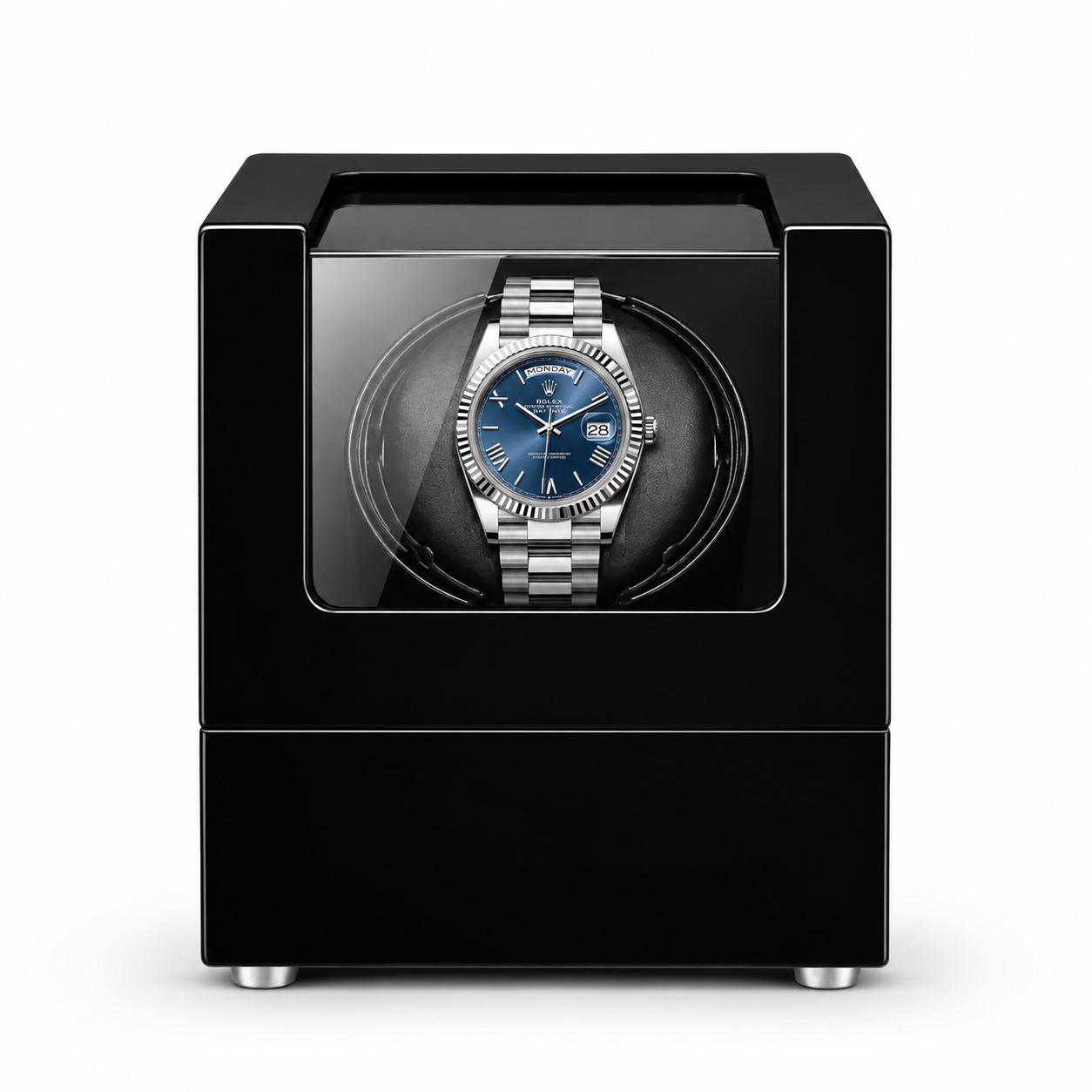
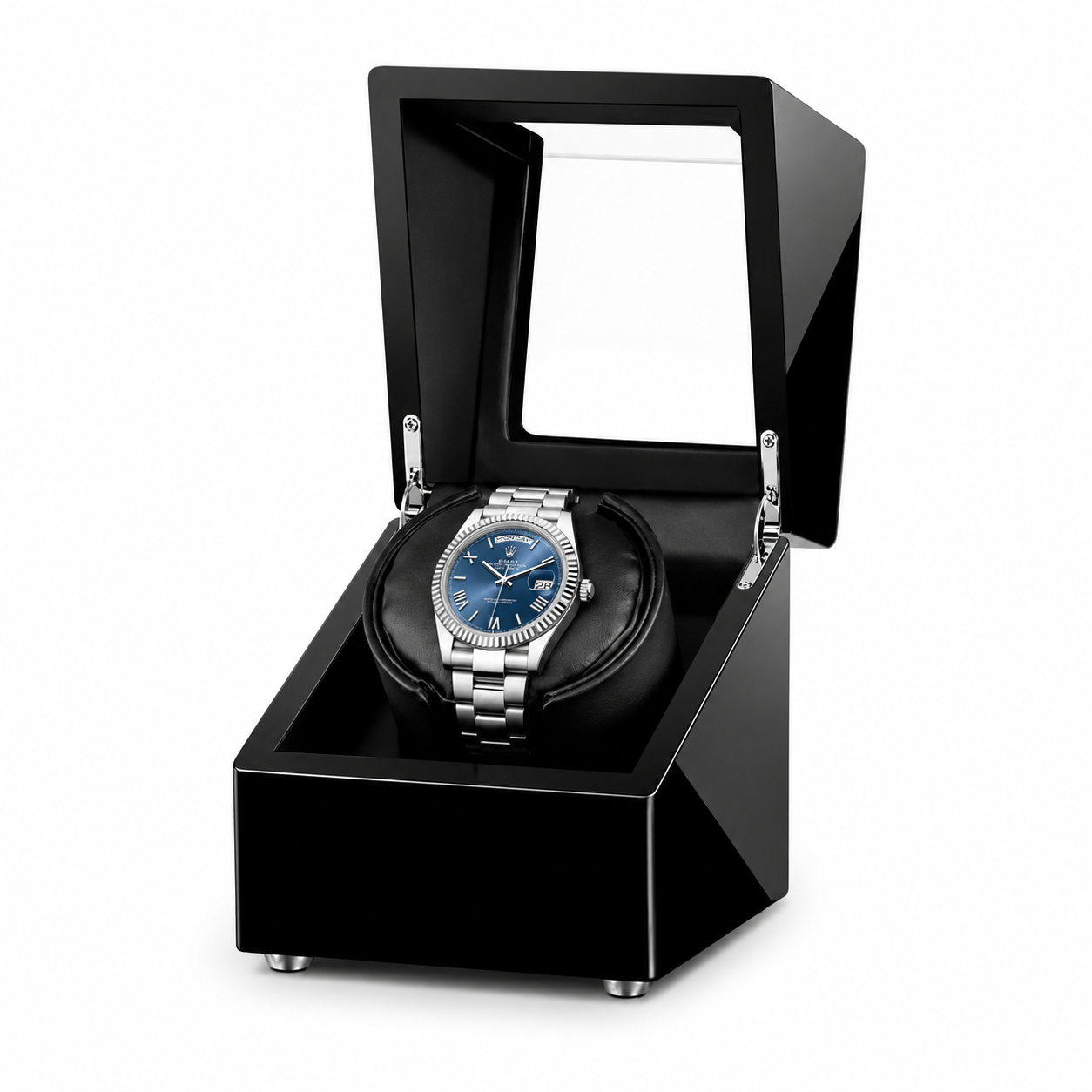
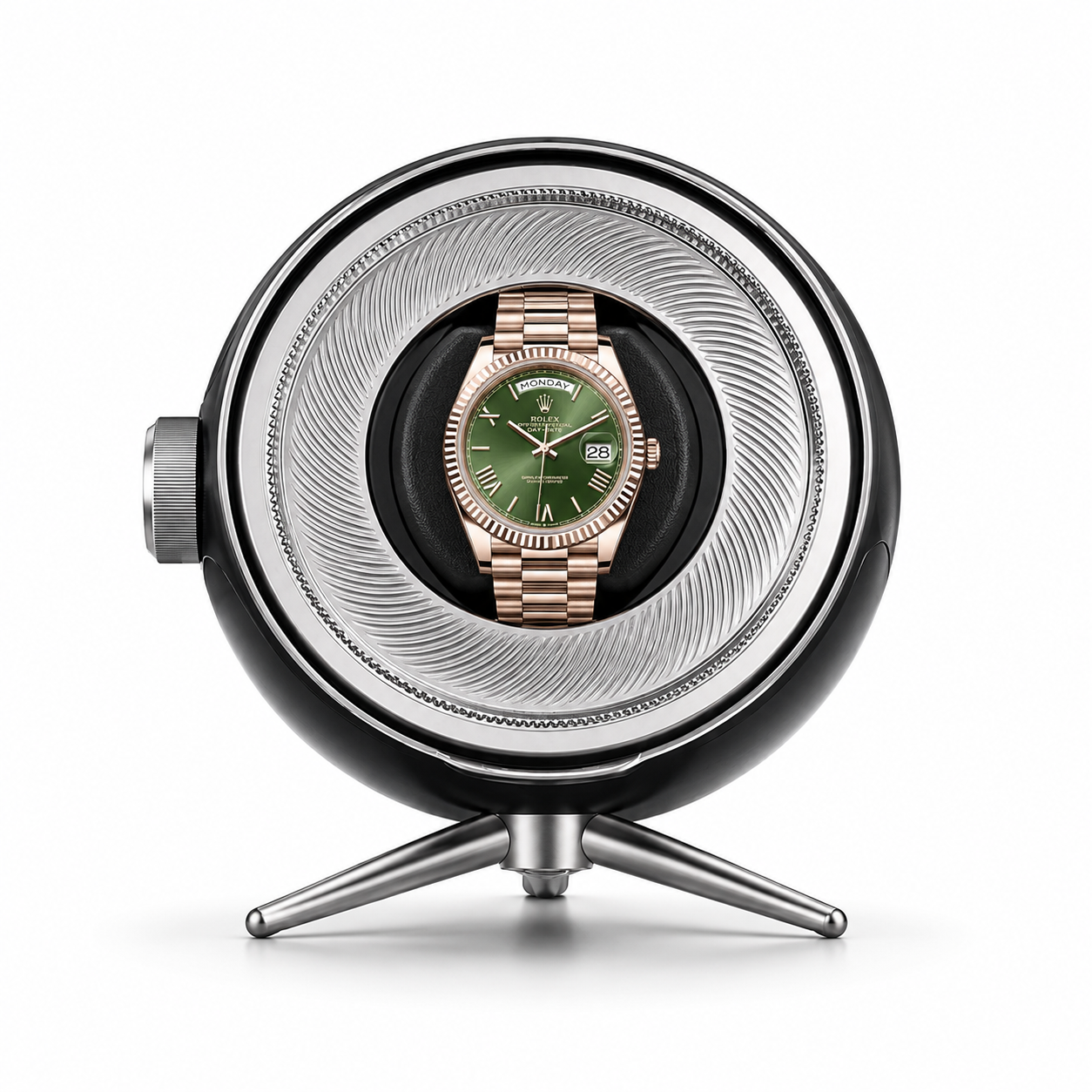
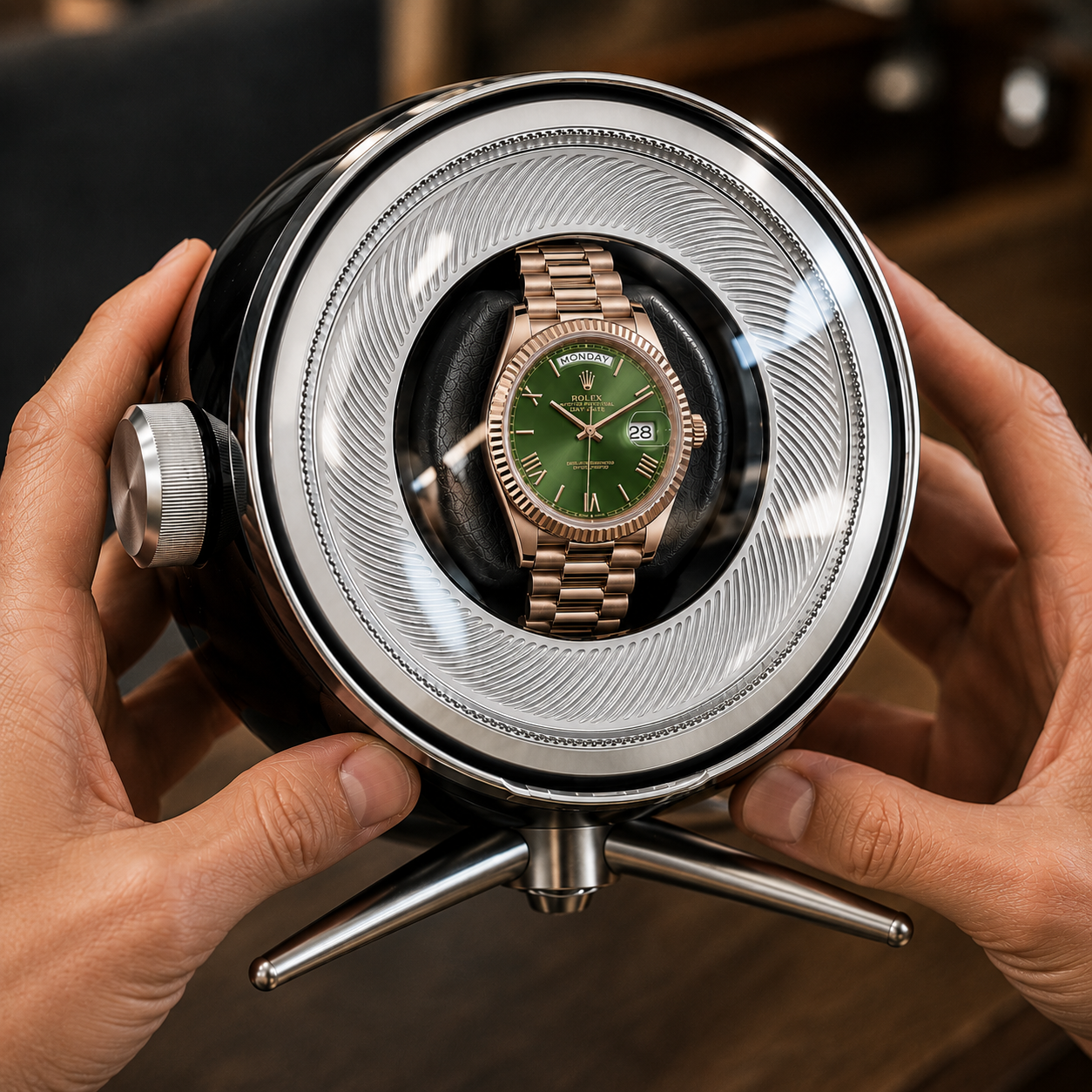
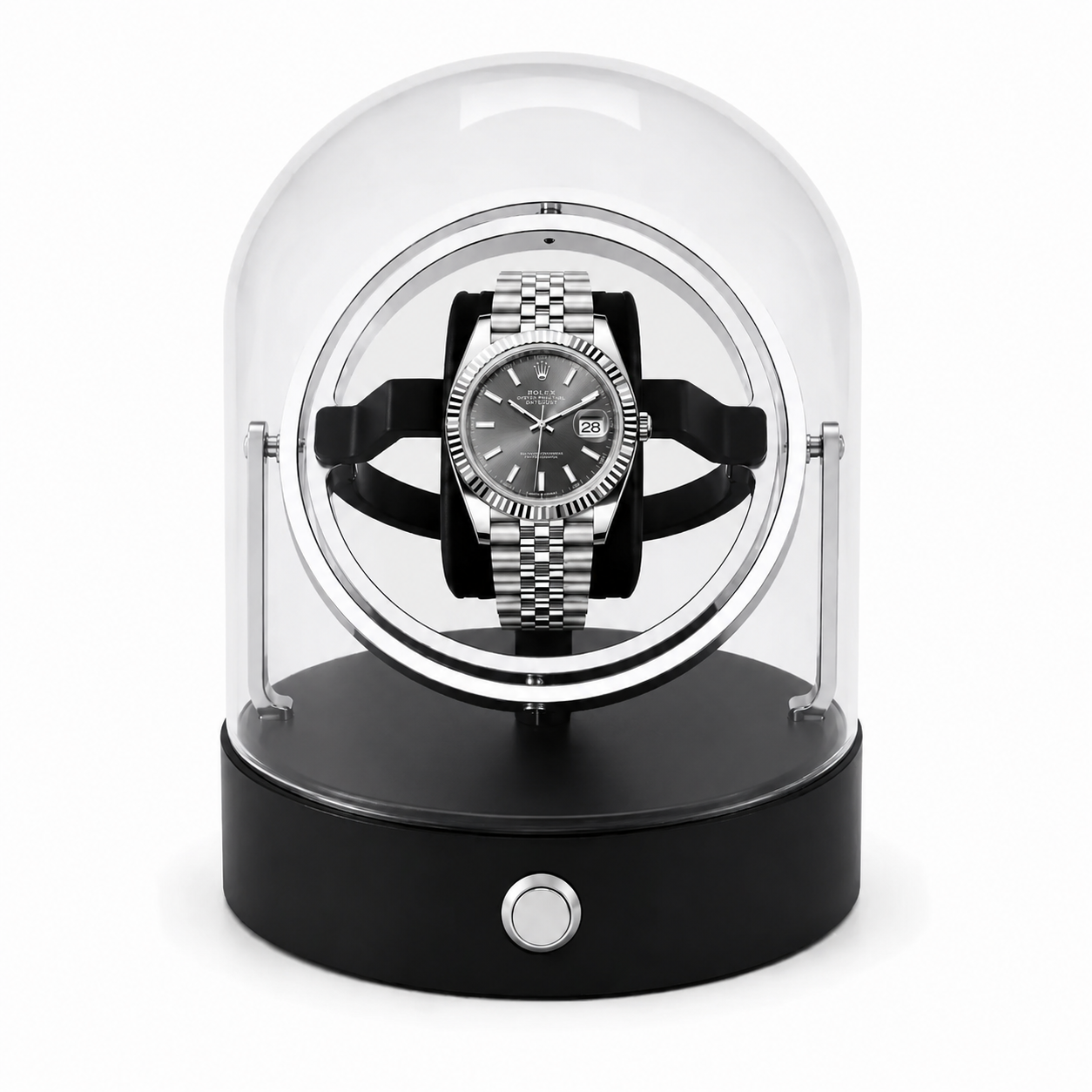
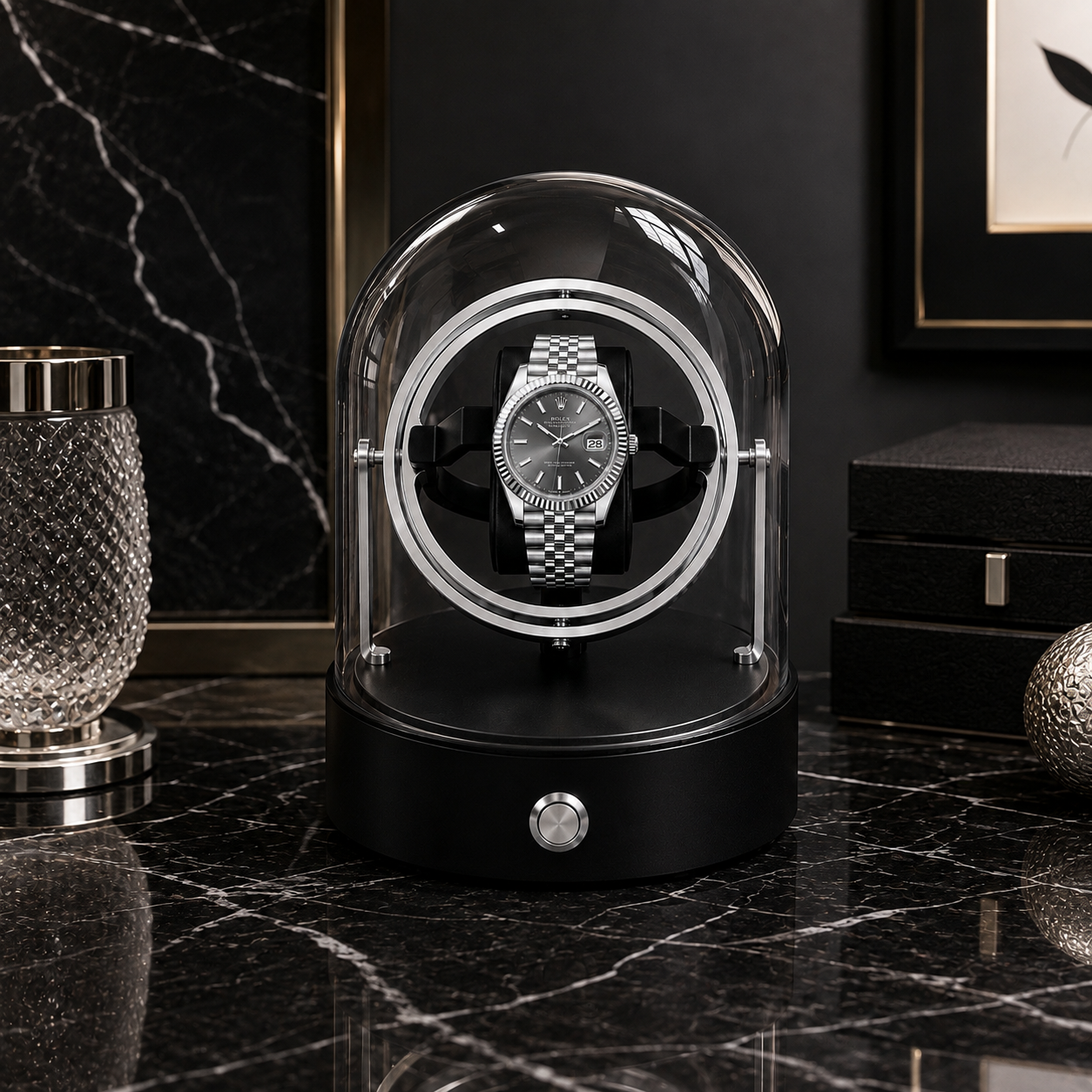
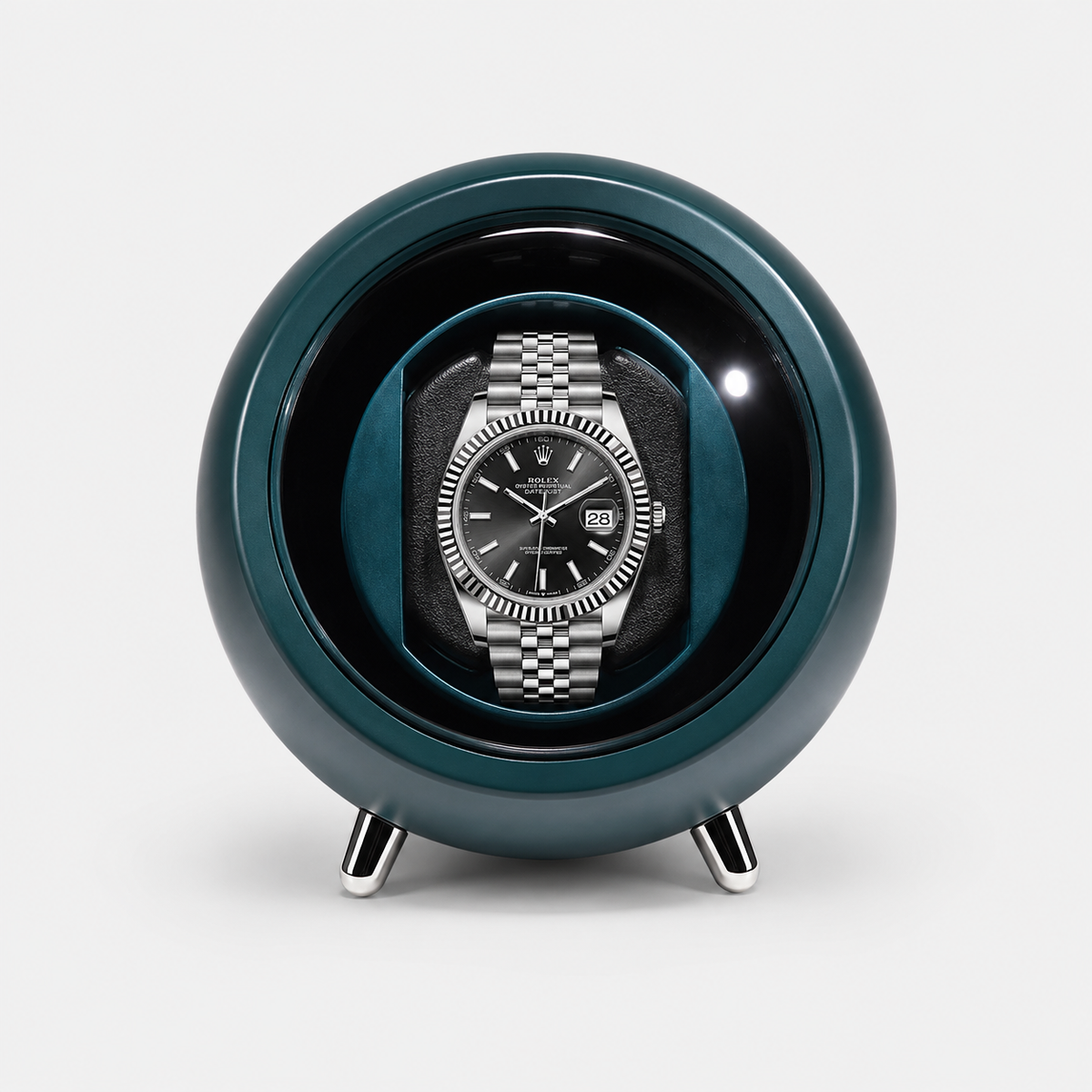
A single winder is a compact solution for one primary automatic watch or for collectors who want to keep one specific piece ready to wear.
Double Watch Winder
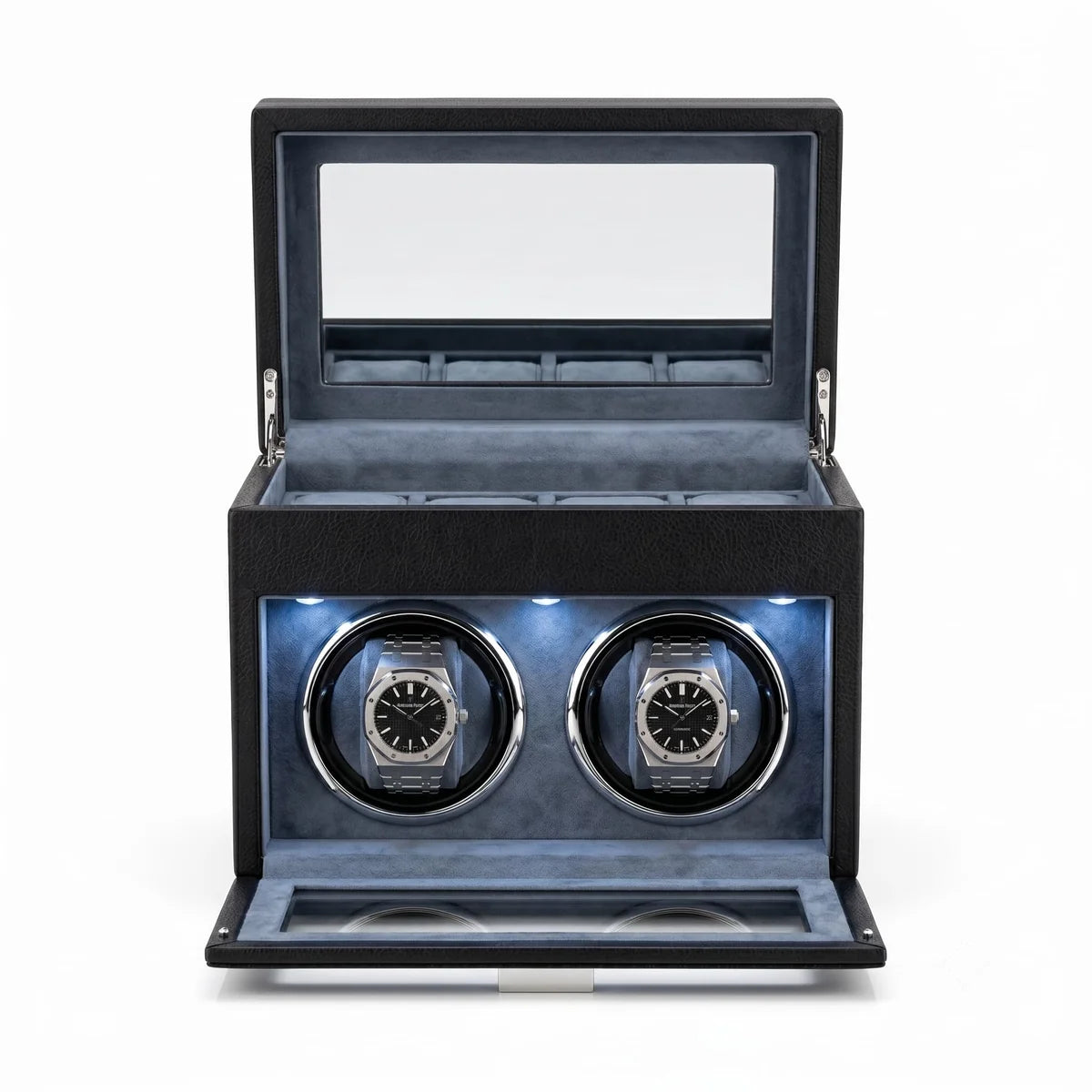
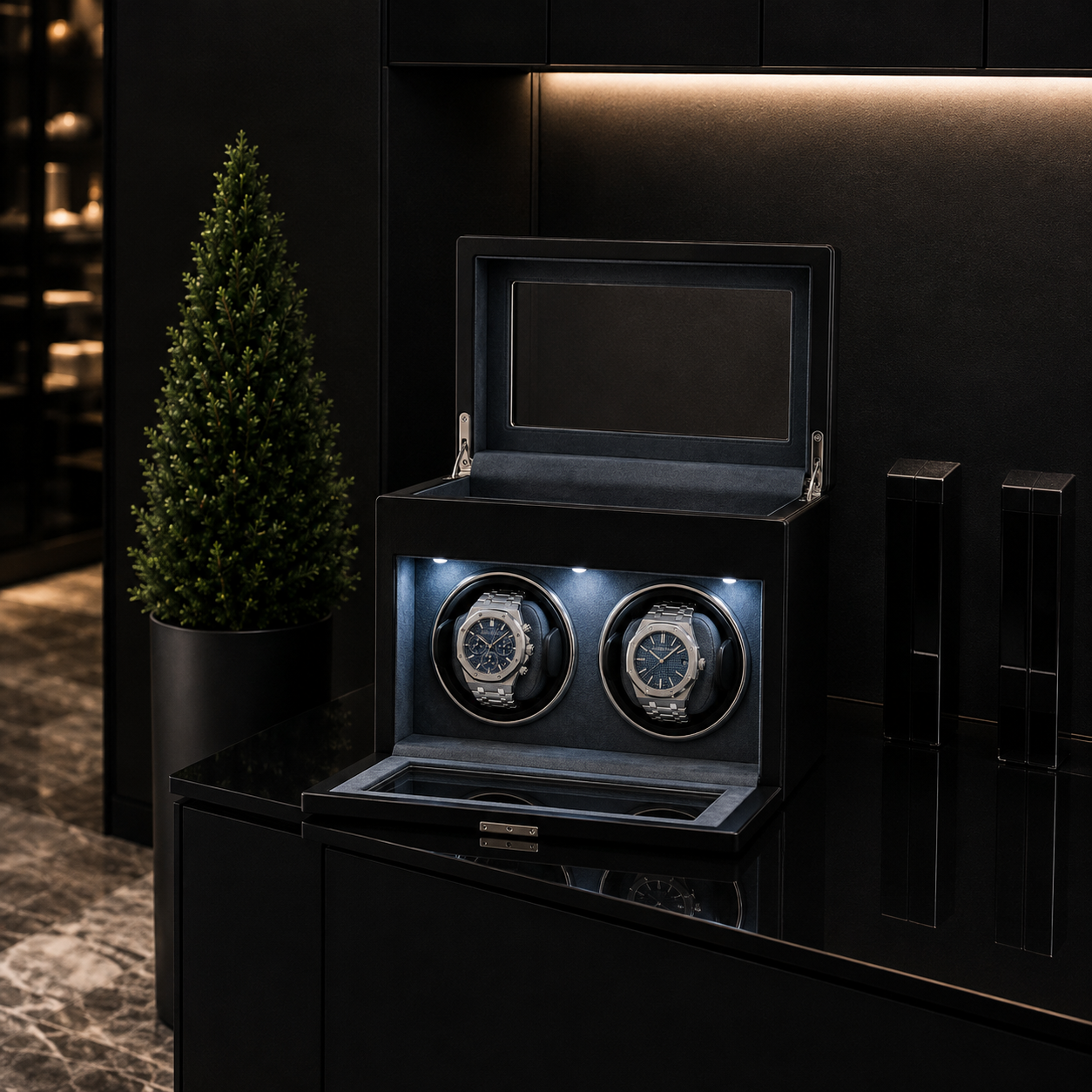
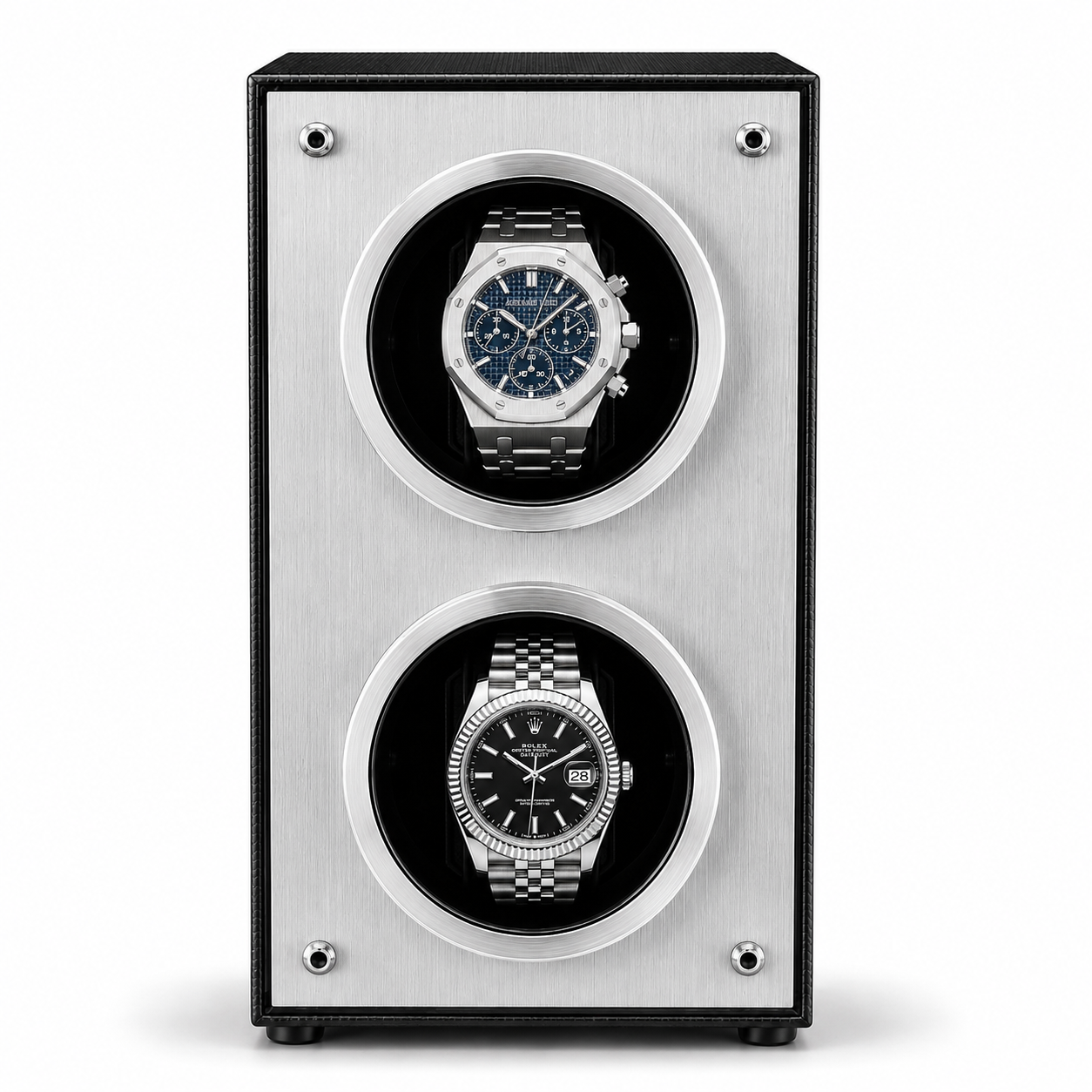
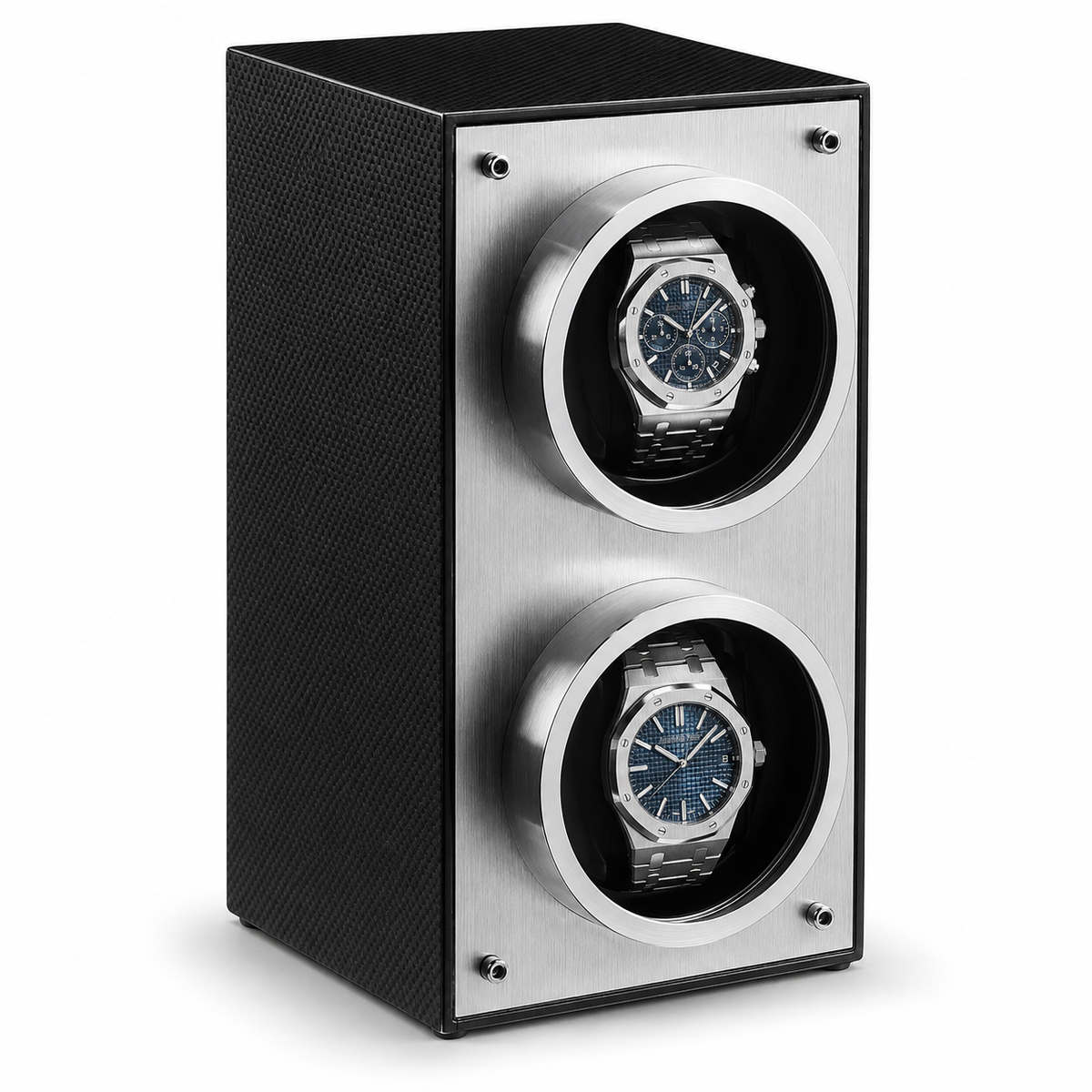
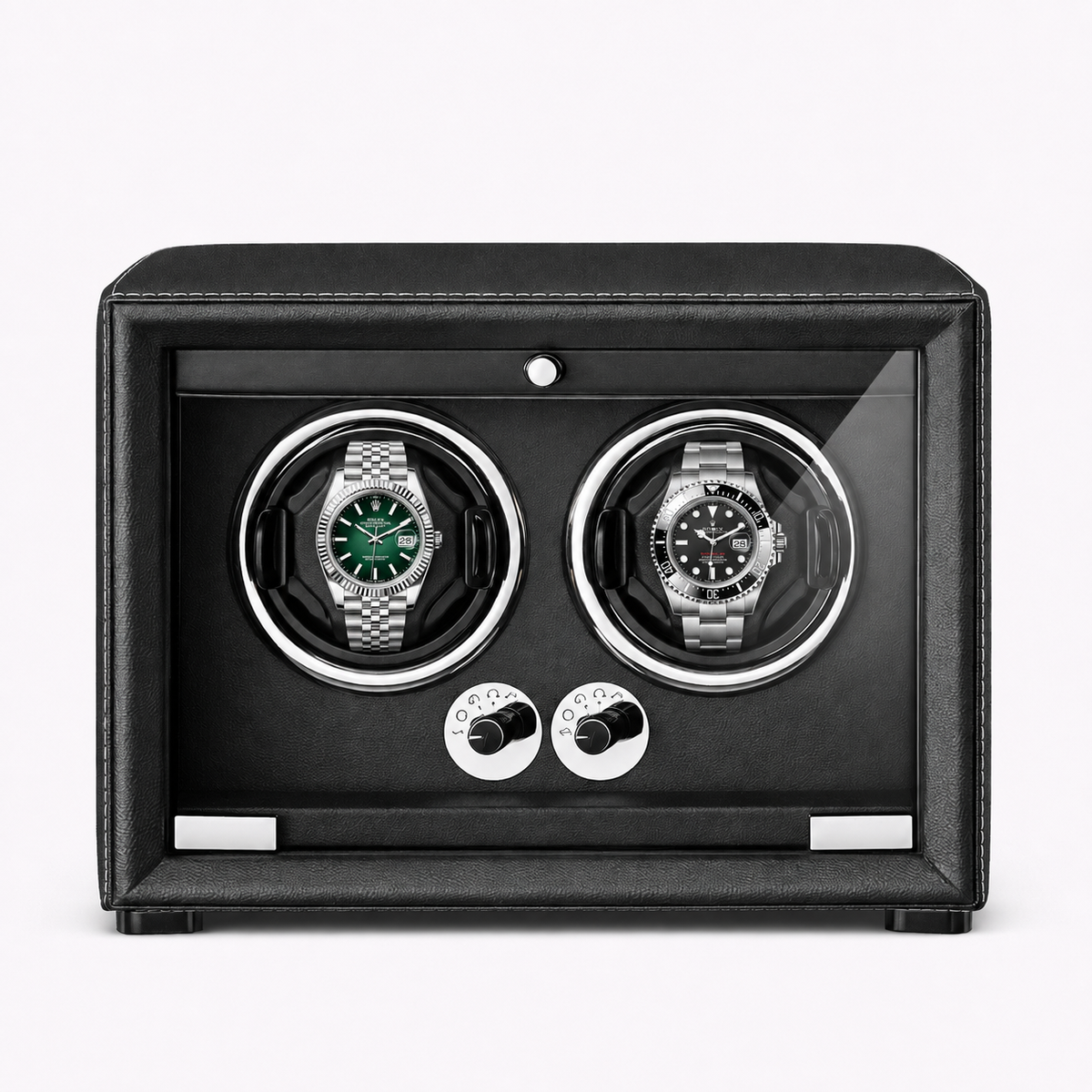
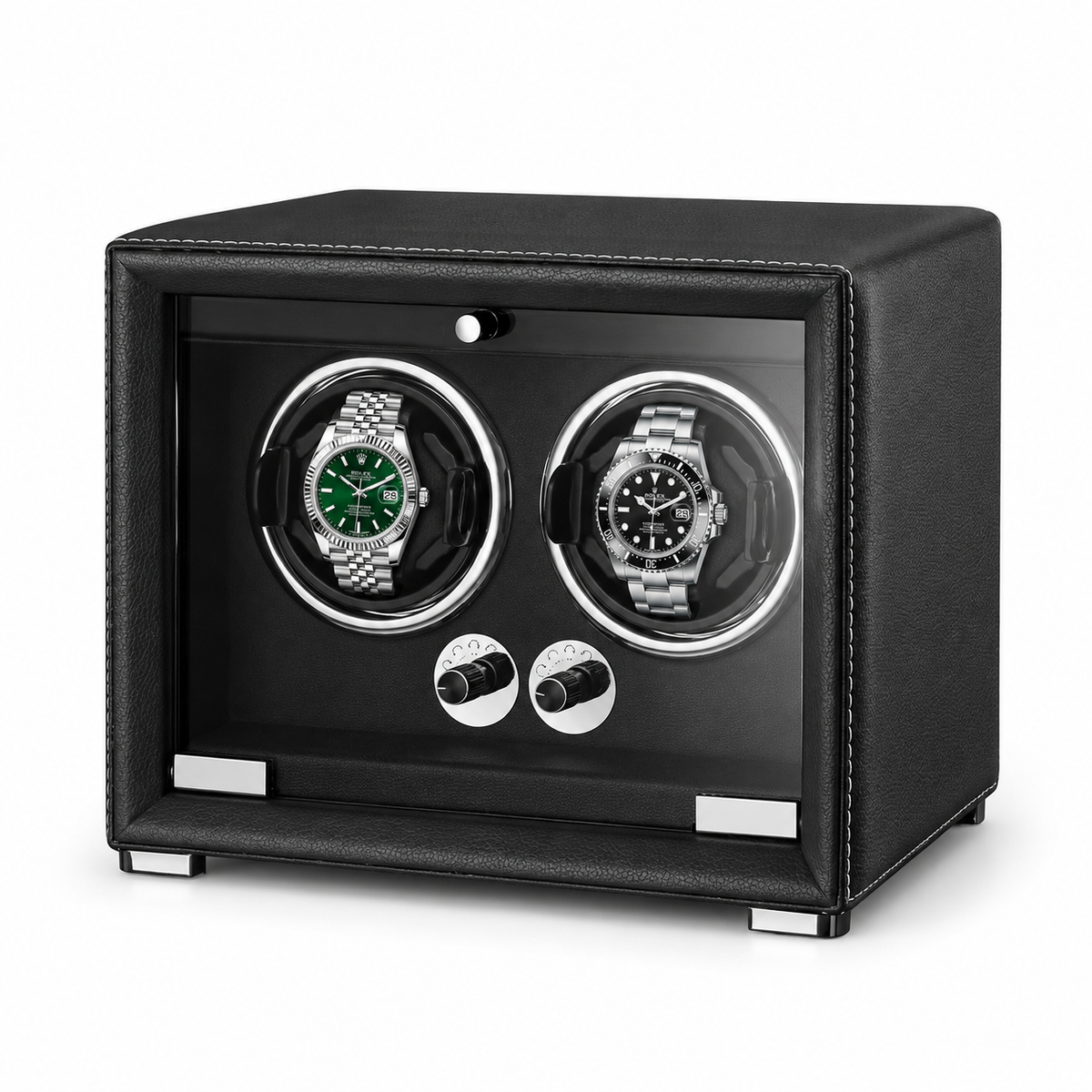
A double watch winder is useful when rotating between two automatic watches.
Independent controls are especially valuable if the watches use different movements or winding requirements.
Multi-Watch Winder
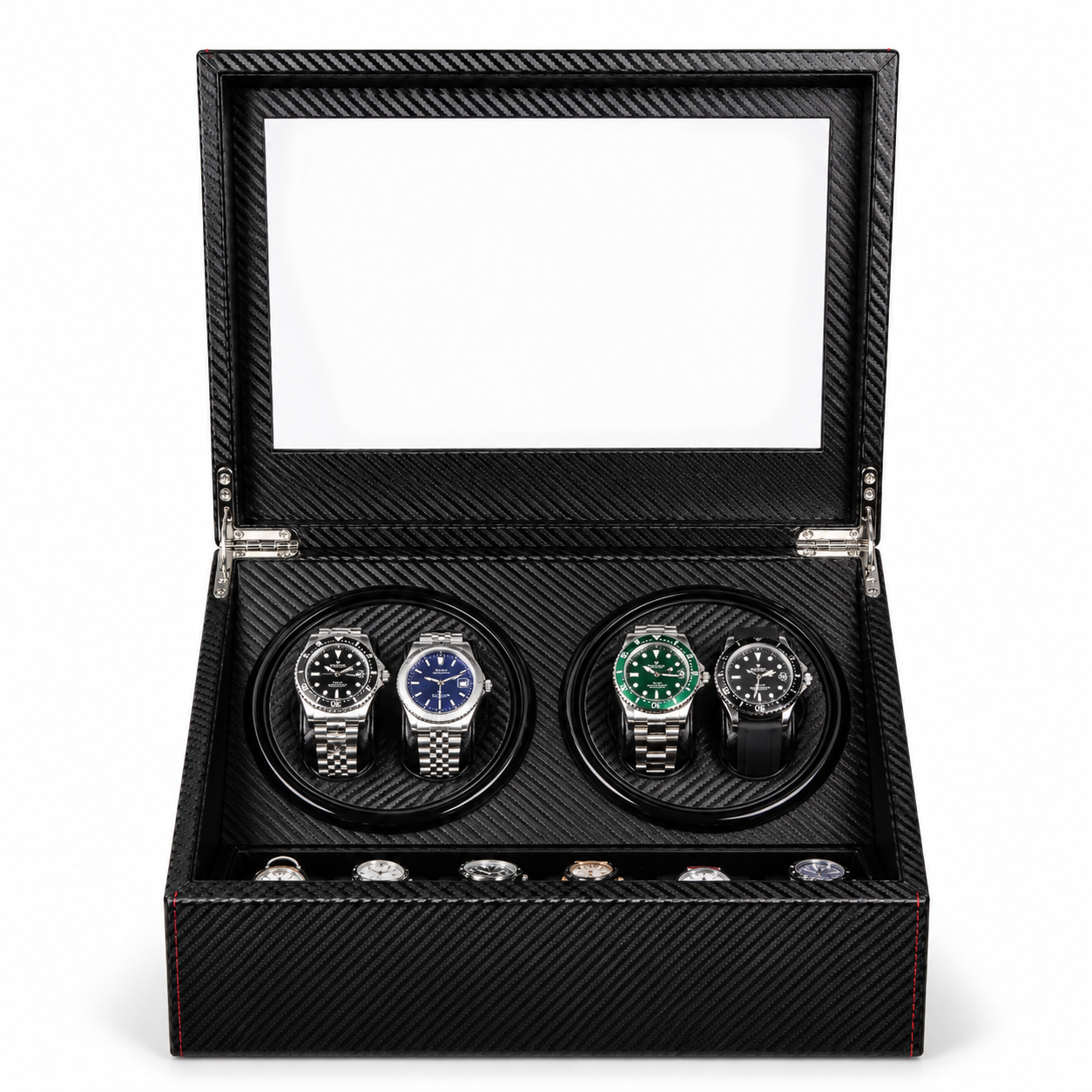
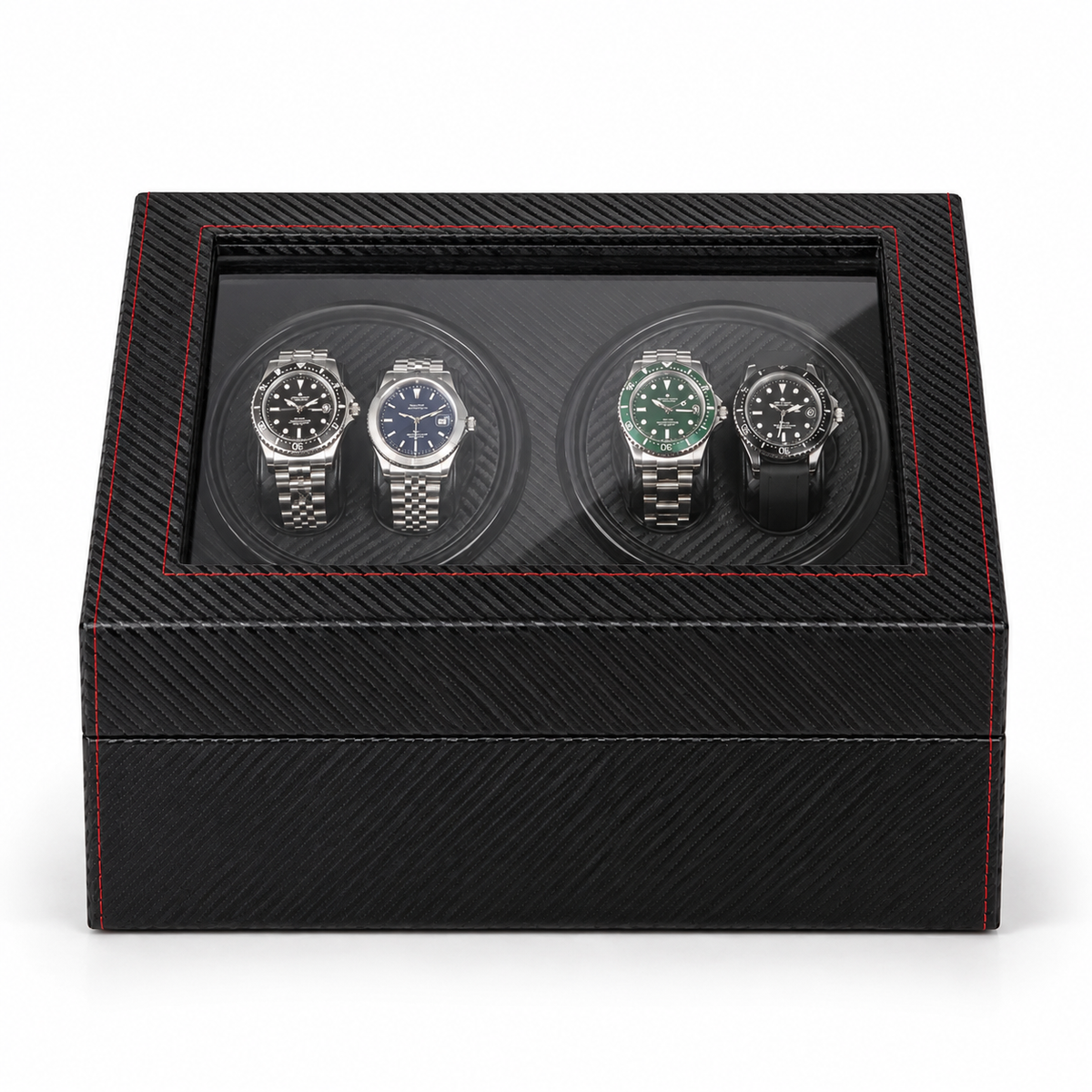
Larger winders provide a centralized solution for growing collections.
If several movements are stored together, independently controlled winding positions provide greater flexibility than a single program controlling every watch.
7. Consider Build Quality and Materials
A watch winder is both a functional accessory and a place where a valuable watch may spend significant time.
Look beyond appearance alone.
Important details can include:
- Stable construction
- Secure watch holders
- Quality hinges and closures
- Protective interior materials
- Reliable controls
- Appropriate ventilation and electronics
- Durable exterior finishes
Leather, wood, carbon-inspired finishes, and lacquered surfaces can create very different aesthetics, but construction quality remains more important than the material name alone.
8. Choose a Winder That Fits Your Collection
Your current collection should determine the winder you buy—not simply the largest model available.
For one frequently worn watch, a compact single winder may be enough.
For two watches with different movements, independent winding positions become more important.
For a larger collection, consider both current capacity and potential future additions.
If you're still deciding whether a winder makes sense for your collection at all, read our guide Do You Really Need a Watch Winder?
9. Consider the Watch Brand and Movement
The brand name alone should not determine the winding program.
Different references from the same manufacturer can contain different movements and therefore have different winding characteristics.
Before selecting TPD or rotation direction, identify the exact watch and movement whenever possible.
This is especially relevant for collectors owning watches from multiple manufacturers.
10. What About Rolex Watches?
Rolex owners should follow the same principle: identify the watch and movement rather than assuming one universal program applies to every Rolex ever produced.
Features such as adjustable TPD, multiple rotation directions, rest cycles, secure cushions, and quiet operation remain important.
For a more specific breakdown, see our Best Watch Winder for Rolex: TPD & Rotation Guide (2026).
Watch Winder Buying Checklist
Before choosing your watch winder, check:
| Feature | What to Look For |
|---|---|
| TPD | Adjustable winding settings |
| Direction | CW, CCW and/or bidirectional |
| Rotation | Intermittent cycles with rest periods |
| Watch support | Secure, adaptable cushion |
| Motor | Quiet operation |
| Controls | Independent when winding multiple watches |
| Capacity | Appropriate for your collection |
| Construction | Stable and protective |
| Design | Suitable for where it will be displayed |
There is no single watch winder that is ideal for every collector. The best choice is the one that combines the winding capabilities required by your watches with the capacity, construction, noise level, and design that fit the way you use your collection.
For a broader comparison of available configurations, see our guide to the Best Watch Winders for Automatic Watches in 2026.




%0A%0AChoosing%20a%20watch%20winder%20is%20not%20simply%20about%20finding%20a%20box%20that%20rotates%20your%20watch.%20The%20right%20winder%20should%20match%20the%20needs%20of%20your%20automa...)