Do You Really Need a Watch Winder? Pros, Cons & Expert Advice
Do You Really Need a Watch Winder? Pros, Cons & Expert Advice
If you own an automatic watch, you may have wondered whether a watch winder is actually necessary. The short answer is: not every automatic watch needs a watch winder, but a winder can be extremely useful for collectors who rotate between multiple watches or own timepieces with complications that take time to reset.
A quality watch winder keeps an automatic watch moving while it is not being worn, helping maintain its power reserve so it remains ready to wear.
But is a watch winder worth it for you? Here is what you should know before buying one.
What Is a Watch Winder?
A watch winder is a device designed to hold and gently rotate an automatic watch when it is not being worn.
Automatic watches use the natural movement of your wrist to move an internal rotor, which transfers energy to the mainspring. When the watch is left unworn for long enough, its power reserve eventually runs out and the movement stops.
A watch winder recreates part of that wrist movement through controlled rotations.
Most modern winders allow you to control factors such as:
-
Turns per day (TPD)
-
Clockwise rotation
-
Counterclockwise rotation
-
Bidirectional rotation
-
Rest periods between winding cycles
Choosing the correct settings is important because automatic movements can have different winding requirements.
Do Automatic Watches Need a Watch Winder?
Technically, no. An automatic watch does not need to remain on a watch winder when it is not being worn.
Allowing a modern automatic watch to stop normally does not damage the movement. You can simply wind and reset the watch when you decide to wear it again.
However, that does not mean a watch winder has no purpose.
For someone who owns one automatic watch and wears it almost every day, a winder may primarily offer convenience and an elegant way to display the watch.
For a collector who regularly rotates between several automatic watches, it becomes significantly more useful.
When Is a Watch Winder Worth It?
A watch winder makes the most sense when convenience, regular rotation, or complicated watch settings are important to you.
You Own Multiple Automatic Watches
If you rotate between several watches, some of them may stop before you wear them again.
Keeping selected watches on a winder means they can remain powered and ready to wear without having to reset the time and date every time you switch watches.
For a small collection, a double watch winder can keep two frequently worn watches running simultaneously. Larger multi-watch winders are better suited to collectors who regularly rotate through a broader collection.
Your Watch Has Complications
Resetting a simple three-hand automatic watch is usually quick.
A watch with a date, day-date display, moonphase, annual calendar, perpetual calendar, GMT function, or other complication can require considerably more attention.
Keeping the movement running can reduce how often these functions need to be reset after the watch has been left unworn.
You Want Your Watch Ready to Wear
Sometimes the biggest advantage is simply convenience.
Open the winder, select your watch, put it on, and go.
There is no need to check whether the movement has stopped or spend time resetting the watch before leaving.
You Want to Store and Display Your Collection
A watch winder can also serve as part of the way a collection is stored and displayed.
Rather than leaving an automatic watch on a desk or inside a drawer, a dedicated winder provides an organized location for the watch while keeping it ready for use.
For larger collections, multi-watch winders and combinations of winding modules and watch storage can keep several timepieces together in one dedicated space.
What Are the Benefits of a Watch Winder?
The main benefits of using a watch winder are convenience, organization, and maintaining the power reserve of watches that are not being worn.
Keeps Automatic Watches Running
The most obvious benefit is that the watch can remain powered between wears.
This is especially useful if you alternate between several watches throughout the week.
Reduces the Need to Reset Complications
Keeping a watch running means its time, date, and other calendar-related functions can continue operating.
For complicated watches, this can save considerably more time than simply resetting the hour.
Creates Dedicated Watch Storage
A quality winder gives your automatic watch a dedicated place when it leaves your wrist.
Depending on the size of your collection, you can choose a compact single watch winder, a two-watch configuration, or a larger system designed for multiple watches.
Displays Your Watches
For many collectors, watches are objects to be appreciated even when they are not being worn.
Materials, lighting, viewing windows, and interior design can turn a watch winder into part of the presentation of a collection.
Are There Any Disadvantages to Using a Watch Winder?
There are a few considerations.
First, a watch winder is not essential for the basic operation of most automatic watches. If you own a single watch and wear it regularly, you may not need one.
Second, settings matter. A winder should provide an appropriate number of turns per day and the correct rotation direction for the movement inside your watch.
Finally, quality matters. A well-designed winder should rotate the watch through controlled cycles rather than continuously turning it without appropriate rest periods.
This is why understanding TPD and winding direction is important before setting up a watch winder.
Can a Watch Winder Overwind an Automatic Watch?
Modern automatic watches are generally designed with a mechanism that prevents the mainspring from being continuously tensioned once it reaches its intended level of wind.
However, this does not mean that using unnecessarily aggressive winder settings is a good idea.
A properly configured winder should provide enough rotation to maintain the watch's power reserve without using significantly more turns than necessary.
The ideal TPD and direction depend on the movement.
If you are unsure where to begin, consult a watch winder TPD guide and check the recommended watch winder settings for your watch brand and movement.
How Many Turns Per Day Does an Automatic Watch Need?
There is no single TPD setting that is correct for every automatic watch.
Many movements operate within commonly used winding ranges, while others have different requirements depending on their caliber and winding system.
A watch winder with adjustable TPD settings gives you greater flexibility when using watches from different manufacturers.
Always determine the requirements of the specific movement whenever possible rather than assuming that one setting works for every watch.
Which Rotation Direction Should You Use?
Automatic movements may wind:
-
Clockwise
-
Counterclockwise
-
In both directions
Using the appropriate direction allows the winding cycle to work efficiently with the movement.
If you own watches from several brands, individually controlled winding modules can be particularly useful because different watches can be configured independently.
Is a Watch Winder Good for Rolex Watches?
A watch winder can be convenient for a Rolex owner, particularly when the watch is part of a rotation and is not worn every day.
It can keep the watch running between wears and reduce the need to reset its time and date after the power reserve is depleted.
The appropriate setup depends on the specific Rolex model and movement, so settings should always be checked before use.
For a more detailed explanation, see our guide to choosing the best watch winder for Rolex watches.
What Type of Watch Winder Should You Choose?
The right watch winder depends primarily on your watch and the size of your collection.
For One Automatic Watch
A compact single-watch model is ideal if you want a dedicated winder without taking up much space.

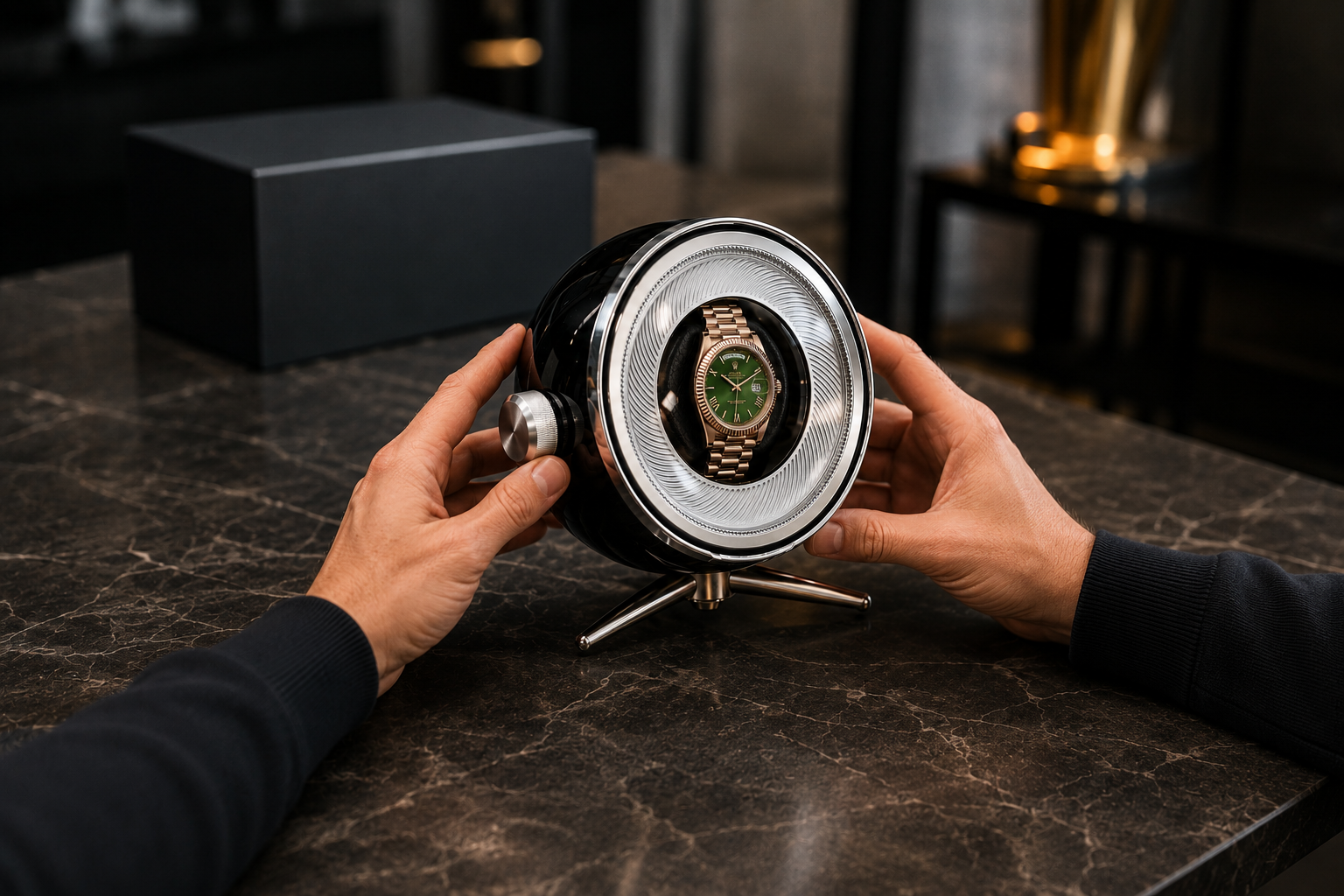
The ChronoVelar Tripod Watch Winder is designed for a single automatic watch and combines a compact format with a presentation-focused design.
It is a practical choice for someone who owns one primary automatic watch or wants an individual winder for a particular timepiece.
For Two Automatic Watches
Collectors who regularly alternate between two watches should consider a dual configuration.
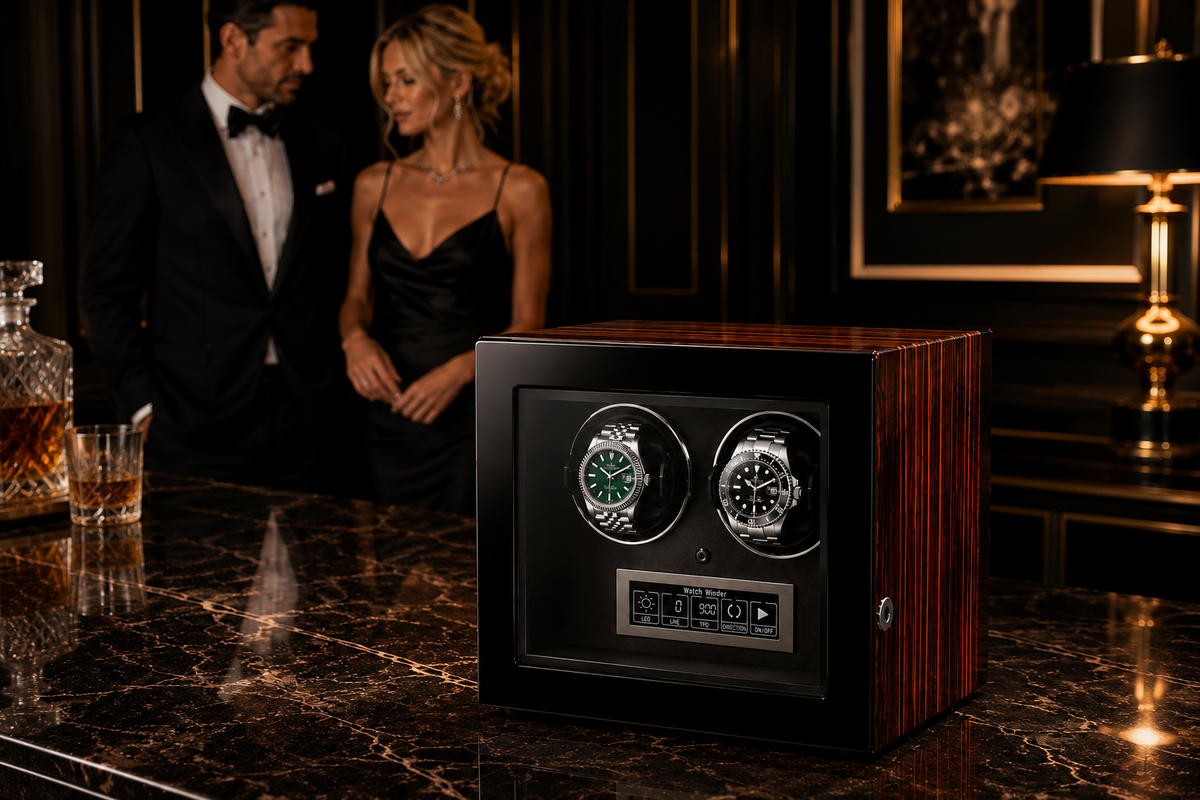
A ChronoVelar 2-Watch Winder allows two automatic watches to be kept together and ready to wear, making it particularly useful for couples or small collections.
For Larger Watch Collections
Once a collection expands, capacity and individual control become more important.
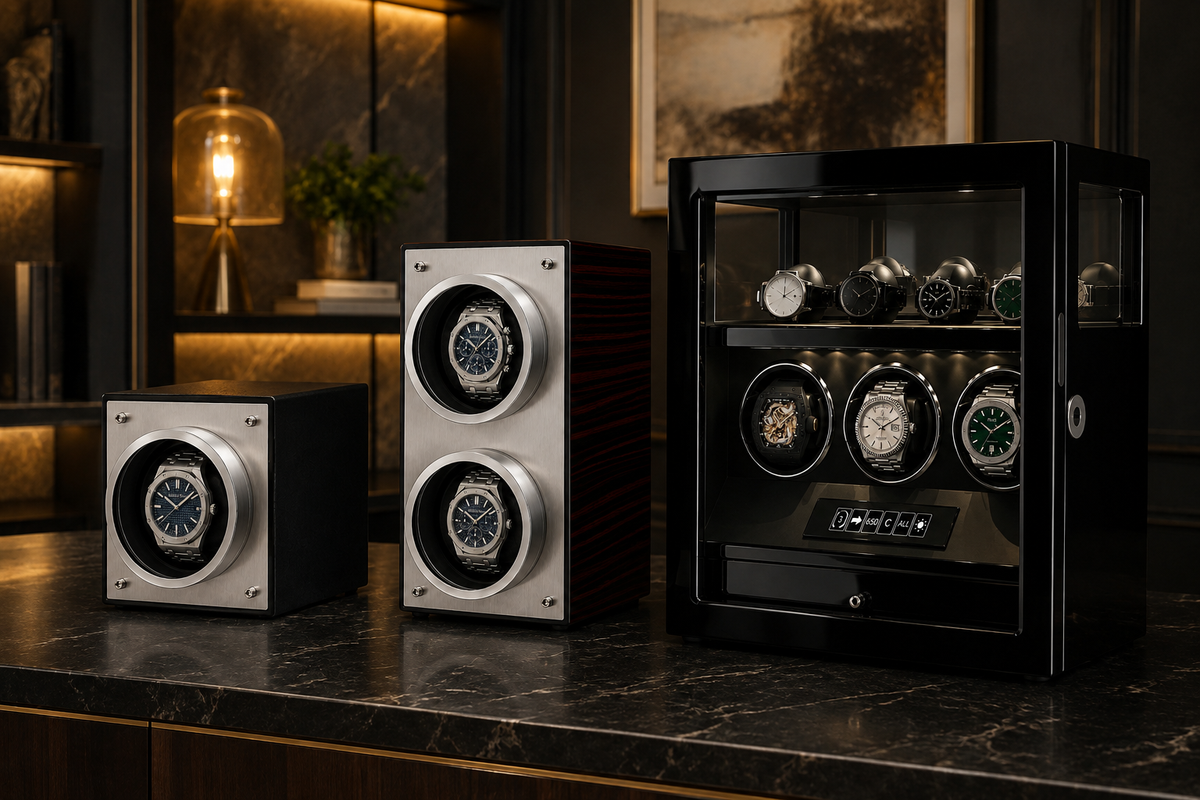
Multi-watch winders can accommodate several automatic watches in one location, while larger configurations can combine active winding positions with additional watch storage.
ChronoVelar offers watch winders for different collection sizes, from individual winders to larger multi-watch configurations.
Watch Winder vs. Watch Box: What's the Difference?
A watch box and a watch winder solve two different problems.
A traditional watch box protects and organizes watches while they are stored. A watch winder adds controlled movement designed to keep compatible automatic watches powered.
For mechanical watches that do not require winding or watches that you intentionally want to leave stopped, traditional storage may be enough.
For automatic watches you want ready to wear, a winder provides the additional benefit of maintaining their power reserve.
Collectors who own both frequently worn automatic watches and watches that remain in storage may benefit from a system that combines winding positions with conventional watch storage.
So, Is a Watch Winder Worth It?
A watch winder is worth considering if you own multiple automatic watches, regularly rotate your collection, have watches with complications, or simply want your watches ready to wear.
It is less essential if you own a single automatic watch that you wear almost every day.
Ultimately, a watch winder is about more than keeping a movement running. For many collectors, it provides a convenient way to organize, protect, display, and enjoy an automatic watch collection.
The key is choosing a winder that offers appropriate settings for your watches and enough capacity for the way you actually use your collection.
Frequently Asked Questions
Do I need a watch winder for an automatic watch?
No. An automatic watch can safely stop when it is not being worn. A watch winder is primarily useful for keeping the watch powered and ready to wear, particularly when you rotate between several automatic watches.
Is it bad to leave an automatic watch unwound?
Generally, no. Modern automatic watches can normally remain stopped when they are not being worn. Always follow the watch manufacturer's recommendations for your specific model.
Should I leave my watch winder running all the time?
A properly configured watch winder operates using winding and rest cycles rather than continuously rotating the watch. Use the appropriate TPD and rotation direction for your movement.
Is a watch winder useful if I only own one watch?
It can be, particularly if you do not wear the watch every day or value the convenience of keeping it ready to wear. If you wear the same automatic watch daily, however, a winder is usually less necessary.
What is the best watch winder for my collection?
Consider the number of watches you want to keep wound, their TPD requirements, winding directions, the level of independent control offered by the winder, noise, construction, and available storage space. A single-watch winder works well for one timepiece, while collectors may benefit from dual or multi-watch configurations.