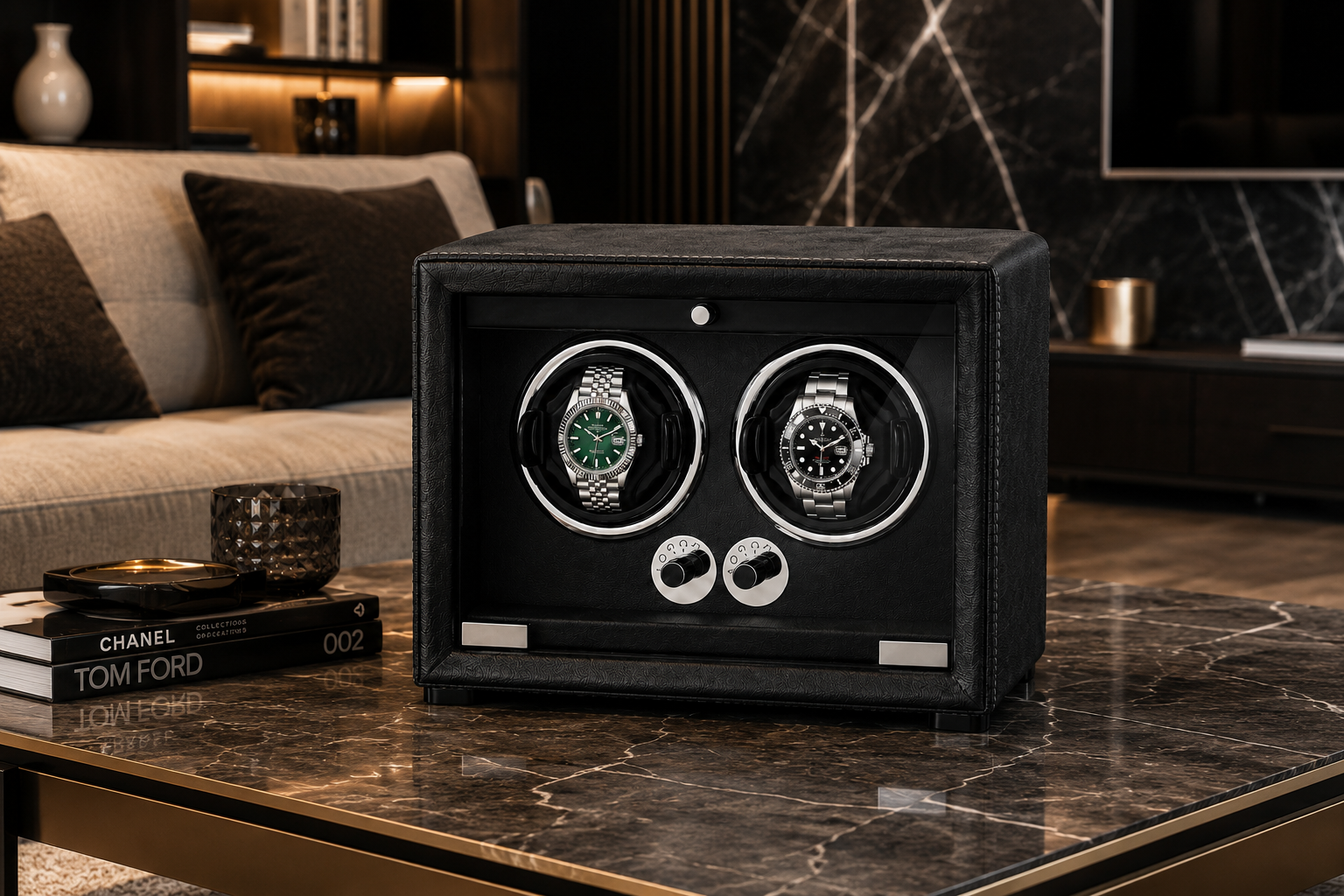
Article: Best Watch Winders for Automatic Watches in 2026
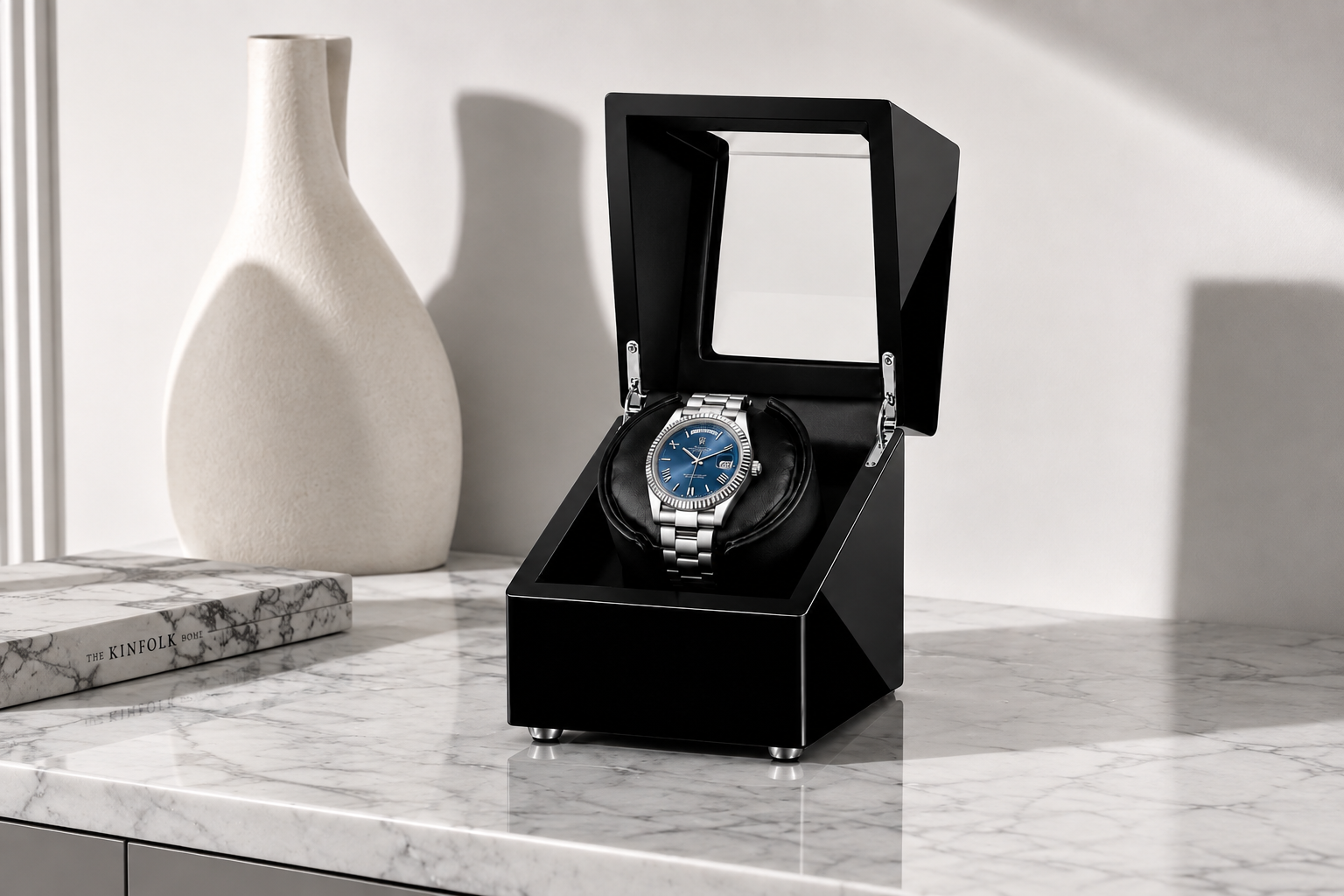
Best Watch Winders for Automatic Watches in 2026
Best Watch Winders for Automatic Watches in 2026
Choosing the best watch winder isn't simply about keeping an automatic watch moving. The right winder should match your watch's movement requirements, provide appropriate Turns Per Day (TPD), offer the correct rotation direction, and operate quietly enough for everyday use.
Whether you own a Rolex, Omega, Tudor, TAG Heuer, Breitling, or another automatic watch, this guide explains what actually matters when choosing a watch winder in 2026.
Quick Answer: What Is the Best Watch Winder?
The best watch winder is one that matches the specific winding requirements of your automatic watch.
Look for a model with:
-
Adjustable Turns Per Day (TPD)
-
Clockwise (CW), counterclockwise (CCW), or bidirectional rotation
-
Quiet operation
-
A secure, properly sized watch holder
-
Rest periods between rotation cycles
-
Reliable construction and motor performance
For collectors with multiple watches, independent winding positions are particularly useful because different movements may require different settings.
What Is a Watch Winder?
A watch winder is a motorized device designed to rotate an automatic watch while it is not being worn.
Automatic watches use the movement of the wrist to power a rotating weight, known as the rotor, inside the movement. When an automatic watch remains unworn for long enough, its power reserve eventually runs down and the watch stops.
A watch winder recreates controlled rotational movement while the watch is stored.
This can be particularly convenient for collectors who rotate between several watches or own watches with complications that take additional time to reset.
Do You Actually Need a Watch Winder?
Not every automatic watch owner needs one.
Allowing most automatic watches to stop when they are not being worn is generally not a problem. A watch winder is primarily a matter of convenience.
It can be especially useful if you:
-
Rotate between several automatic watches
-
Own a watch with a perpetual calendar, annual calendar, moonphase, GMT, or other complications
-
Prefer your watch to remain ready to wear
-
Frequently switch between watches
-
Want to display automatic watches while keeping them running
For someone who wears the same automatic watch every day, a watch winder may be less necessary.
How to Choose the Best Watch Winder
1. Adjustable TPD
TPD stands for Turns Per Day.
Different automatic movements can have different winding requirements. A good watch winder should therefore provide suitable rotation cycles rather than simply rotating continuously.
More rotation is not automatically better.
The goal is to provide enough movement to maintain the watch's power reserve while following the recommendations appropriate for its movement.
2. Rotation Direction
Automatic movements may wind:
-
Clockwise (CW)
-
Counterclockwise (CCW)
-
In both directions
A versatile watch winder should offer multiple rotation directions so it can accommodate a broader range of automatic movements.
Before selecting a setting, check the winding requirements for your watch's specific movement.
3. Quiet Operation
Motor noise is particularly important if the watch winder will be placed in a bedroom, dressing room, or office.
A well-designed winder should operate quietly and use intermittent winding cycles with rest periods rather than rotating continuously.
4. Watch Fit
A watch should remain securely positioned while rotating.
Look for a holder or pillow that adapts to different bracelet and wrist sizes without putting unnecessary pressure on the watch.
This becomes particularly important with heavier watches and larger cases.
5. Independent Winding Positions
For collectors with two or more automatic watches, independently controlled winding positions can be valuable.
One watch may require different TPD or rotation settings from another.
Independent controls allow each movement to receive an appropriate winding program.
Single vs. Double vs. Multi-Watch Winders
The right capacity depends primarily on the size of your collection.
Single Watch Winder
A single watch winder is ideal for someone who owns one primary automatic watch or wants a compact solution for a specific timepiece.
Double Watch Winder
A 2-watch winder is particularly useful for collectors who regularly alternate between two automatic watches.
If the two watches use different movements, look for independent winding positions and adjustable settings.
Multi-Watch Winder
Collectors with larger rotations may prefer winders designed for four, six, or more watches.
Beyond capacity, consider whether each winding position can be controlled independently.
Are Watch Winders Safe for Automatic Watches?
A properly configured watch winder is generally designed to provide controlled rotational cycles similar to the movement an automatic watch experiences while being worn.
The important factor is proper configuration.
Use settings appropriate for the specific movement and avoid assuming that maximum TPD or continuous rotation is better.
Modern automatic movements typically incorporate mechanisms designed to prevent the mainspring from being conventionally overwound, but that does not mean unnecessarily excessive winding is desirable.
When in doubt, consult the watch manufacturer's recommendations or the specifications of the movement.
Can You Use a Watch Winder for Rolex, Omega, Tudor and Other Brands?
Watch winders can be used with many automatic watches from brands such as:
-
Rolex
-
Omega
-
Tudor
-
TAG Heuer
-
Breitling
-
IWC
-
Longines
-
Oris
-
Seiko
-
Grand Seiko
However, the brand name alone does not determine the correct setting.
Different models — and even different generations of the same model — may use different movements.
Always identify the movement or reference when determining the appropriate TPD and rotation direction.
What TPD Should You Use?
There is no universal TPD setting for every automatic watch.
The appropriate number of turns depends on the movement inside the watch.
This is why adjustable TPD settings are preferable when building a collection containing watches from different manufacturers.
If you do not know the requirements of your watch, identify its exact model and movement before choosing a winding program.
Should a Watch Winder Run All Day?
A watch winder does not need to rotate continuously.
Quality winding programs generally alternate between periods of rotation and rest.
This more closely reflects the intermittent movement a watch experiences during normal wear and avoids unnecessary continuous operation.
What Features Matter Most?
When comparing watch winders in 2026, prioritize functional specifications over purely cosmetic features.
A useful checklist includes:
| Feature | Why It Matters |
|---|---|
| Adjustable TPD | Helps match different automatic movements |
| Multiple directions | Supports CW, CCW and bidirectional winding requirements |
| Quiet motor | Important for bedrooms and offices |
| Rest cycles | Prevents unnecessary continuous rotation |
| Secure watch holder | Keeps the watch stable during operation |
| Independent controls | Useful for collections with different movements |
| Appropriate capacity | Matches the size of your collection |
| Reliable construction | Important for long-term everyday use |
Materials, lighting, glass or acrylic viewing panels, and premium finishes can then be considered according to personal preference and where the winder will be displayed.
Choosing a Watch Winder for a Luxury Watch
For a luxury automatic watch, focus first on compatibility and control.
A beautiful case is valuable, but the winding mechanism remains the most important component.
Before purchasing, consider:
-
Your watch's movement
-
Required TPD
-
Required rotation direction
-
Case and bracelet size
-
Number of watches you intend to wind
-
Where the winder will be placed
-
Motor noise
-
Power options
-
Warranty and after-sales support
For a collection containing multiple movements, independent controls become increasingly useful.
ChronoVelar Watch Winders
ChronoVelar offers automatic watch winders designed for different collection sizes, from compact single-watch models to multi-watch configurations.
Depending on the model, features may include adjustable winding programs, multiple rotation directions, independent winding positions, integrated lighting, adaptive watch pillows, and a range of leather, wood, and contemporary finishes.
Rather than choosing solely by appearance, compare the technical specifications of each model with the requirements of your automatic watch.
Frequently Asked Questions
Is a watch winder good for an automatic watch?
A properly configured watch winder can conveniently maintain an automatic watch's power reserve while it is not being worn. The winding program should be appropriate for the watch's specific movement.
Will a watch winder overwind my watch?
Modern automatic watches typically use a mechanism that allows the mainspring to slip once an appropriate level of tension is reached. Nevertheless, the winder should still use appropriate TPD settings and rest cycles rather than unnecessary continuous rotation.
Is it okay to leave a Rolex on a watch winder?
A compatible watch winder can be used with many Rolex automatic watches. The appropriate settings depend on the specific model and movement, so verify its winding requirements rather than relying only on the Rolex brand name.
How many TPD does my automatic watch need?
It depends on the movement. There is no single TPD value appropriate for every automatic watch.
Is clockwise or counterclockwise rotation better?
Neither is universally better. Some movements wind clockwise, some counterclockwise, and others bidirectionally. Use the direction recommended for your specific movement.
Is a watch winder worth buying?
For collectors who regularly alternate between several automatic watches or own watches with complications that are inconvenient to reset, a watch winder can provide significant convenience. For someone wearing the same watch every day, it may be less necessary.
Final Thoughts
The best watch winder for an automatic watch is not necessarily the most expensive or the one with the most features.
It is the one that matches your watch's movement, provides appropriate TPD and rotation settings, holds the watch securely, and operates reliably in the environment where you plan to use it.
Start with the movement inside your watch, determine its winding requirements, and choose the capacity and design that fit your collection.
As your collection grows, adjustable settings and independently controlled winding positions become increasingly valuable — allowing one watch winder to accommodate multiple automatic movements without treating every watch the same way.