Best Watch Winder for Rolex: TPD & Rotation Guide (2026)
Choosing the best watch winder for a Rolex starts with understanding the watch inside the case. Different Rolex models and generations can use different movements, so the right winding program should be based on the specific caliber rather than the Rolex name alone.
Whether you own a Submariner, Datejust, GMT-Master II, Daytona, Day-Date, or another automatic Rolex, this guide explains what to look for in a watch winder, how TPD and rotation direction work, and which features matter most.
Quick Answer: What Is the Best Watch Winder for a Rolex?
A good Rolex watch winder should provide controlled rotation, appropriate Turns Per Day (TPD), rest periods, secure watch support, and quiet operation.
Look for:
-
Adjustable TPD settings
-
Clockwise (CW), counterclockwise (CCW), and/or bidirectional rotation
-
Intermittent rotation with rest periods
-
A secure, properly sized watch pillow
-
Quiet motor operation
-
Reliable construction
-
Independent controls when winding multiple watches
Most importantly, configure the winder according to the requirements of your specific Rolex movement.
Does a Rolex Need a Watch Winder?
No. A watch winder is not required for a Rolex automatic watch.
If a Rolex is left unworn long enough, its power reserve will eventually run down and the watch will stop. This does not automatically mean something is wrong with the movement.
A watch winder is primarily about convenience.
It can be particularly useful if you:
-
Rotate between several watches
-
Want your Rolex ready to wear
-
Frequently switch watches throughout the week
-
Own watches with complications that take longer to reset
-
Want to display your watch while keeping it running
If you wear the same Rolex every day, a watch winder may be less necessary.
What Does TPD Mean?
TPD stands for Turns Per Day.
It describes approximately how many rotations a watch winder performs during a 24-hour period.
Automatic watches are powered through a rotor that moves as the watch is worn. A watch winder recreates controlled rotational movement while the watch is stored.
The objective is not to maximize the number of turns.
Instead, the goal is to provide an appropriate winding cycle for the movement while incorporating rest periods.
What TPD Should You Use for a Rolex?
There is no setting that should be blindly applied to every Rolex ever produced.
Rolex has used different calibers across models and generations. Two watches carrying the same model family name may therefore have different movements depending on their reference and production period.
For this reason, identify the exact watch reference and caliber before selecting a winding program.
When available, follow the movement or watch manufacturer's specifications and the instructions provided with your watch winder.
Clockwise or Counterclockwise for a Rolex Watch Winder?
The table below should be used as a starting point for identifying your watch — not as a substitute for checking its exact caliber.
| Rolex Collection | What to Check | Recommended Approach |
|---|---|---|
| Submariner | Reference & caliber | Verify movement-specific TPD and direction |
| Datejust | Reference & caliber | Verify movement-specific TPD and direction |
| GMT-Master II | Reference & caliber | Verify movement-specific TPD and direction |
| Daytona | Reference & caliber | Verify movement-specific TPD and direction |
| Day-Date | Reference & caliber | Verify movement-specific TPD and direction |
| Explorer | Reference & caliber | Verify movement-specific TPD and direction |
| Yacht-Master | Reference & caliber | Verify movement-specific TPD and direction |
| Sea-Dweller | Reference & caliber | Verify movement-specific TPD and direction |
This movement-first approach is more reliable than choosing settings based solely on the Rolex collection name.
Clockwise or Counterclockwise for a Rolex Watch Winder?
Watch winders commonly offer three rotation options:
CW — Clockwise
The holder rotates clockwise.
CCW — Counterclockwise
The holder rotates counterclockwise.
Bidirectional
The winder alternates between clockwise and counterclockwise rotation.
The correct choice depends on the movement.
Do not assume that bidirectional rotation is automatically better simply because it uses both directions. The appropriate setting is the one that matches the winding characteristics of the caliber inside your watch.
Can a Watch Winder Damage a Rolex?
A properly configured, well-designed watch winder is intended to provide controlled rotational cycles comparable to the movement an automatic watch experiences during wear.
However, that does not mean a watch should rotate continuously at maximum settings.
A quality watch winder should use controlled rotation and rest periods.
When using a watch winder with a Rolex:
-
Use an appropriate TPD setting
-
Select a compatible rotation direction
-
Avoid unnecessary continuous rotation
-
Make sure the watch is securely positioned
-
Keep the winder in a stable environment
-
Follow the instructions for your specific watch and winder
If you are uncertain about the requirements of a particular vintage or modern Rolex movement, consult an authorized watch professional or movement-specific technical information.
What to Look for in a Rolex Watch Winder
1. Adjustable TPD
Adjustable TPD gives you greater control over the winding cycle.
This is particularly useful if you own several automatic watches with different movement requirements.
2. Multiple Rotation Directions
A versatile watch winder should provide the rotation direction required by your movement.
Depending on the model, this may include clockwise, counterclockwise, and alternating rotation programs.
3. Rest Cycles
A watch winder does not need to rotate continuously.
Programs that alternate rotation and rest periods provide controlled winding without unnecessary constant movement.
4. A Secure Watch Pillow
Rolex watches vary significantly in case size, bracelet configuration, and weight.
The pillow should hold the watch securely without requiring excessive pressure on the bracelet.
Self-adjusting watch holders can be particularly convenient for collections containing different watch sizes.
5. Quiet Operation
If the winder will sit in a bedroom or office, motor noise matters.
Look for a winder designed for quiet operation rather than evaluating the product solely on appearance.
6. Independent Controls for Multiple Rolex Watches
If you own two or more automatic watches, independent winding positions can be particularly useful.
For example, one position can be configured for one movement while another uses a different winding program.
This becomes increasingly valuable as a collection grows.
Single or Double Watch Winder for Rolex?
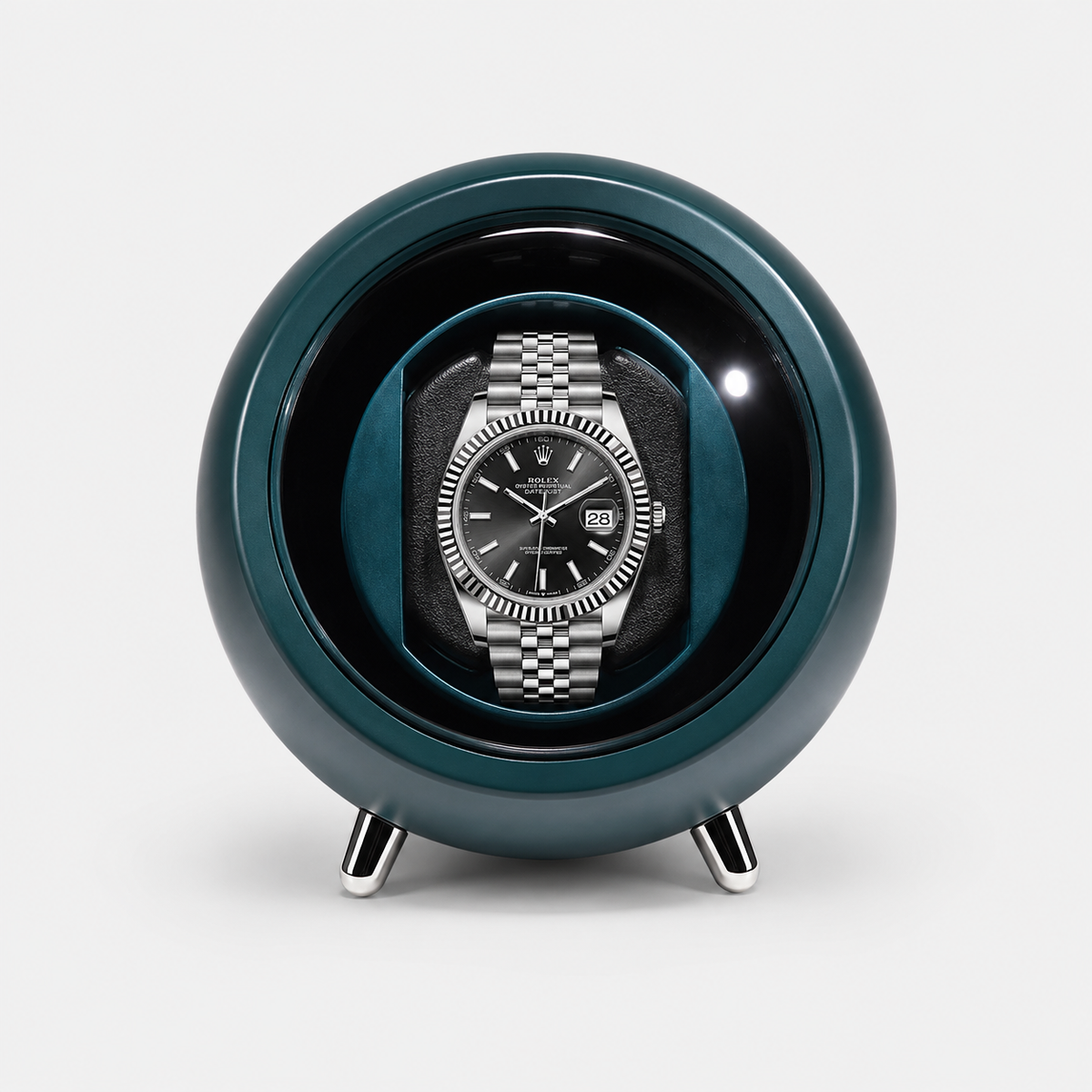
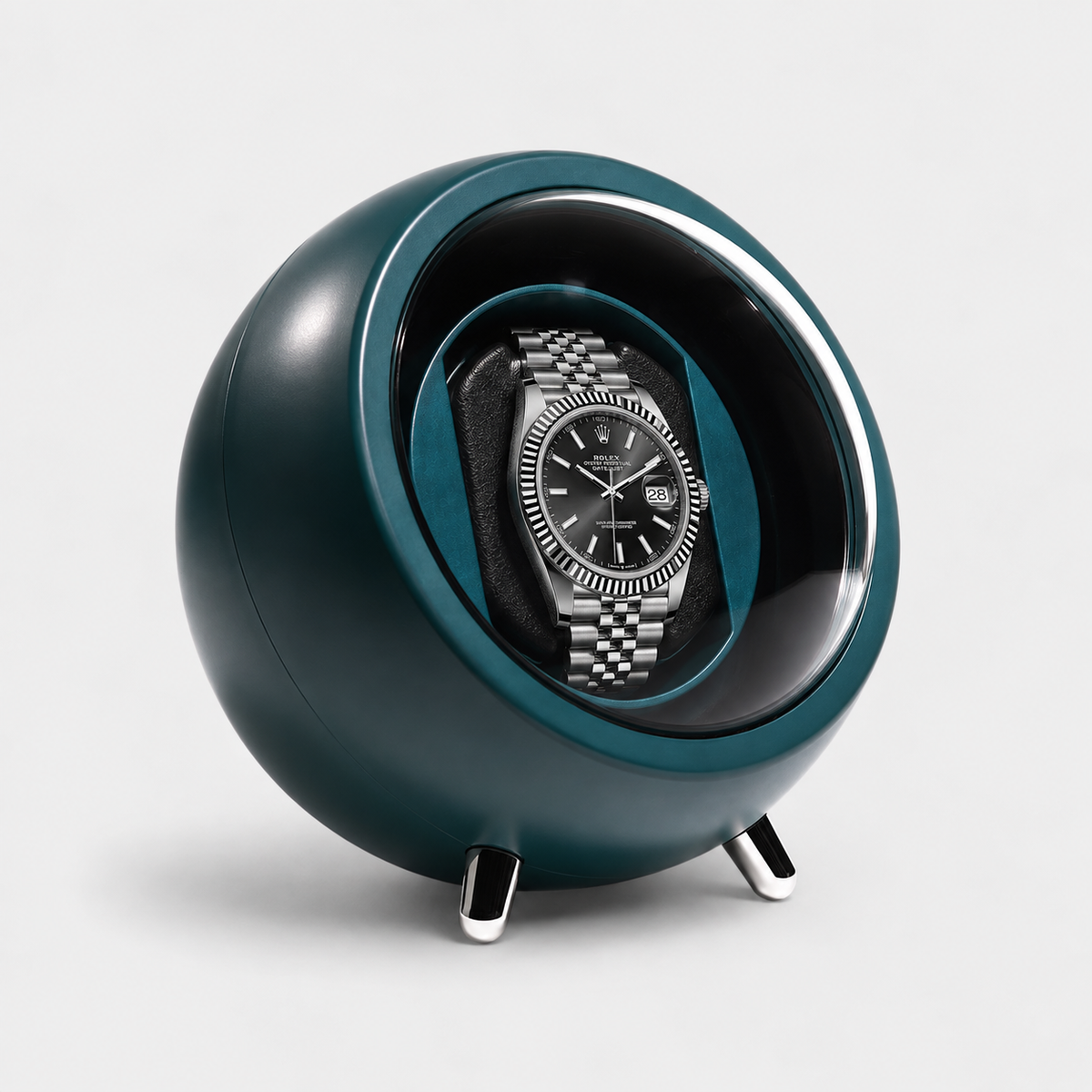
Single Watch Winder
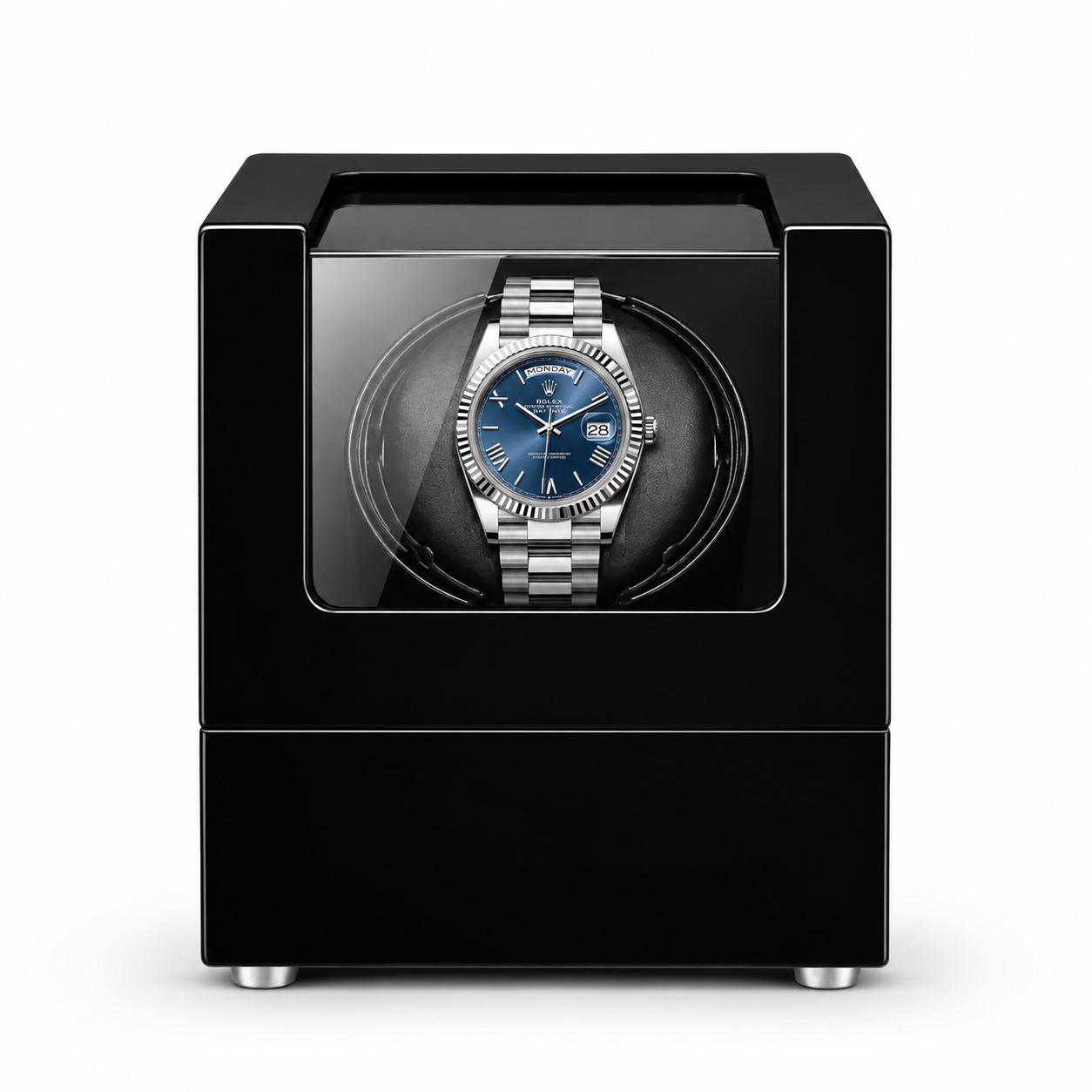
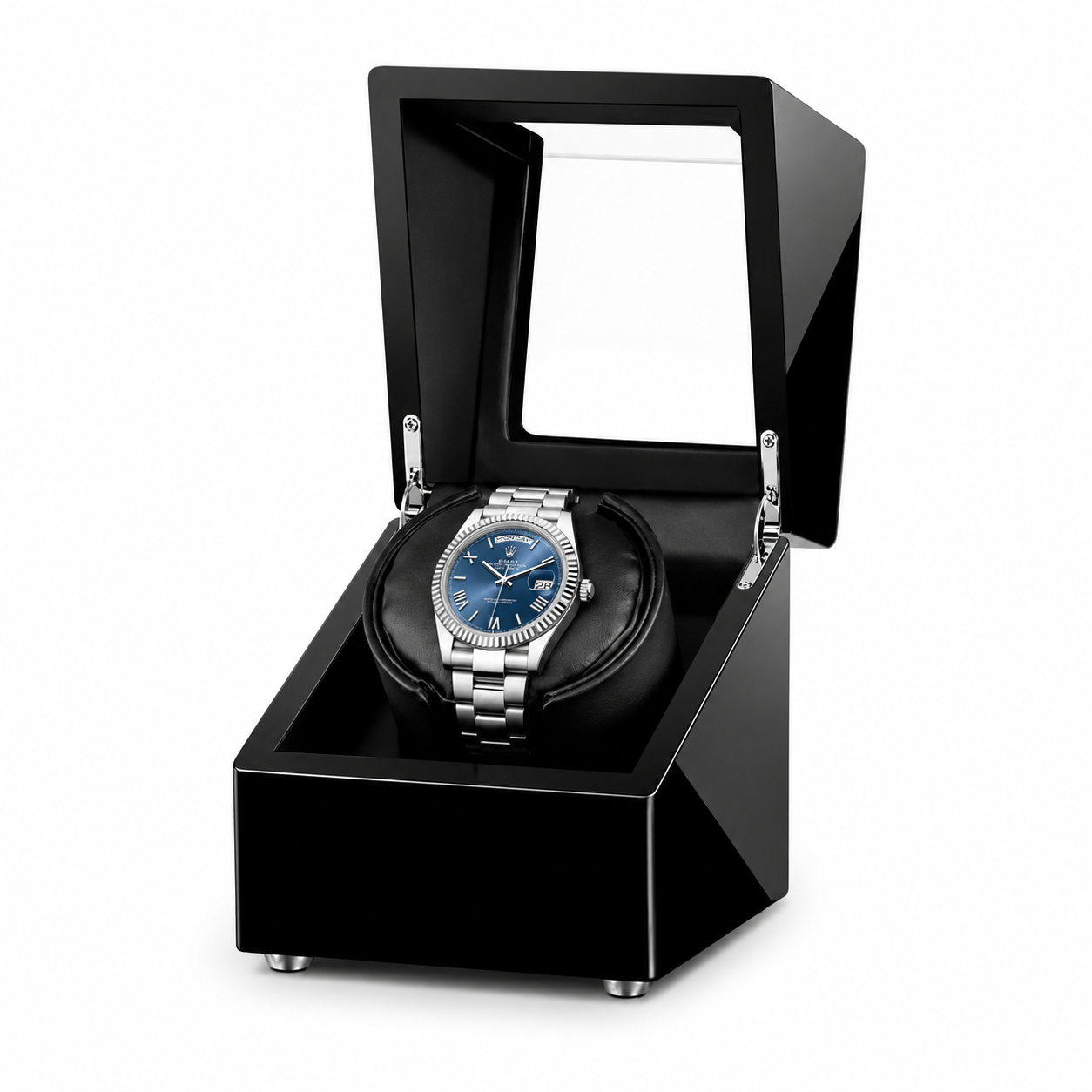
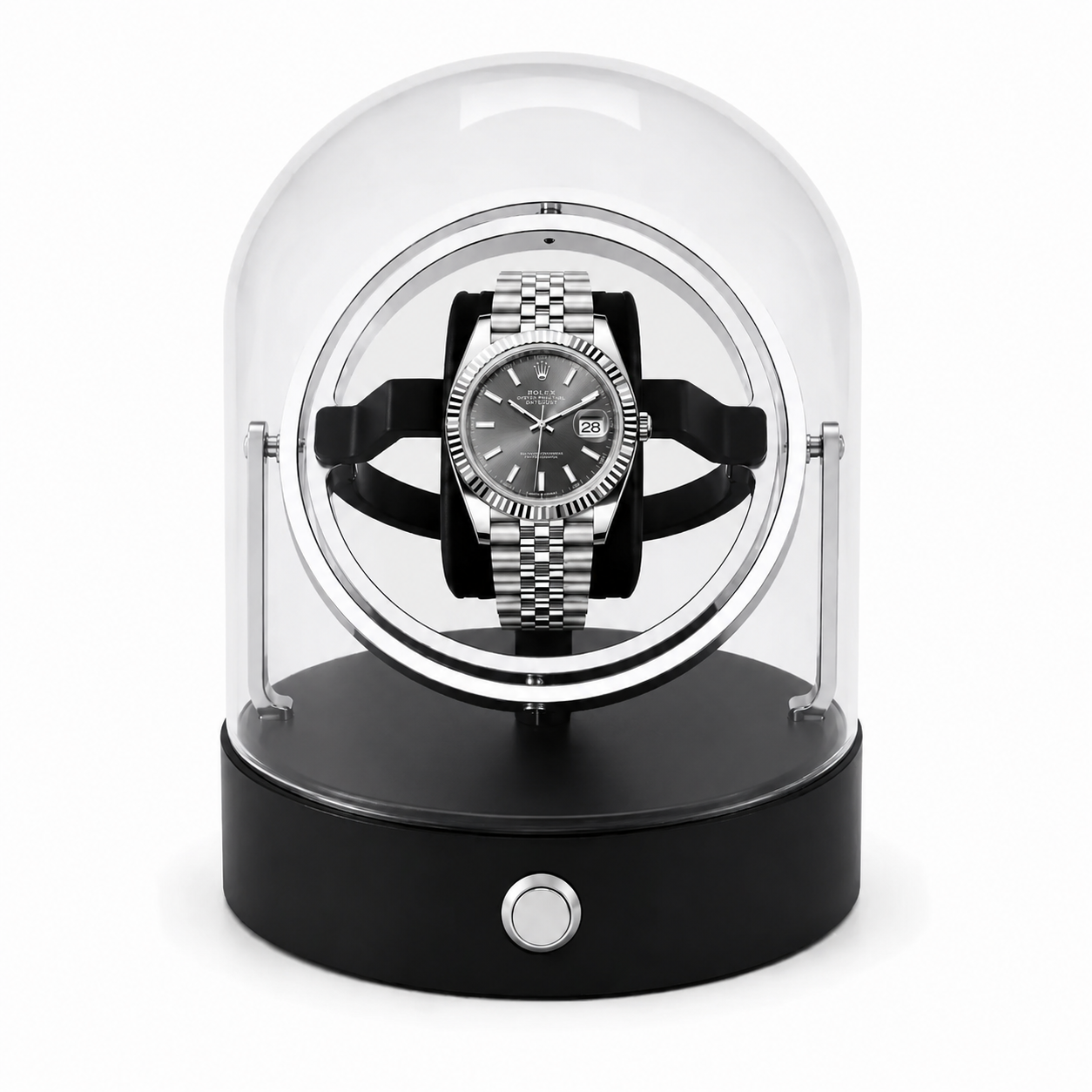
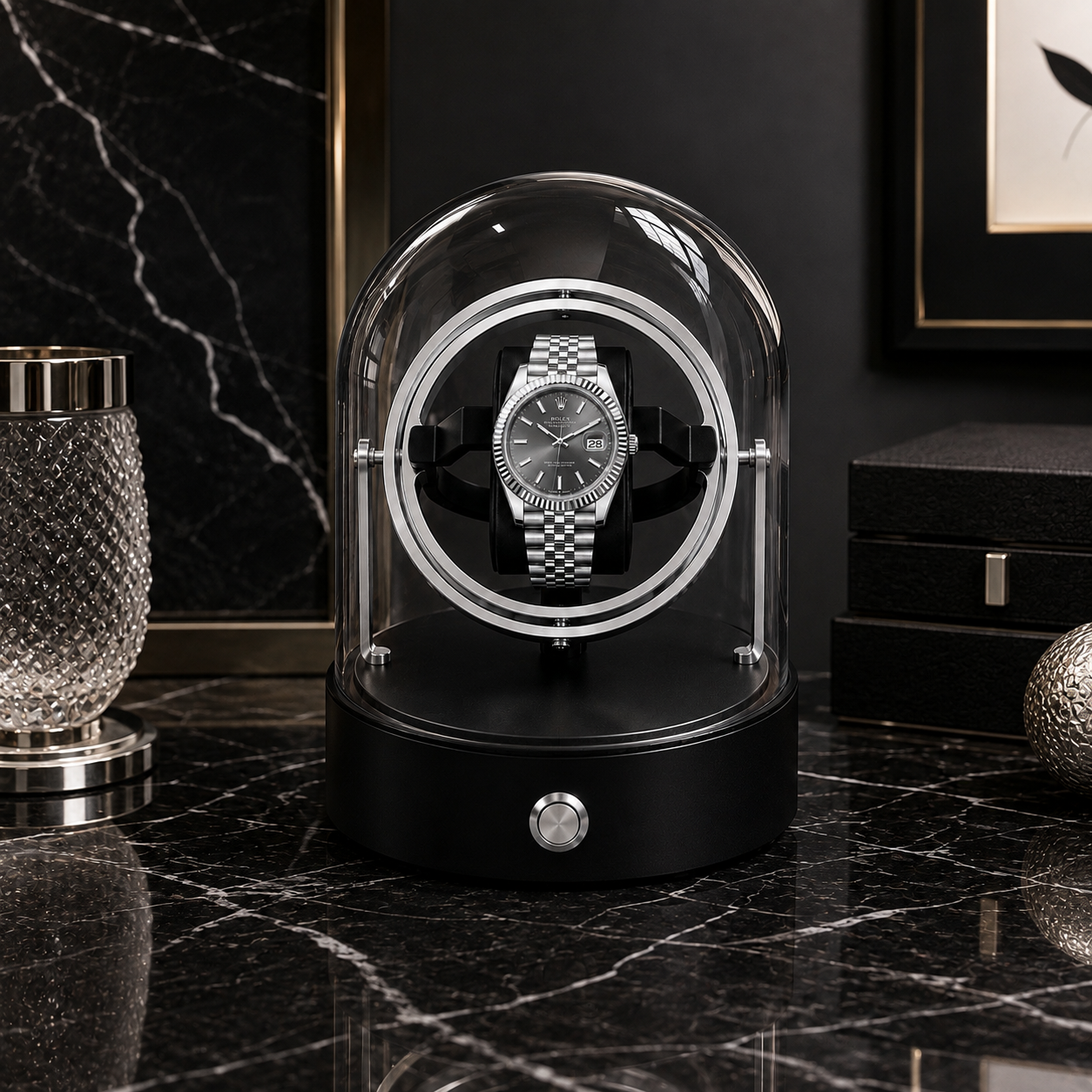
A single winder is ideal if you want a compact solution for one Rolex or one primary automatic watch.
It also works well for collectors who wear most of their collection regularly but want to keep one particular watch running.
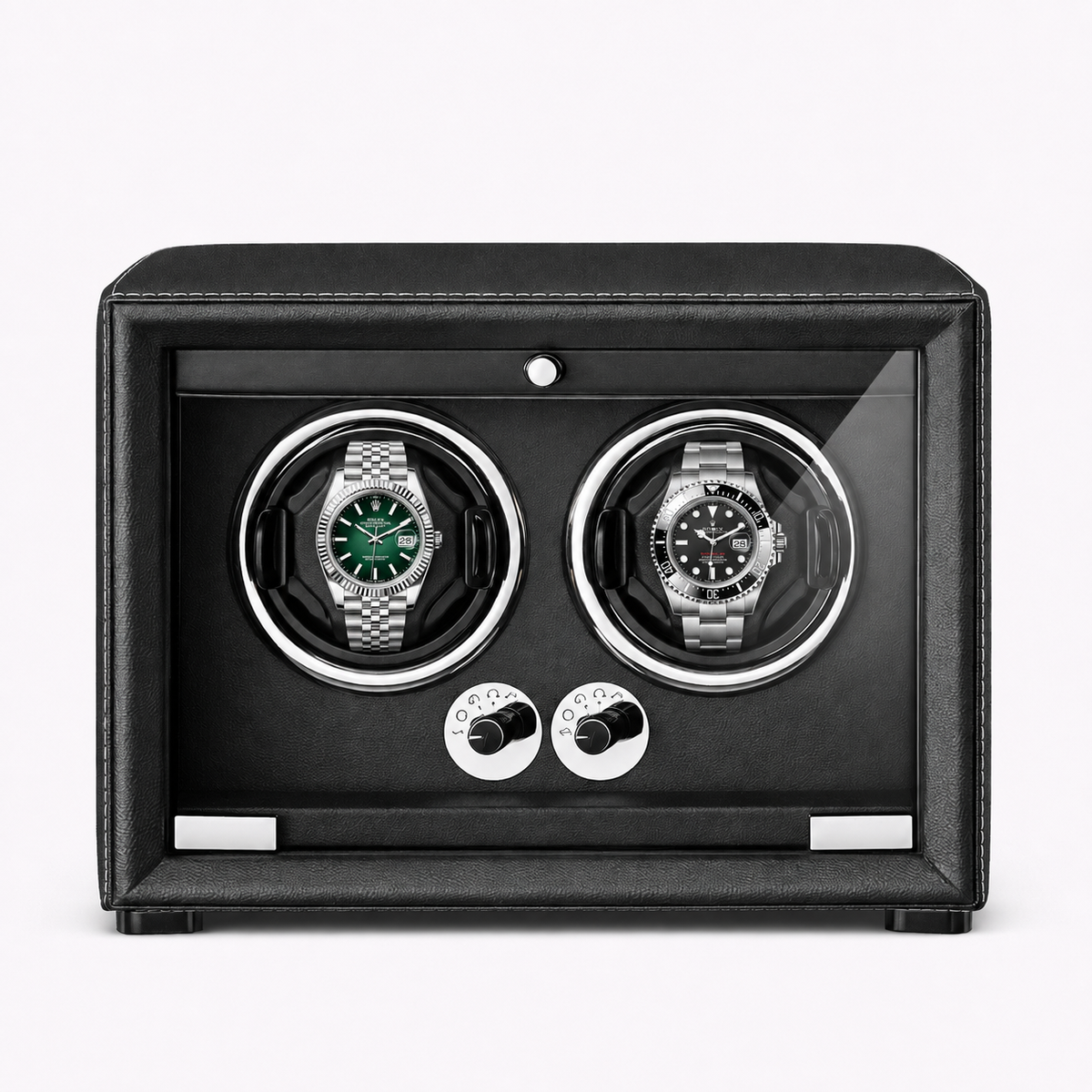
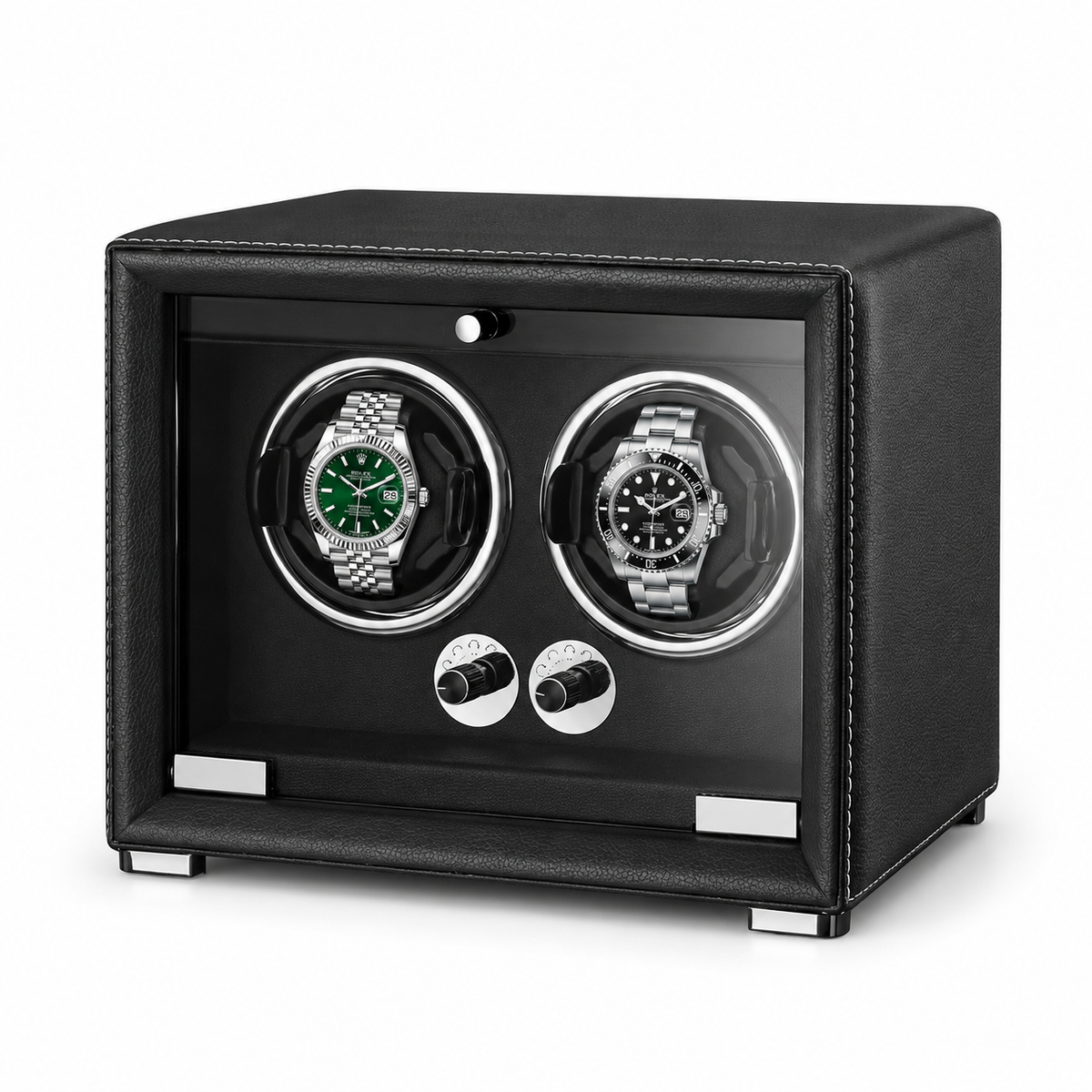
Double Watch Winder
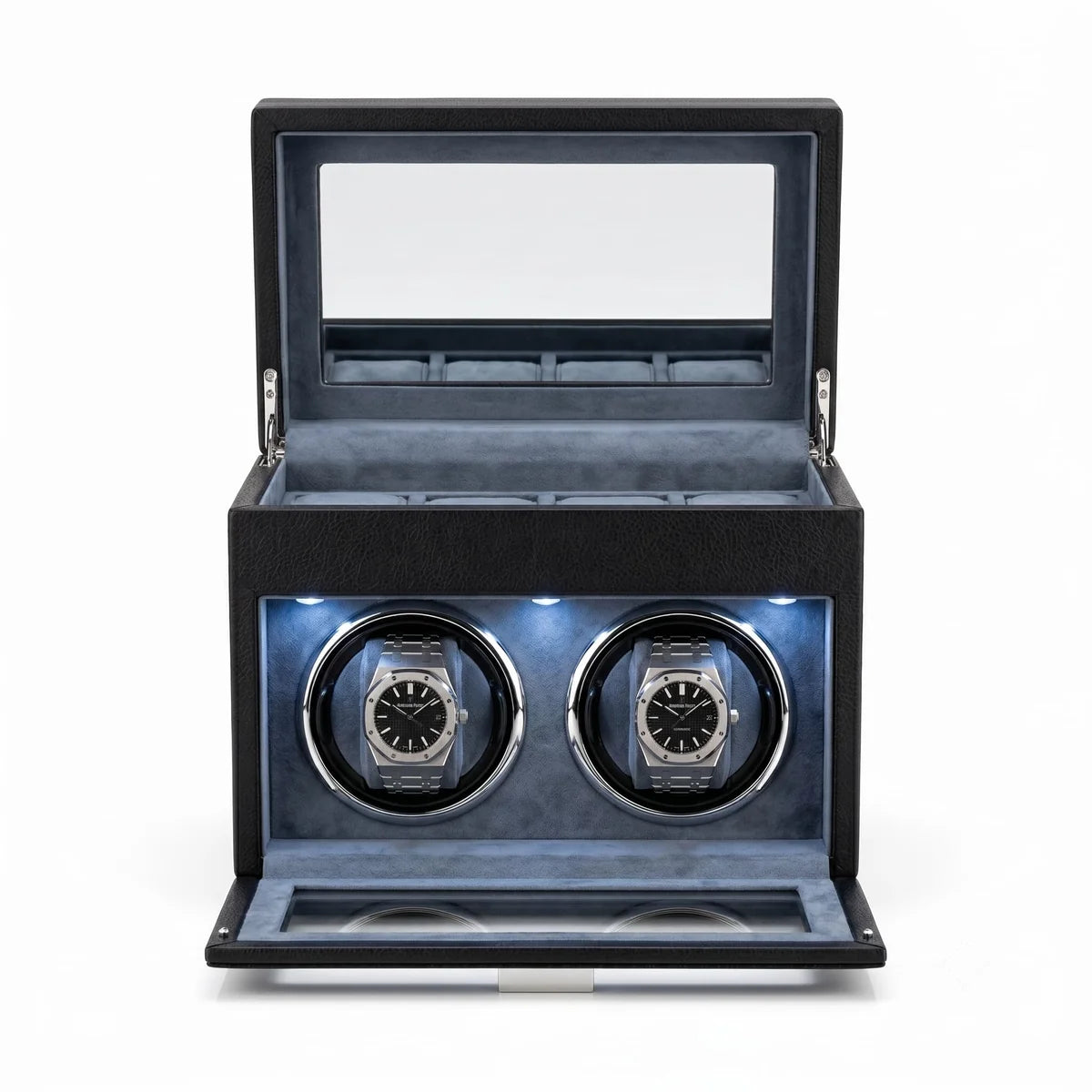
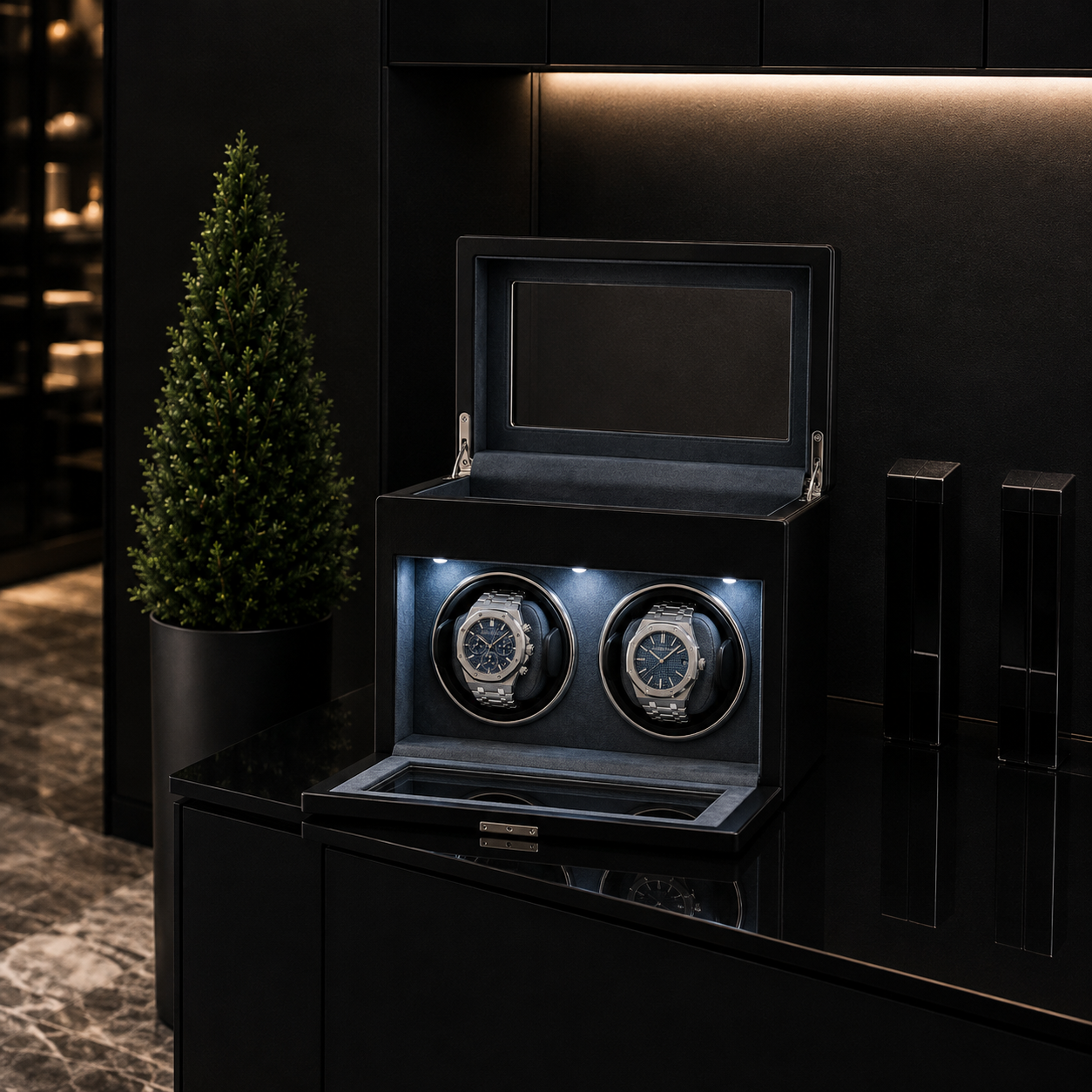
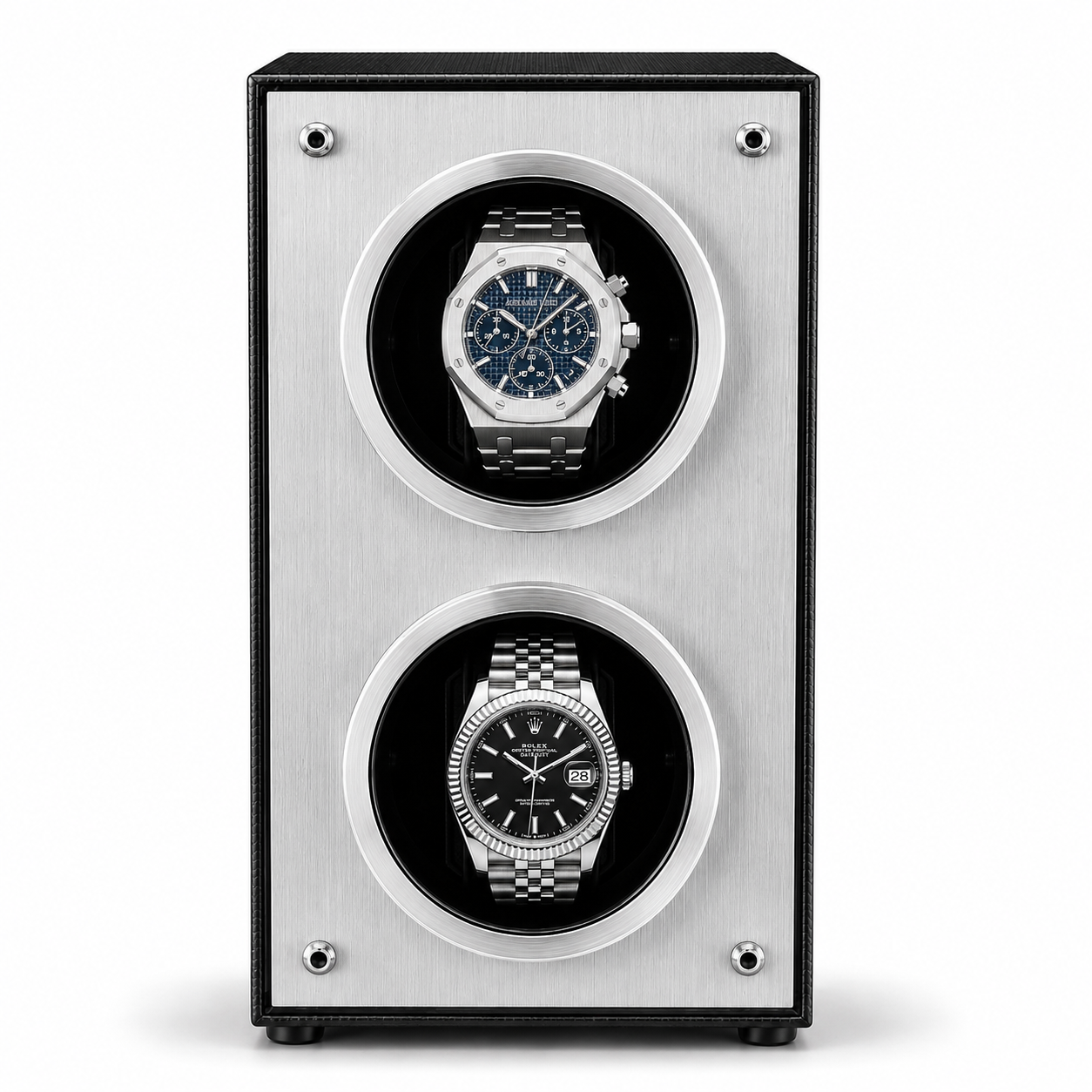
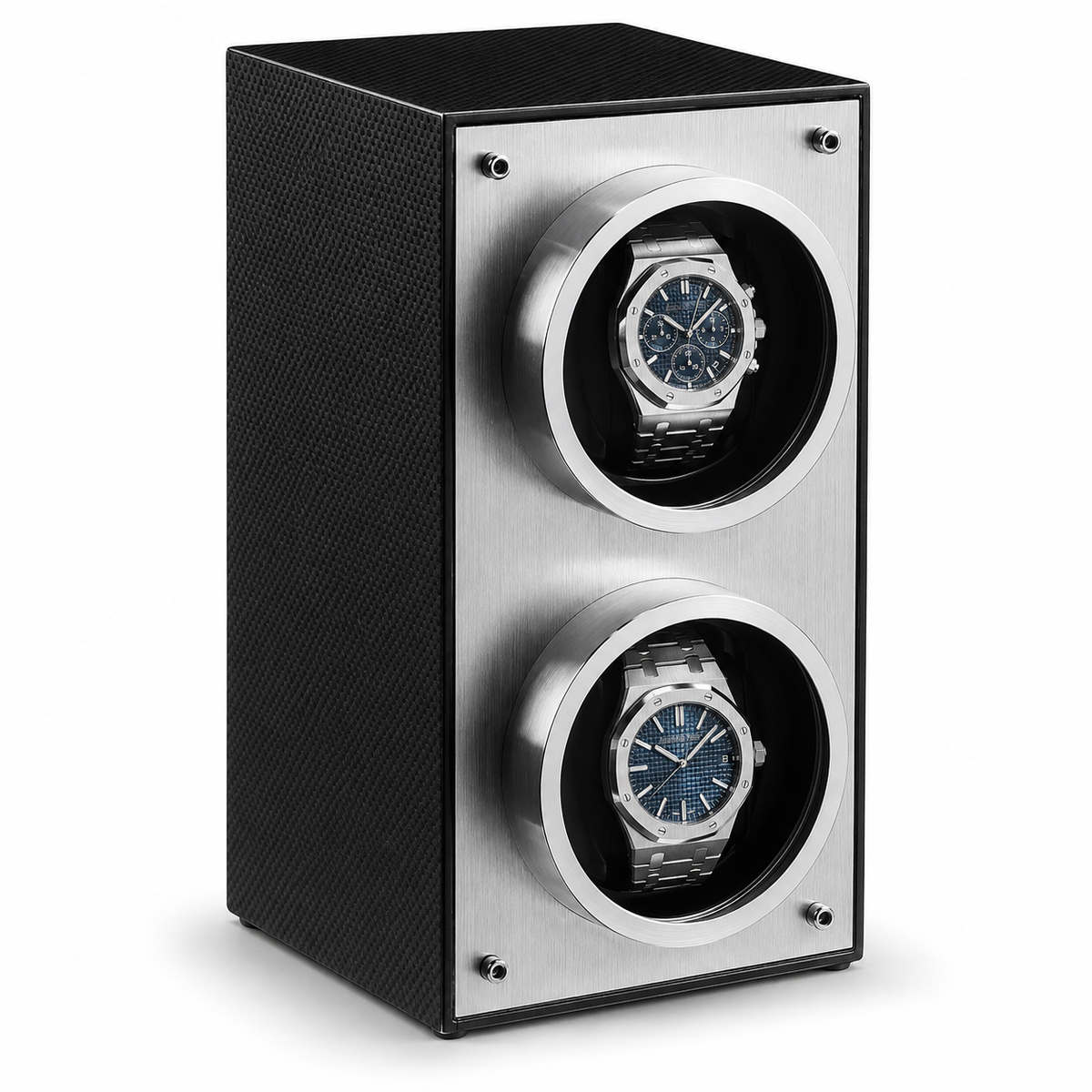
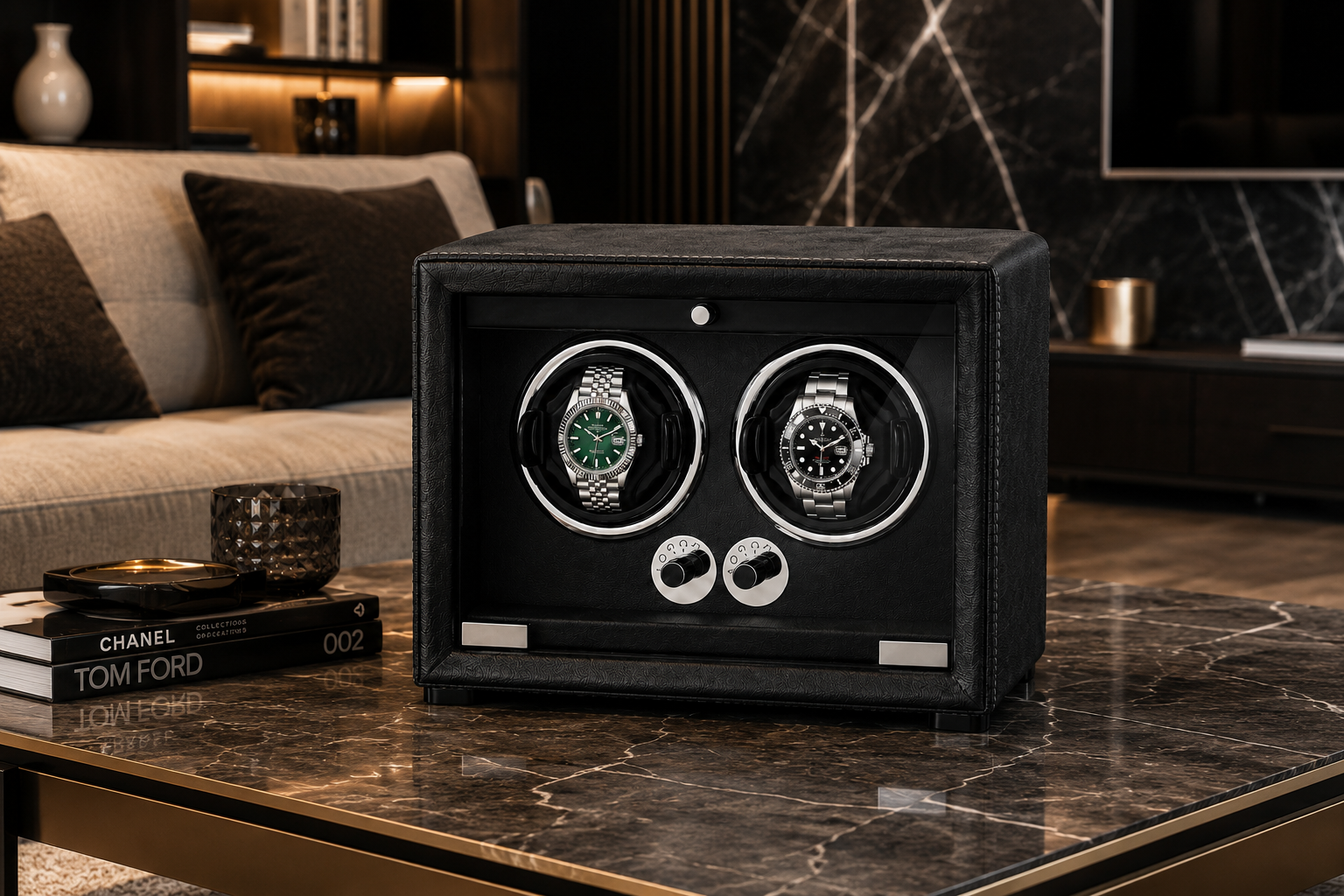
A double watch winder is a practical option for collectors rotating between two automatic watches.
Independent controls are preferable when the two watches have different winding requirements.
Multi-Watch Winder
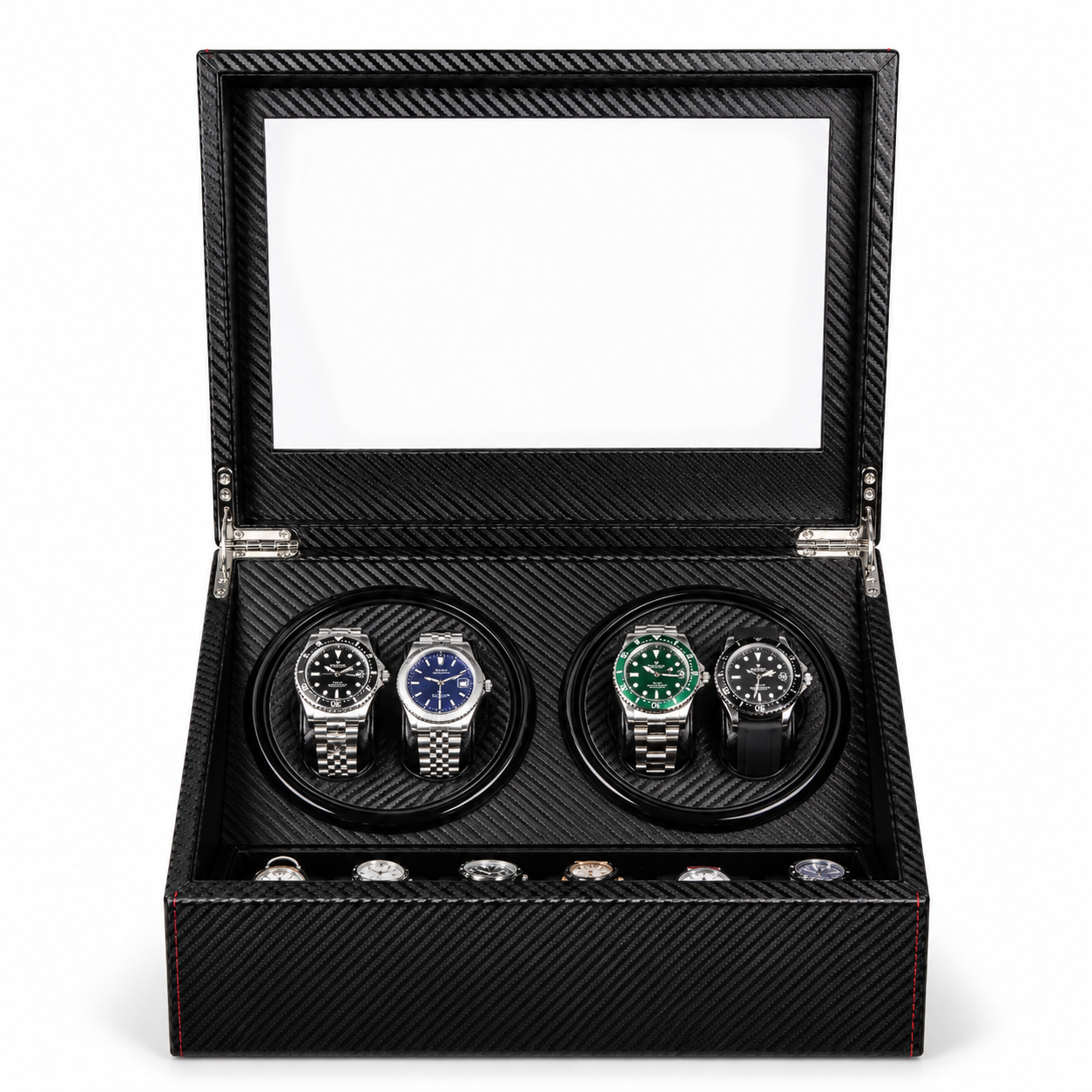
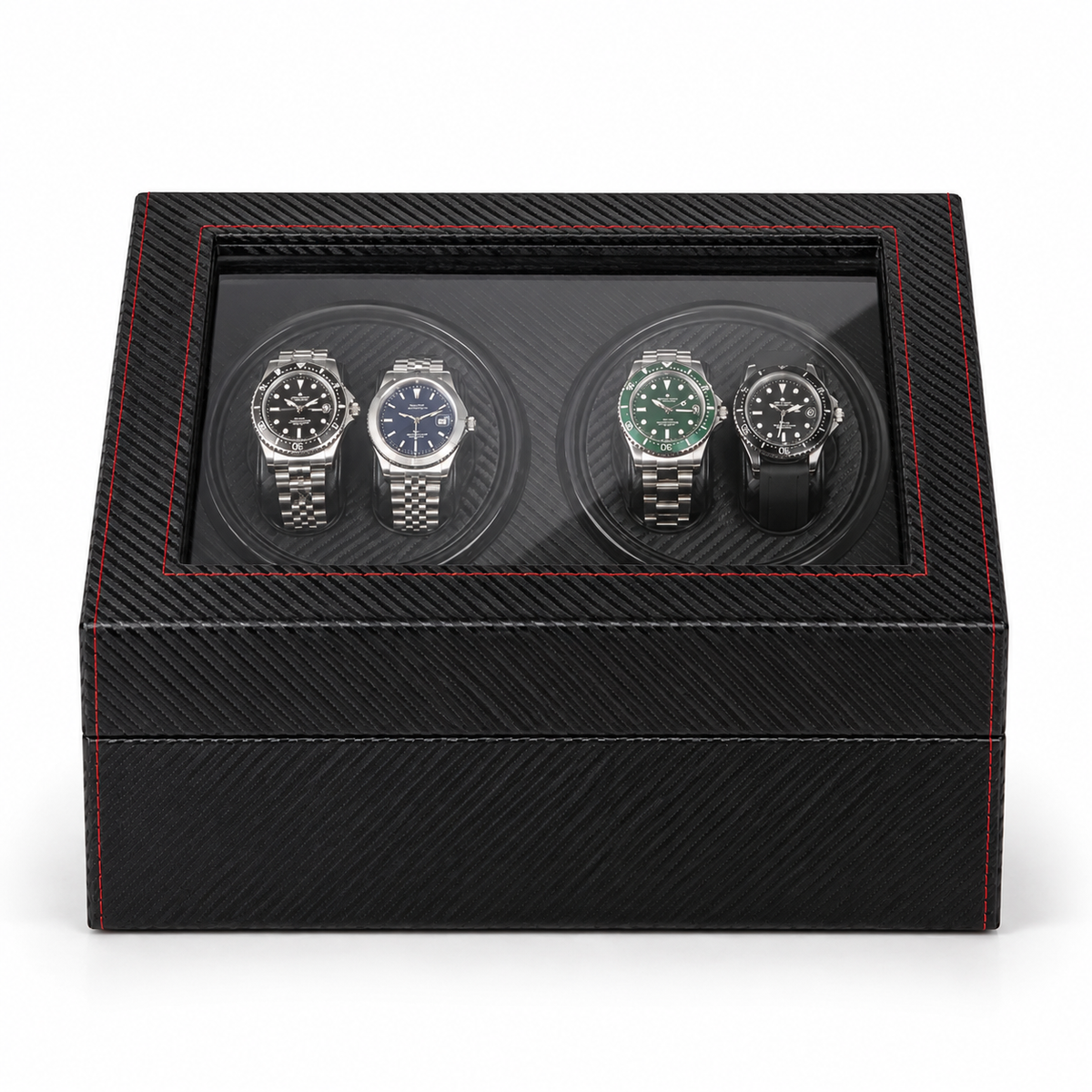
For larger collections, a four- or six-watch winder can consolidate several watches into one display.
Again, independently controlled winding positions provide greater flexibility when different movements are stored together.
Watch Winder for Rolex Submariner
The Submariner is one of the most recognizable automatic watches in the world, but not every Submariner contains the same movement.
Different generations have used different calibers.
Before setting up a watch winder for a Rolex Submariner, identify the watch reference and movement.
Then select the appropriate TPD and rotation program.
For collectors who alternate between a Submariner and another automatic watch, a double winder with independent settings can offer additional flexibility.
Watch Winder for Rolex Datejust
The Datejust has existed in numerous sizes, references, and generations.
For that reason, searching for a single universal “Rolex Datejust watch winder setting” can be misleading.
Identify the caliber first.
Once the movement is known, choose the corresponding winding direction and TPD program.
Watch Winder for Rolex GMT-Master II
A GMT-Master II is often rotated with other watches in a collection, making a winder convenient for owners who prefer to keep the watch running between wears.
As with other Rolex collections, verify the exact movement rather than selecting settings based solely on the model name.
Watch Winder for Rolex Daytona
A Daytona should also be treated according to its specific movement and reference.
Collectors should avoid assuming that winding requirements for a Submariner, Datejust, or other Rolex automatically apply to a Daytona.
Movement-specific configuration remains the safest approach.
Best Watch Winder Features for a Rolex Collection
If you own several Rolex watches — or a mixed collection containing Rolex, Omega, Tudor, Breitling, TAG Heuer, and other automatic watches — prioritize flexibility.
| Feature | Why It Matters |
|---|---|
| Adjustable TPD | Accommodates different movement requirements |
| Multiple directions | Supports different winding directions |
| Rest cycles | Avoids unnecessary continuous rotation |
| Independent controls | Allows different watches to use different programs |
| Adaptive pillows | Accommodates different bracelets and wrist sizes |
| Quiet motor | Useful for bedrooms and offices |
| Secure construction | Keeps valuable watches stable |
| Appropriate capacity | Allows room for the collection to grow |
ChronoVelar Watch Winders for Rolex Owners
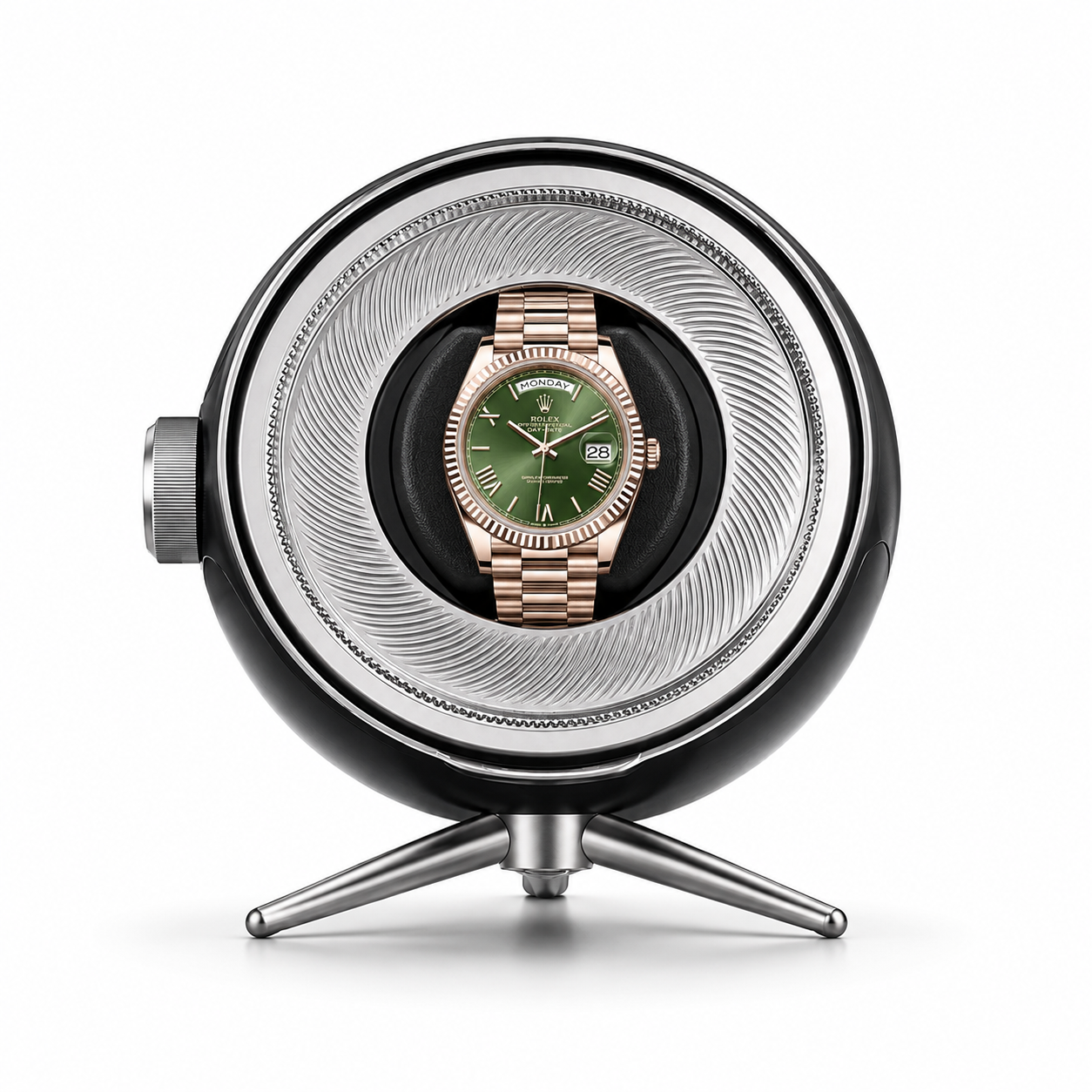
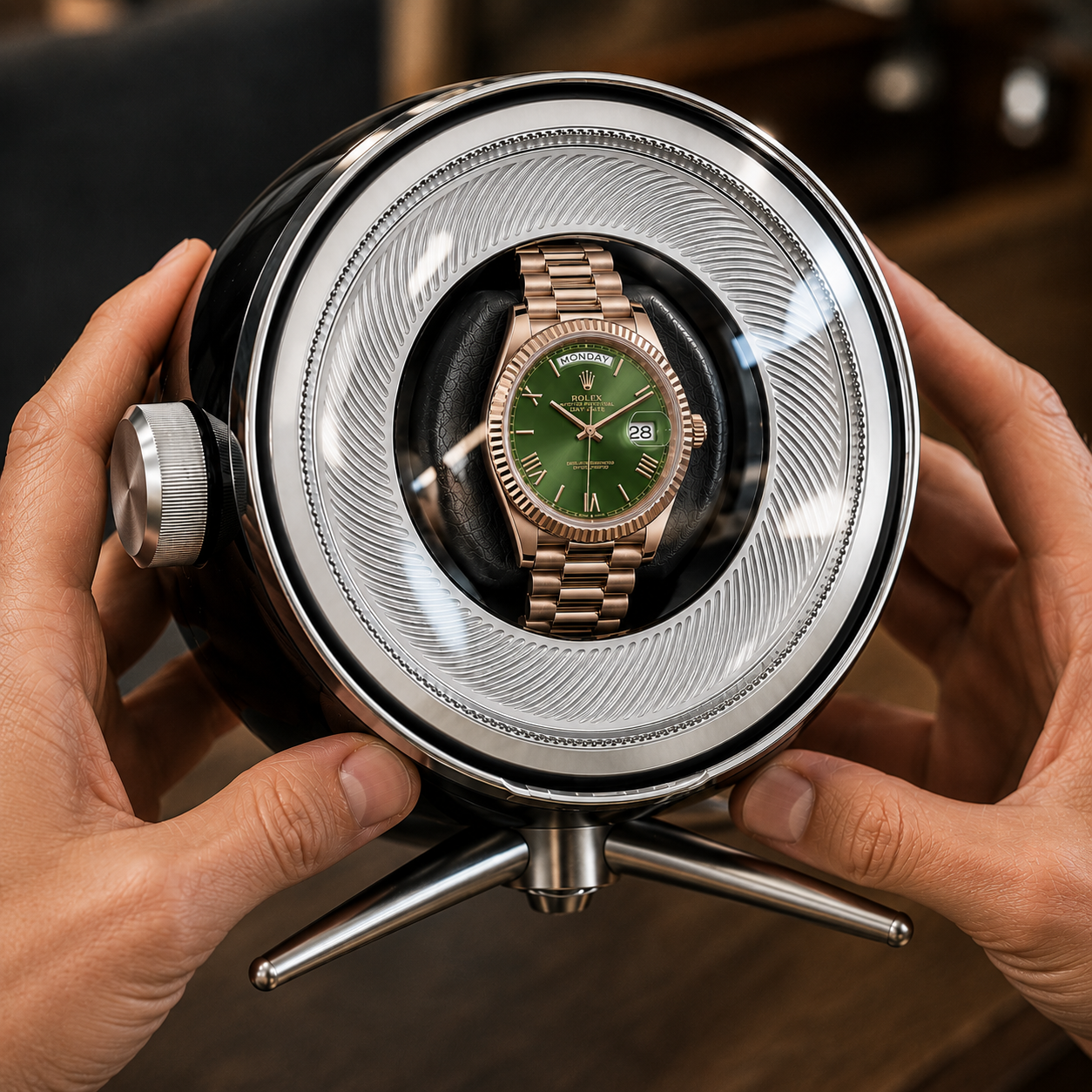
ChronoVelar offers watch winders for different collection sizes, including single, double, and multi-watch configurations.
Depending on the model, features may include adjustable winding programs, multiple rotation directions, independent winding positions, adaptive watch pillows, integrated lighting, and leather or wood finishes.
When choosing a ChronoVelar winder for a Rolex, start with the technical requirements of the watch rather than appearance alone.
Once compatibility has been established, choose the capacity, materials, and design that best fit your collection and interior.
Final Thoughts
The best watch winder for a Rolex is not determined by the Rolex name alone.
Start by identifying the exact reference and caliber inside your watch. Then choose a winder capable of providing the appropriate TPD, rotation direction, rest cycles, and secure fit.
For collectors with multiple automatic watches, adjustable settings and independent winding positions offer additional flexibility.
Ultimately, a watch winder is a convenience rather than a requirement. Choosing one based on accurate movement specifications — rather than simply selecting the highest TPD or most expensive model — is the better approach for a Rolex collection.