Article: How Many Watch Winders Do You Need ? 1, 2, 4, 6 & 8-Watch Guide (2026)
How Many Watch Winders Do You Need ? 1, 2, 4, 6 & 8-Watch Guide (2026)
Buying a watch winder is relatively simple when you own one automatic watch.
It becomes more complicated when your collection starts growing.
Should you buy a single-watch winder for each watch? Is a double watch winder enough? Should you choose four winding positions now if you expect to add another watch next year?
The right answer depends on more than the number of watches you own.
You should choose your watch winder based on how many automatic watches actually need to remain wound, how often you rotate them, and whether they require different winding settings.
Here's how to choose between a 1, 2, 4, 6 or 8-watch winder.
Quick Answer: What Size Watch Winder Do You Need ?
Choose enough winding positions for the automatic watches you regularly rotate — not necessarily every watch you own.
As a practical starting point:
| Your Collection | Winder Size to Consider |
|---|---|
| 1 automatic watch | 1-watch winder |
| 2 automatic watches | 2-watch winder |
| 3–4 frequently worn automatics | 4-watch winder |
| 5–6 frequently worn automatics | 6-watch winder |
| 7–8 frequently worn automatics | 8-watch winder |
| Mixed automatic + quartz/manual collection | Count only automatics that benefit from winding |
A collector with eight watches does not automatically need an eight-watch winder.
If only three are automatic and regularly rotated, a four-watch winder could be the more practical choice.
Start by Counting Your Automatic Watches
A watch winder is primarily designed for automatic mechanical watches, so your total collection size can be misleading.
Imagine a six-watch collection containing:
- 3 automatic watches
- 1 manual-winding mechanical watch
- 2 quartz watches
You don't necessarily need six winding positions.
The three automatic watches are the relevant starting point.
Similarly, if you own five automatic watches but wear one every day, you may only need winding positions for the remaining watches in your rotation.
This distinction can prevent you from buying a much larger system than you actually need.
Who Should Choose a 1-Watch Winder ?
A single watch winder is generally the best choice for someone who owns one primary automatic watch or wants a dedicated display for a specific timepiece.
Single-watch winders offer several advantages:
- Compact footprint
- Easy placement on a dresser, desk or shelf
- Dedicated presentation
- Simple setup
- Lower entry cost
- Easy to add another individual winder later
This format makes particular sense if you own one Rolex, Omega, Tudor, Breitling, TAG Heuer or another automatic watch that regularly spends time off your wrist.
Best for a Dedicated Watch Display
Some collectors deliberately prefer individual winders even after their collection grows.
Why?
Because each watch receives its own display.
A dedicated single-watch winder can also make it easier to place different watches in different rooms or locations.
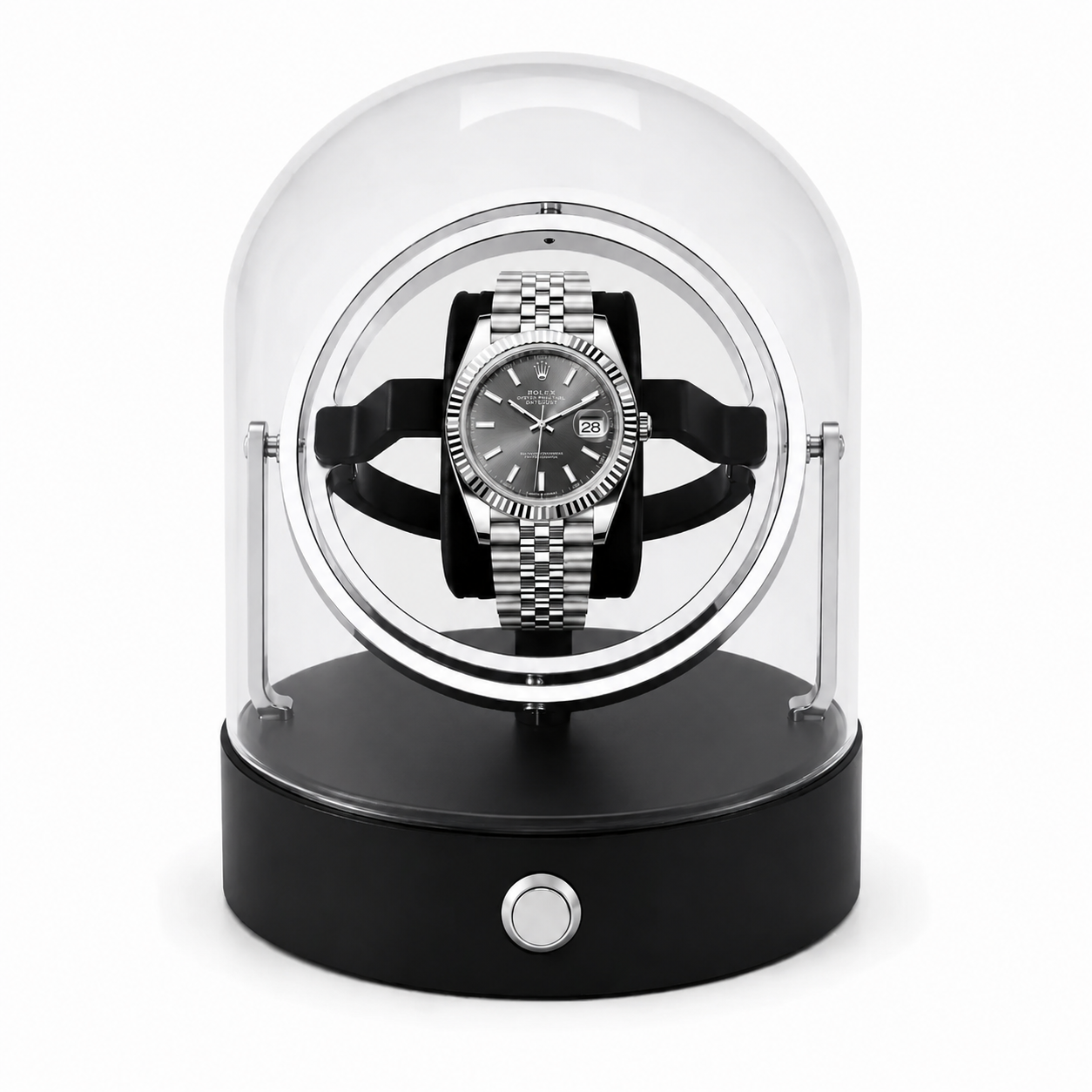
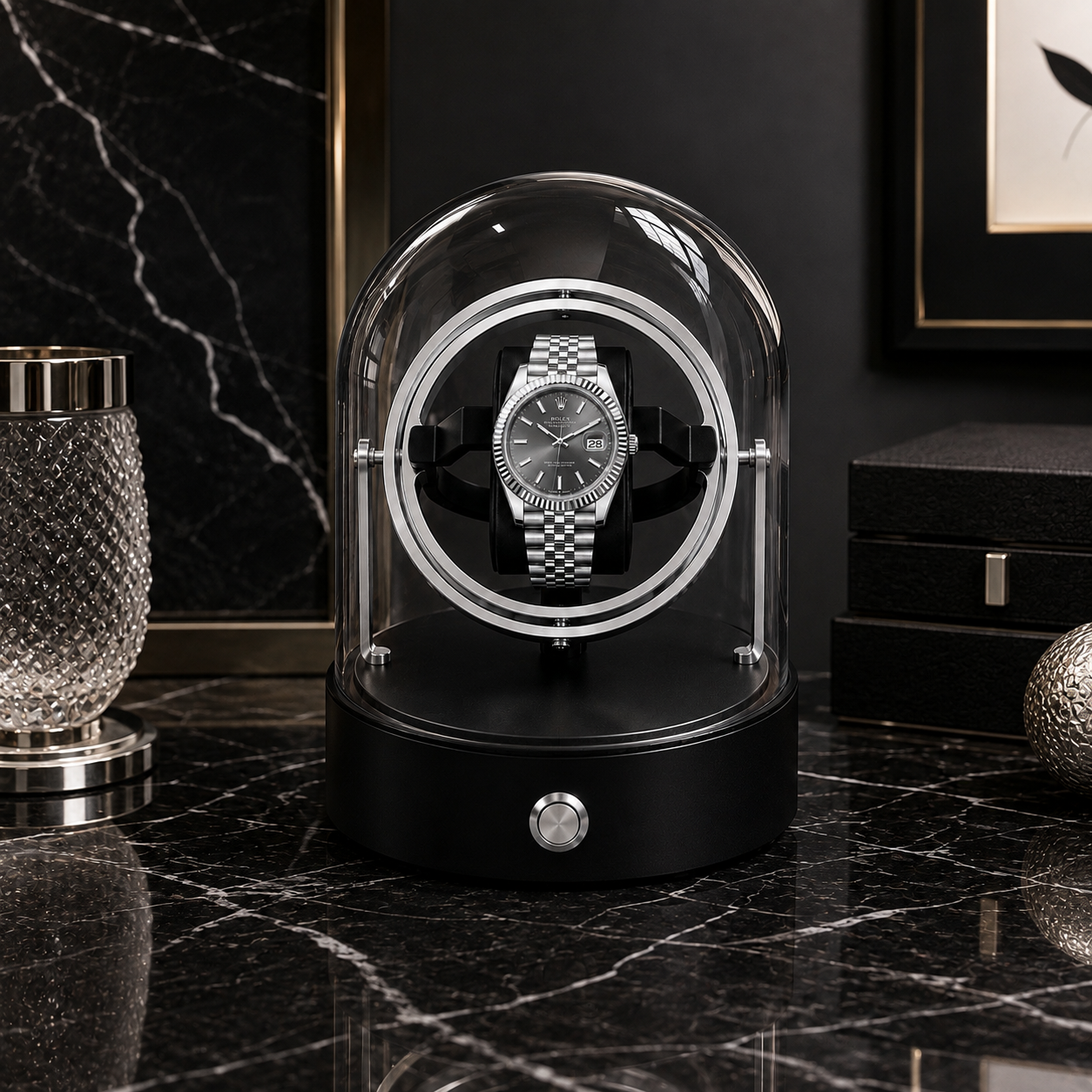
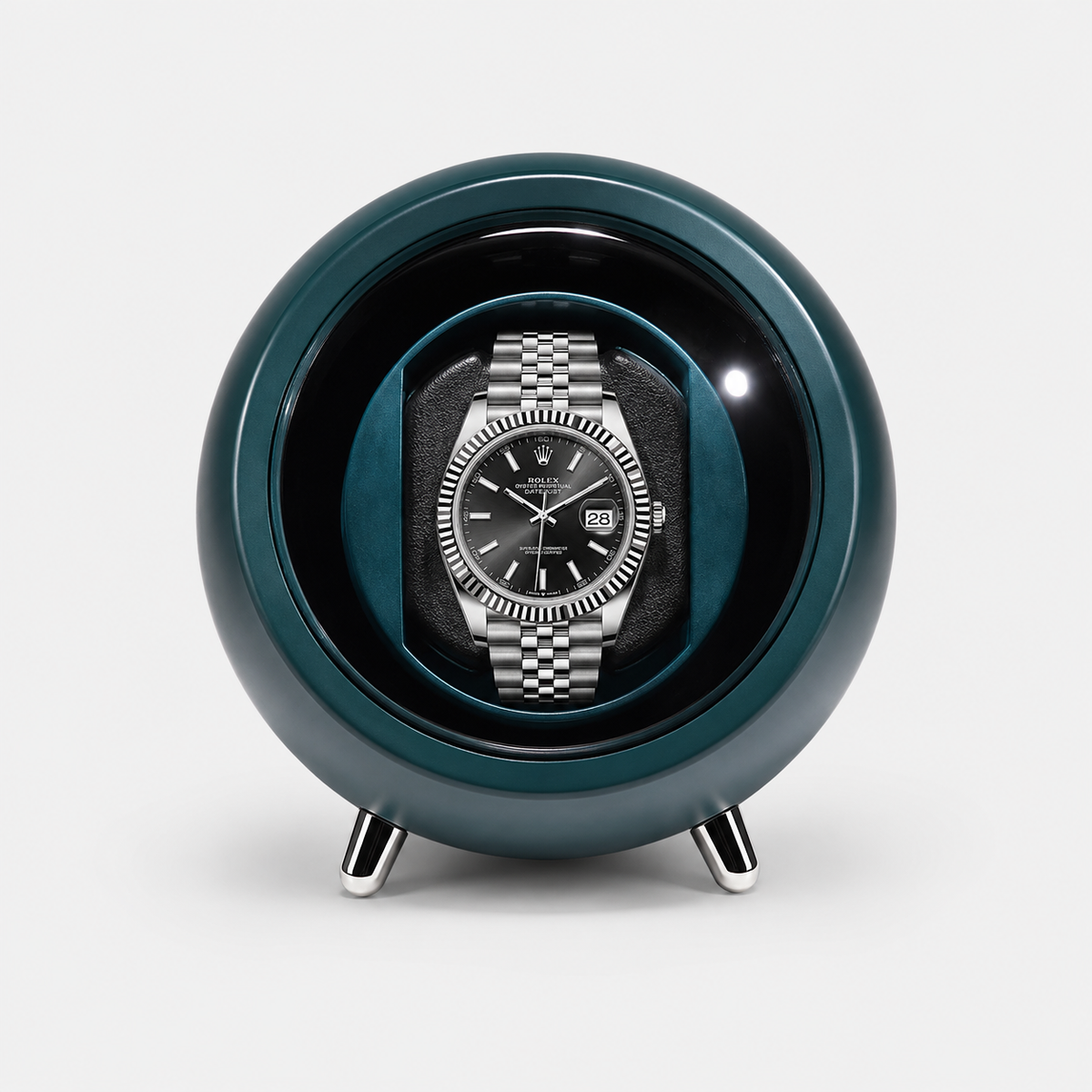
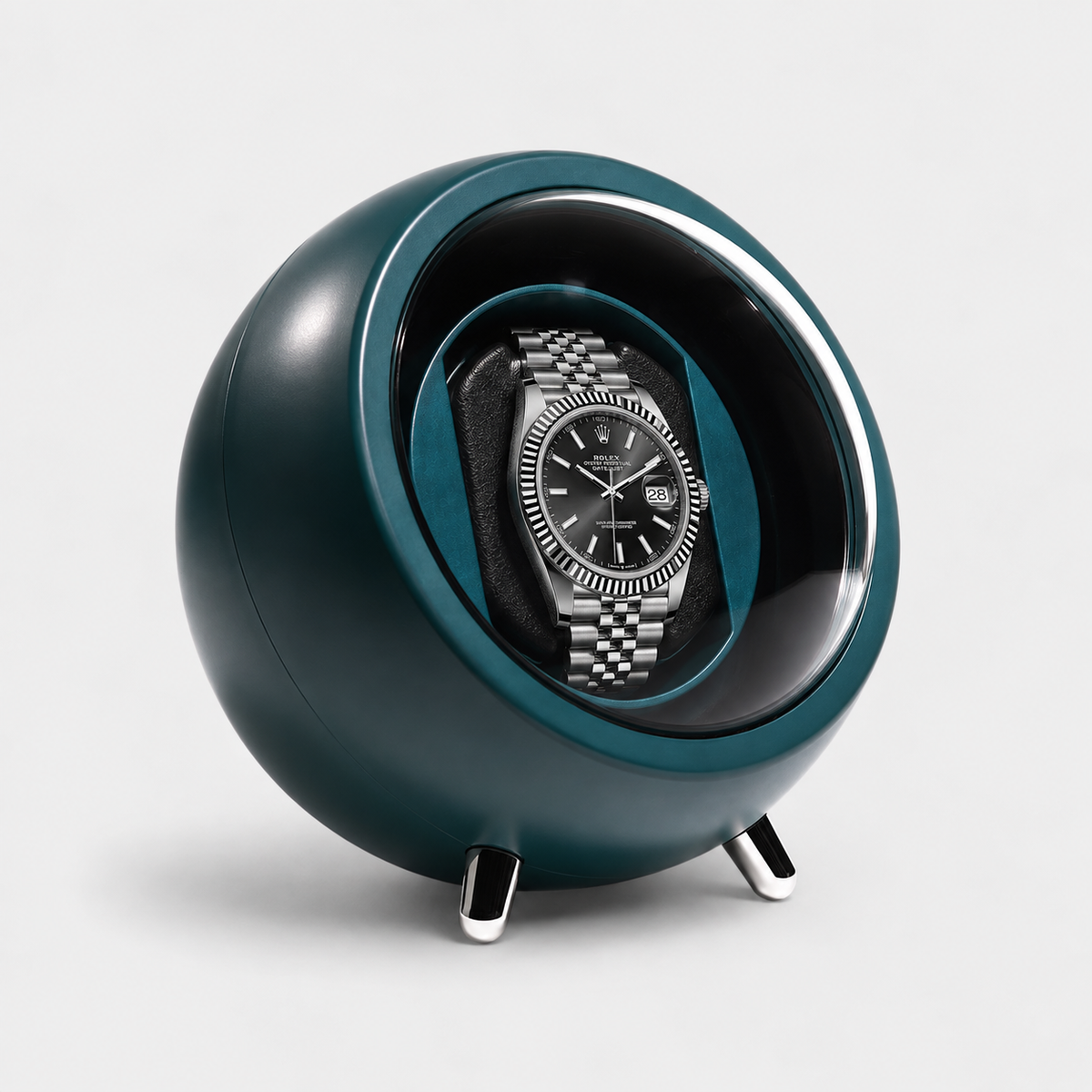
ChronoVelar Single-Watch Options
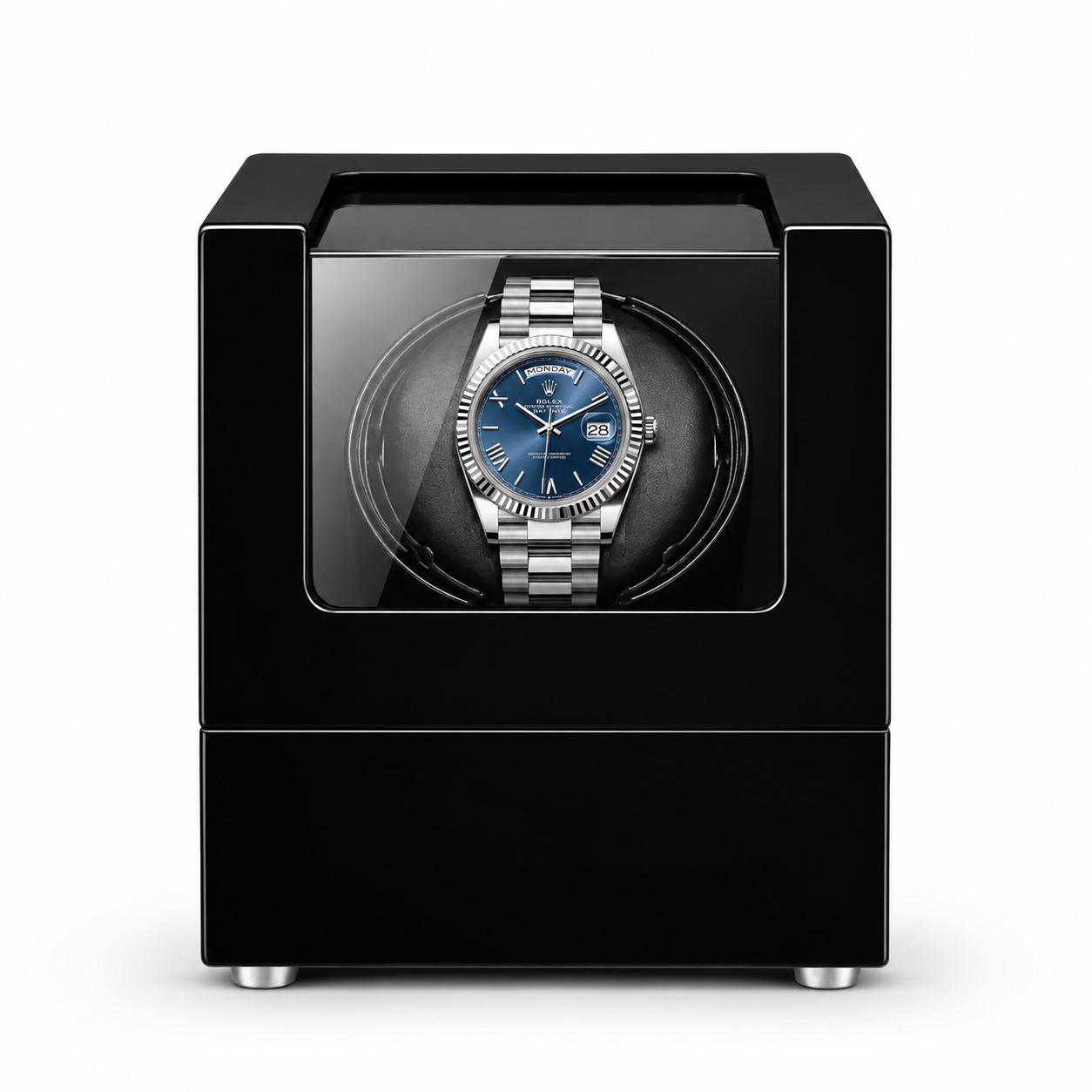
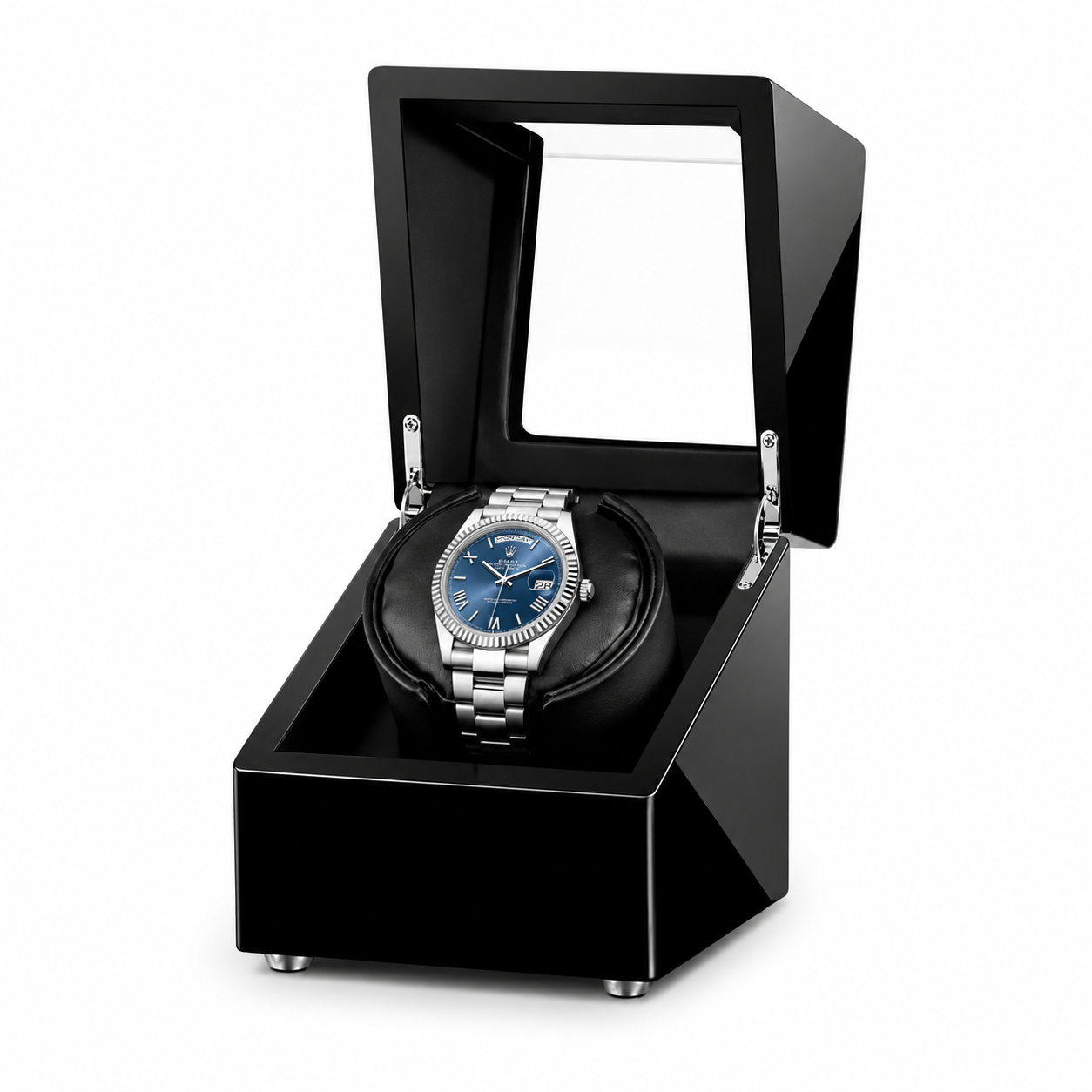
For a traditional luxury presentation, The Classic Winder | Boston provides a dedicated single-watch format.
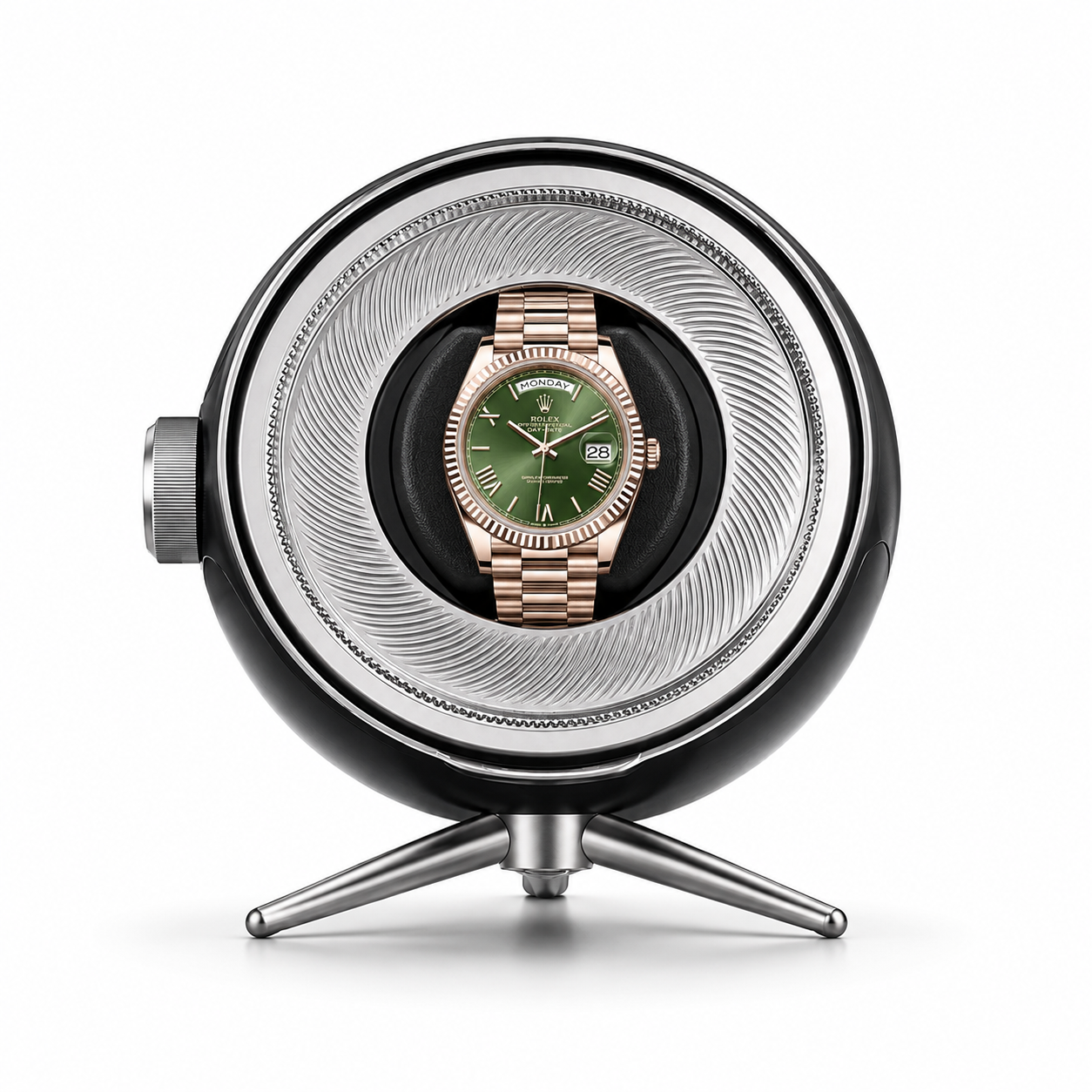
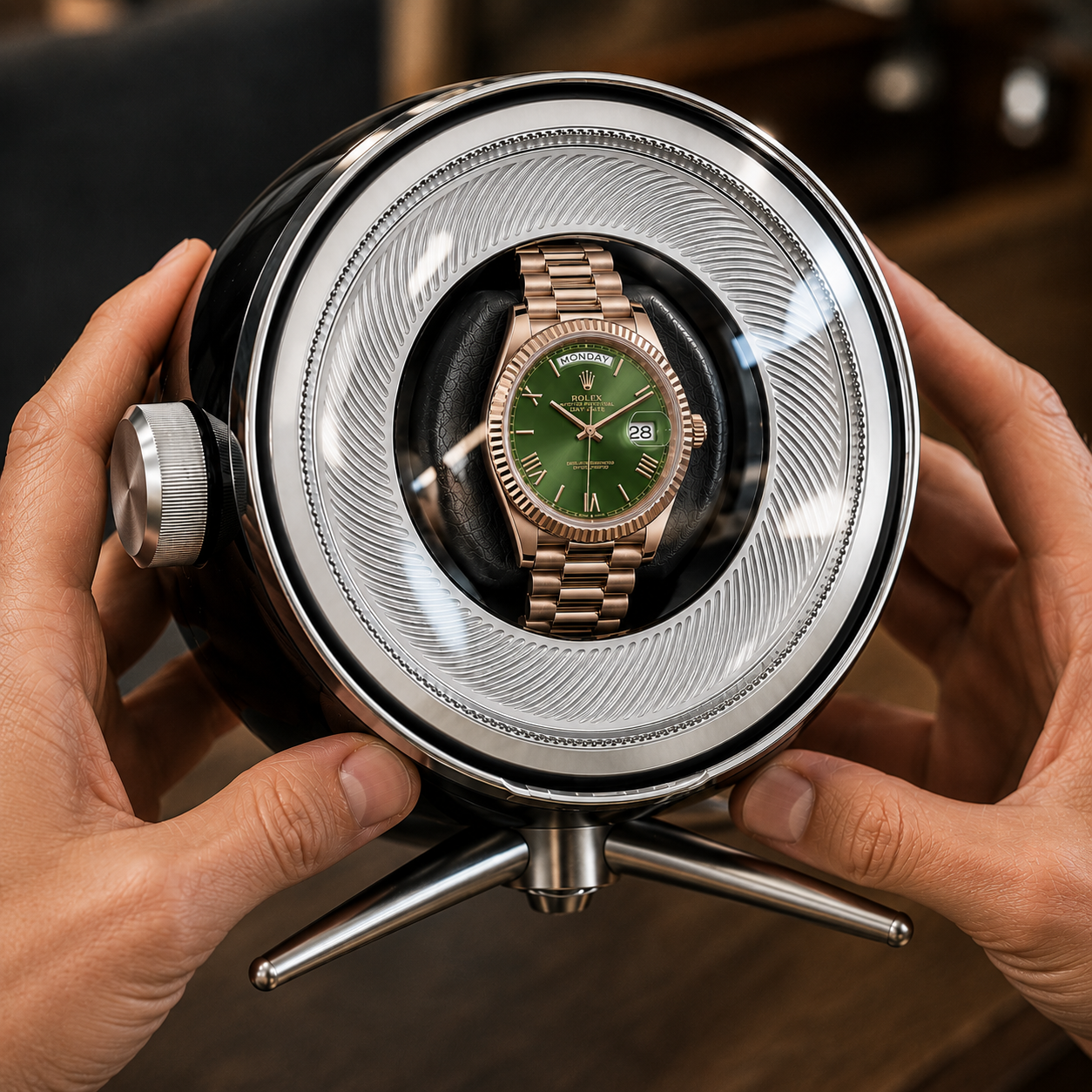
For a more contemporary aesthetic, The Tripod Winder provides another compact solution.
The better choice depends on your interior and how prominently you want the watch displayed.
Who Should Choose a 2-Watch Winder ?
A two-watch winder is ideal for collectors who regularly alternate between two automatic watches or want room for their next acquisition.
This is arguably one of the most versatile configurations.
Consider a collection such as:
Rolex Datejust + Omega Seamaster
or:
TAG Heuer Carrera + Tudor Black Bay
or:
Breitling Navitimer + Rolex Submariner
Two watches from different manufacturers may contain movements with different winding requirements.
For that reason, independent winding control becomes particularly valuable in a two-watch system.
Why Independent Controls Matter
TPD and rotation direction depend on the movement inside the watch rather than simply the brand.
Your Rolex and Omega should not automatically be treated as though they require identical winding programs.
For mixed collections, look for individually configurable winding positions whenever possible.
Our Watch Winder TPD Guide: Settings by Brand & Watch Movement (2026) explains this in greater detail.
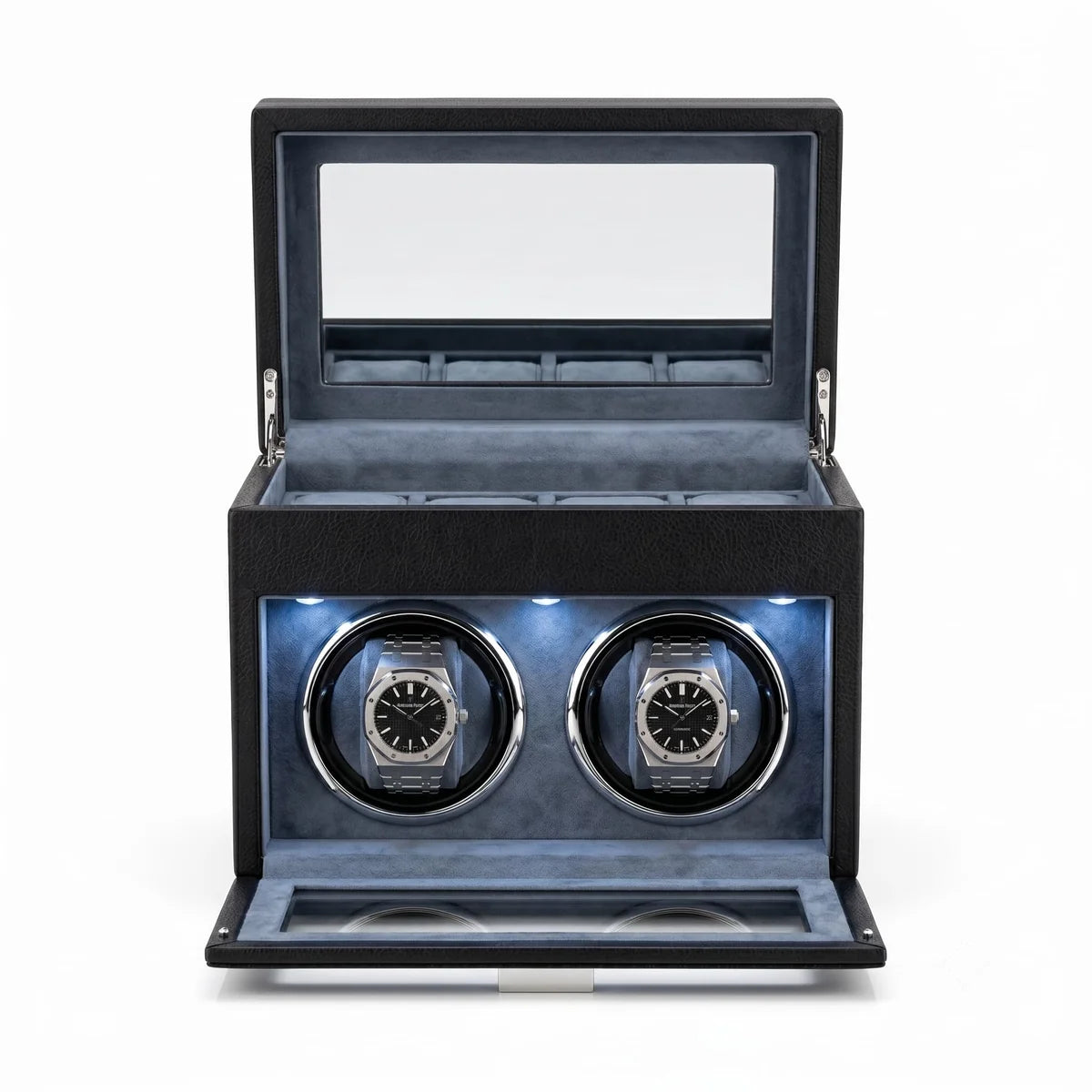
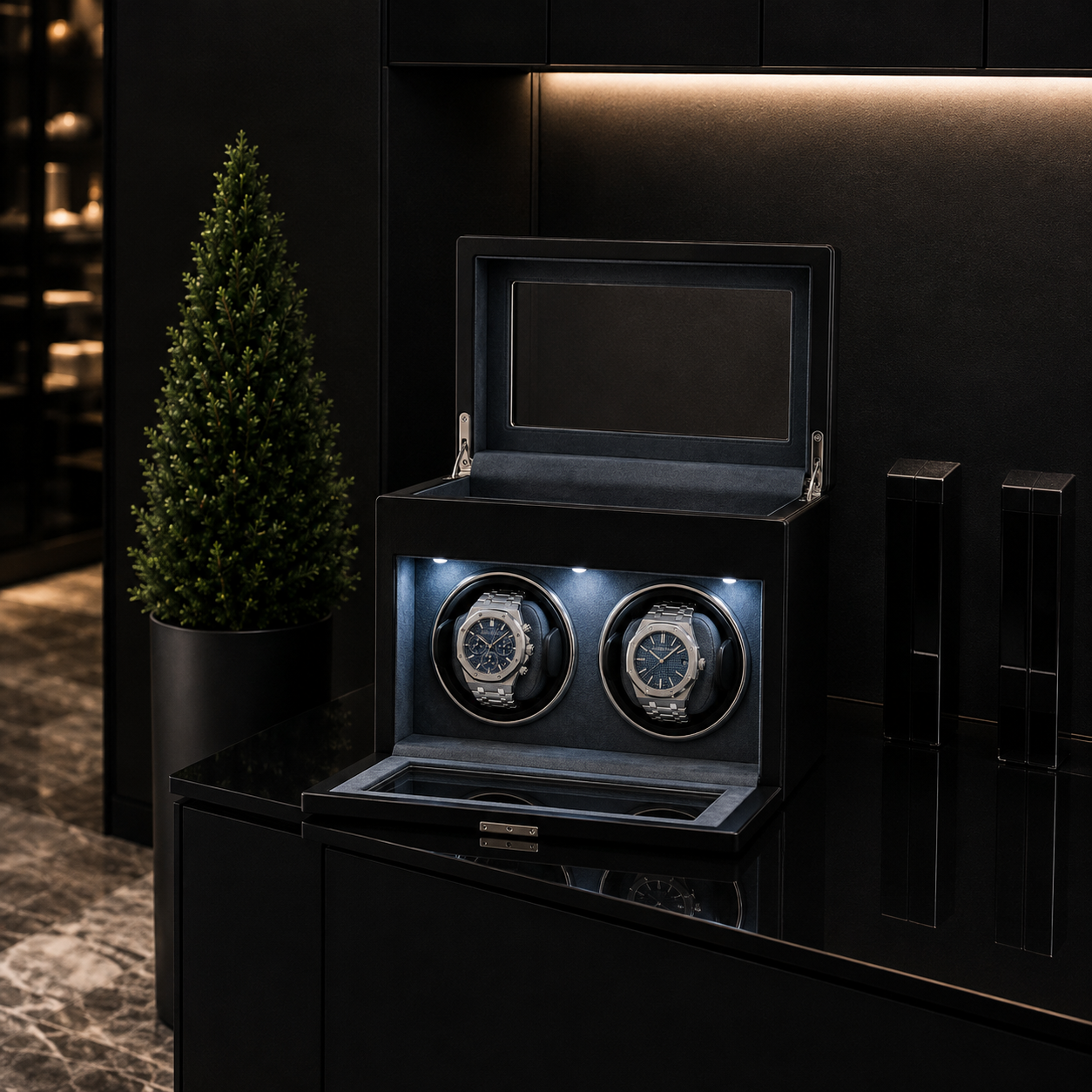
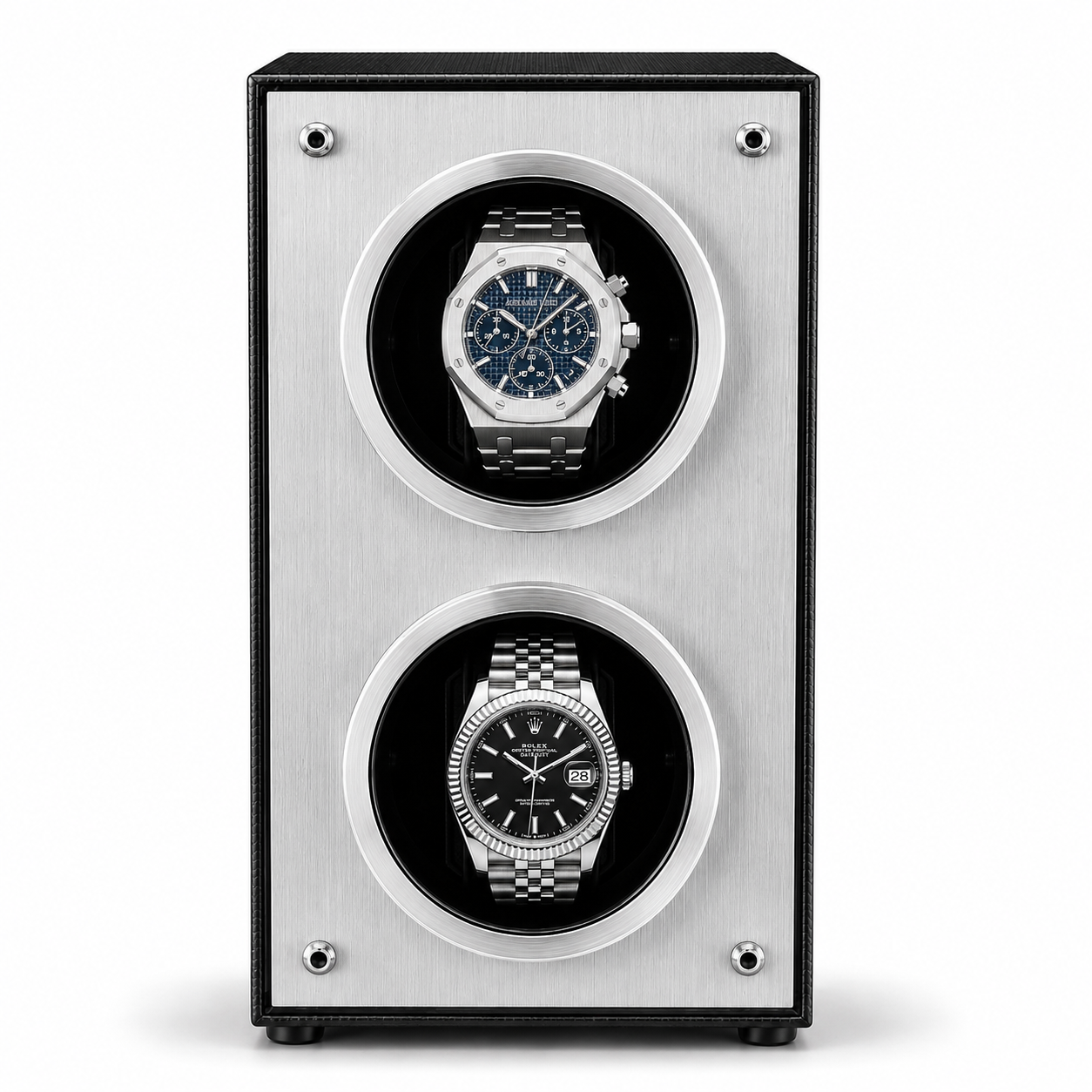
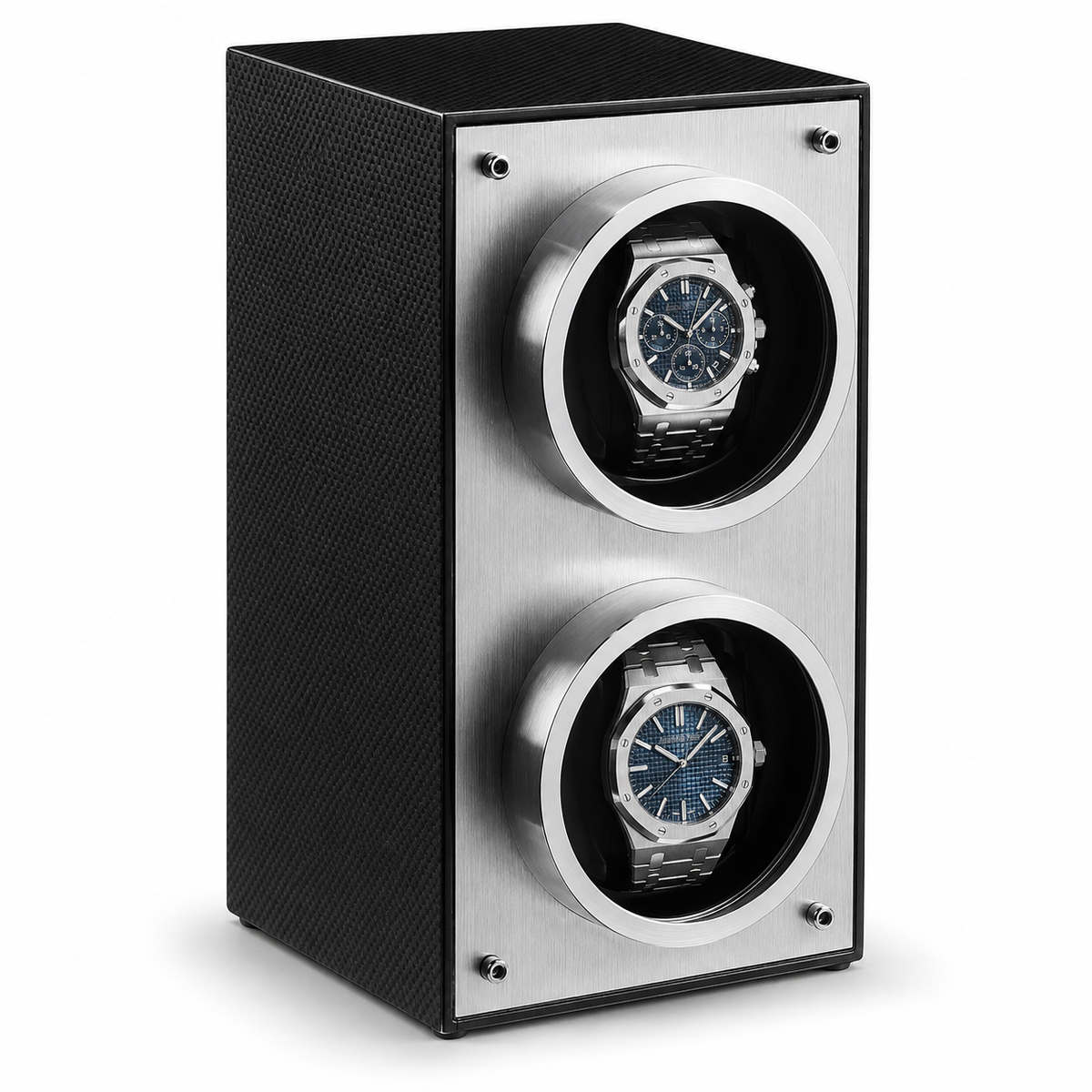
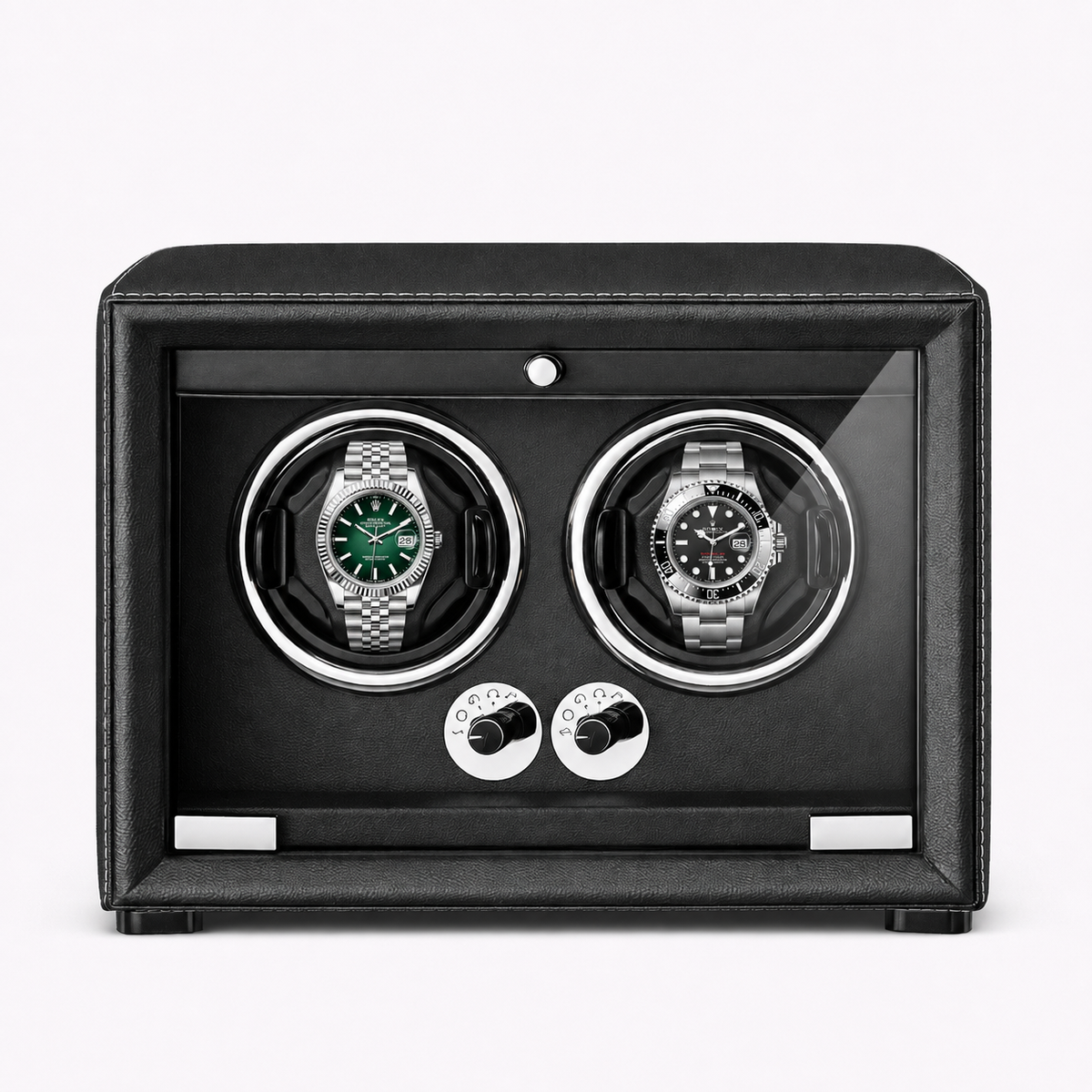
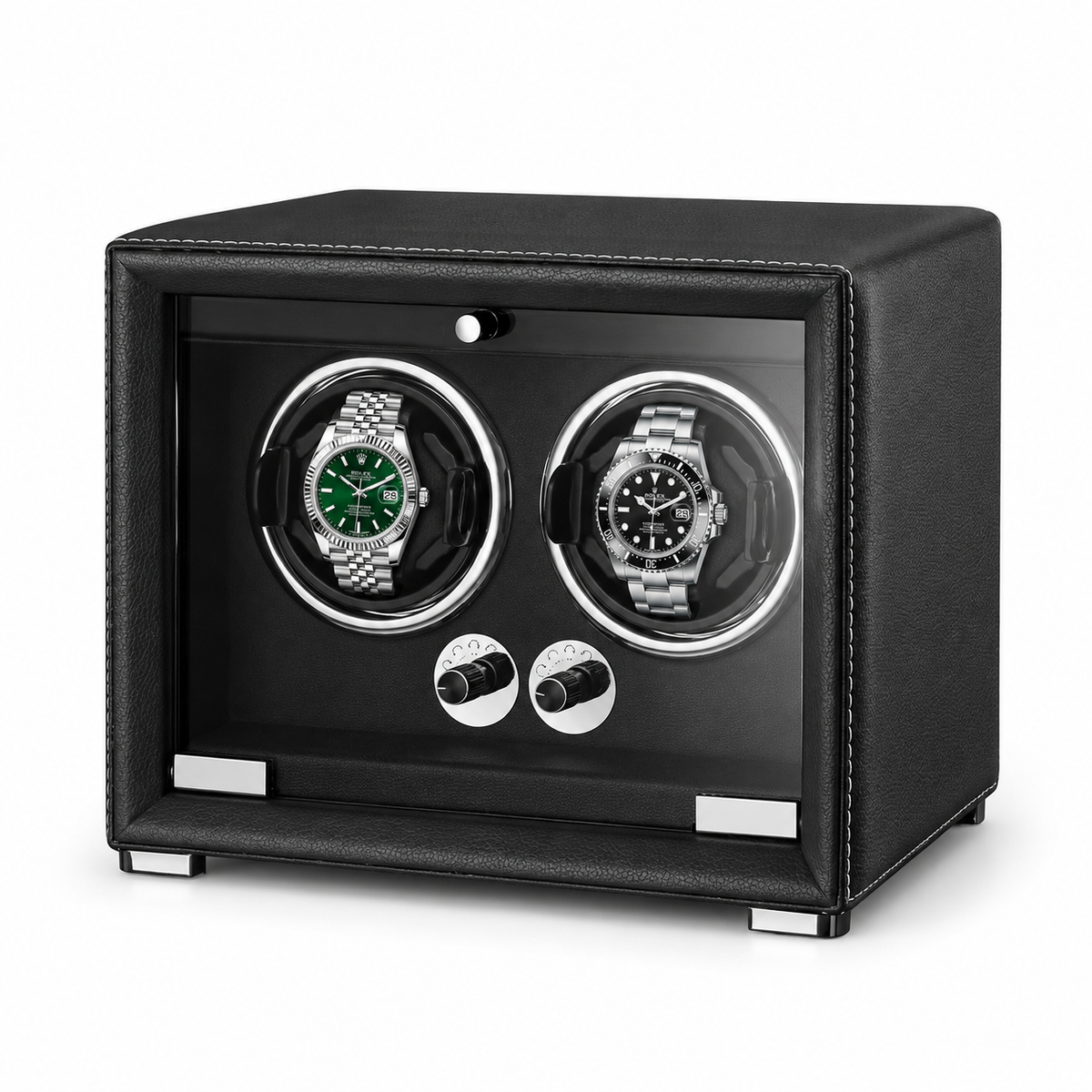
ChronoVelar Meridian Duo
For two watches requiring individual configuration, the Meridian Duo is one of the most relevant options in the ChronoVelar collection.
Its dual-winder architecture makes it particularly appropriate for collectors who regularly rotate two valuable automatic watches.
When Does a 4-Watch Winder Make Sense ?
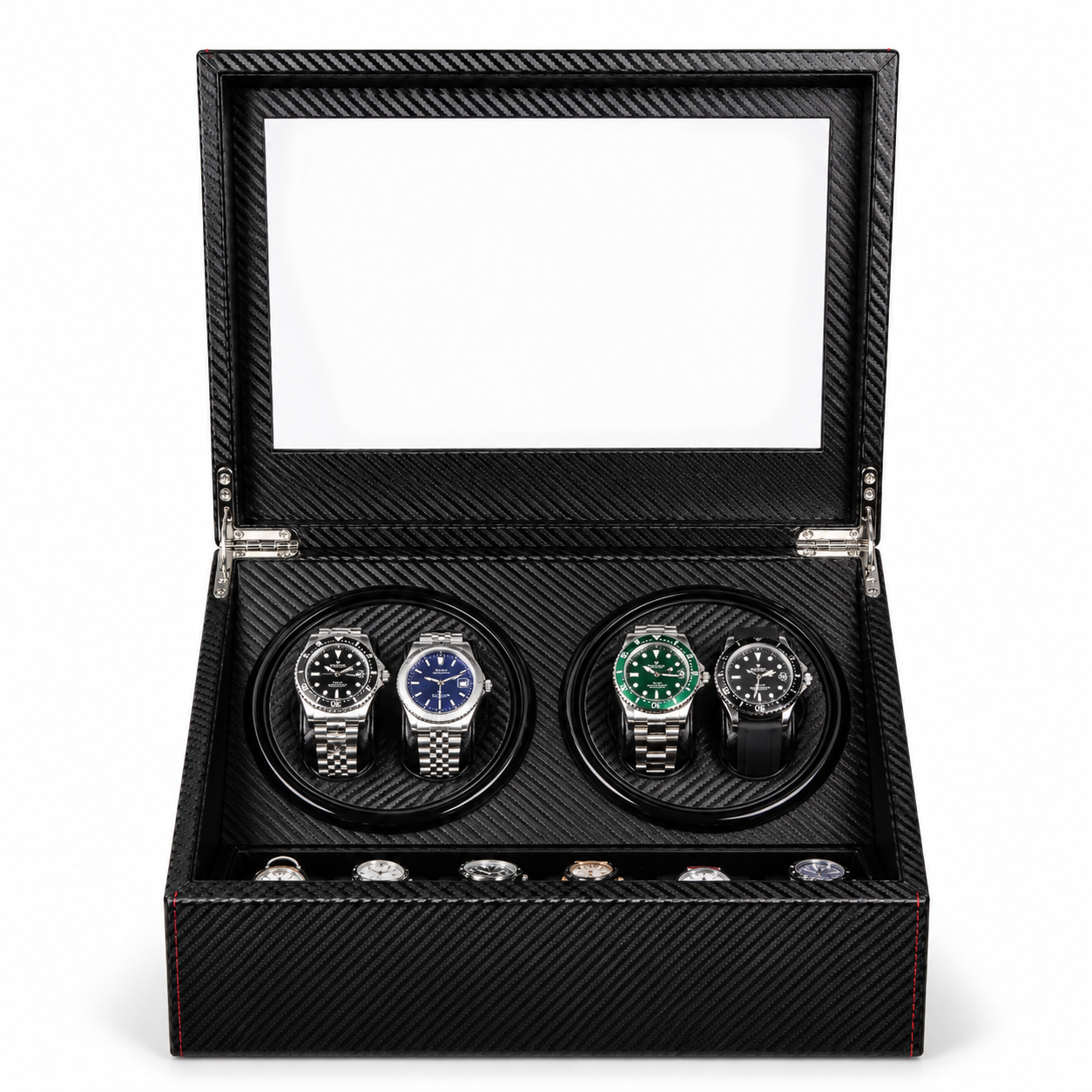
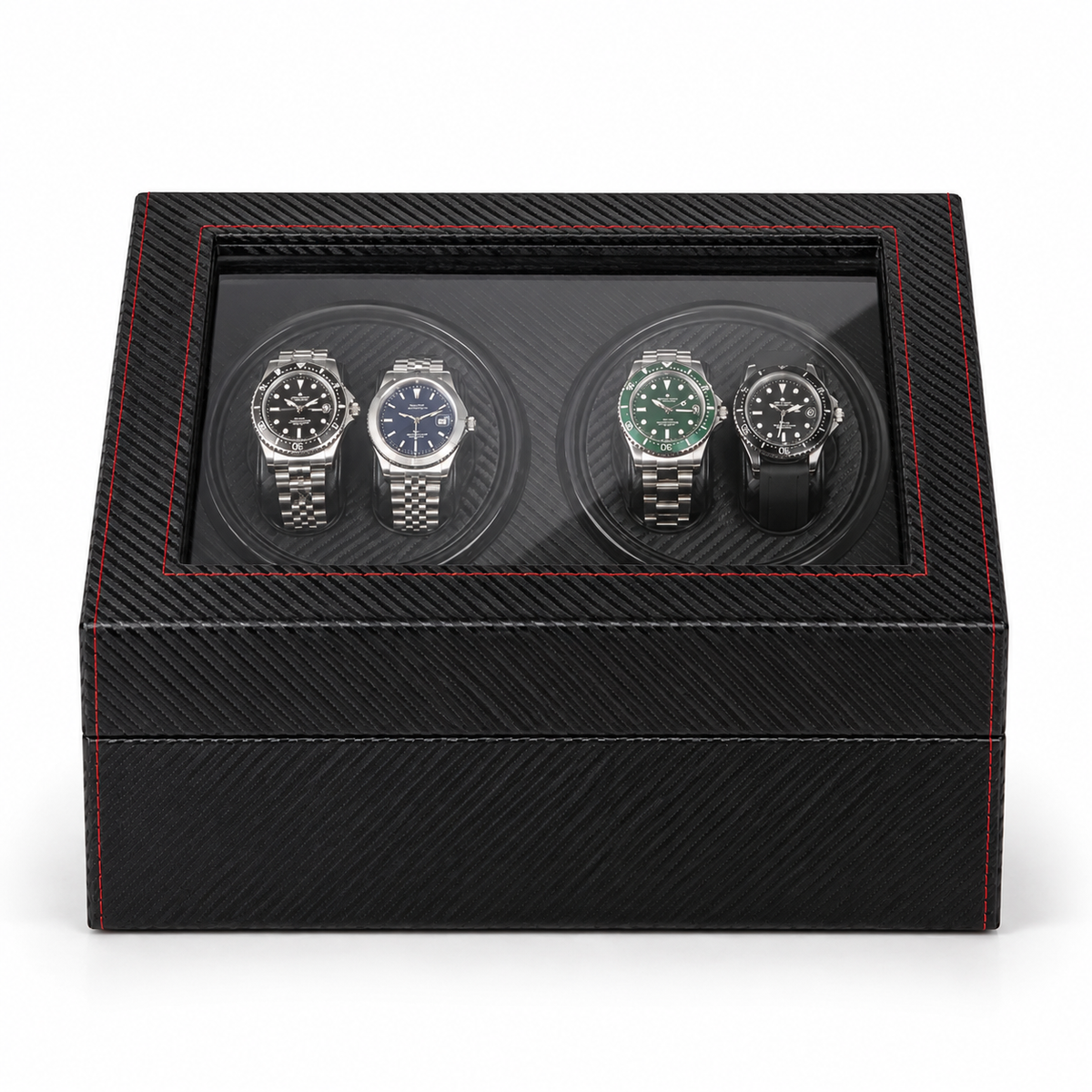
A four-watch winder starts making sense when automatic watches have become a genuine collection rather than one or two occasional pieces.
Four positions provide enough capacity for a diversified rotation without moving immediately into a large watch cabinet.
For example:
Rolex + Omega + Tudor + Breitling
A four-watch configuration can keep each frequently worn automatic watch together in one location.
This also changes the purpose of the winder.
It is no longer simply an accessory for one watch.
It becomes part of your watch storage and collection-management system.
Think About Future Capacity
If you currently own three automatic watches and already plan to purchase a fourth, buying a four-watch system can make more sense than purchasing a dual winder you'll quickly outgrow.
But don't overestimate your growth either.
Buying eight winding positions for a two-watch collection “just in case” is usually unnecessary.
Should You Buy a 6-Watch Winder ?
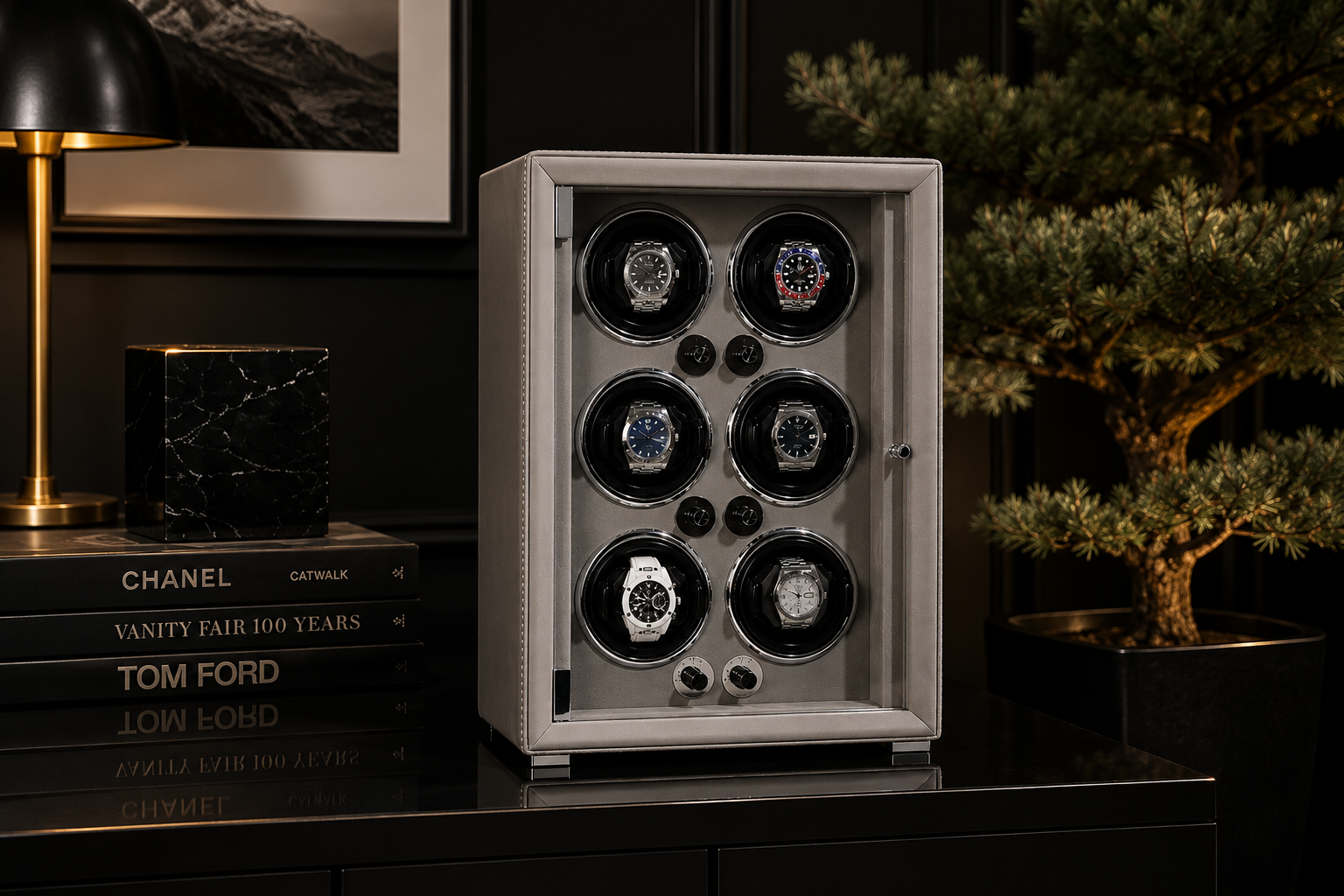
A six-watch winder is suited to established collectors who regularly rotate several automatic watches and want them consolidated into one system.
At this level, several factors become increasingly important:
- Motor noise
- Individual or grouped controls
- Watch-holder adjustability
- Overall dimensions
- Interior lighting
- Display quality
- Ease of access
- Rotation programs
Capacity alone is no longer enough.
A six-watch winder that doesn't accommodate the requirements of your movements can be less useful than a smaller but more configurable system.
Who Actually Needs an 8-Watch Winder ?
An eight-watch winder is designed for larger automatic collections where several watches are kept in active rotation.
At this level, a watch winder often becomes a substantial piece of furniture or display equipment.
It can make sense for a collector who owns:
- Multiple luxury automatic watches
- Several brands and calibers
- Complicated watches that are inconvenient to reset
- A dedicated dressing room, office or watch-storage area
- A collection that continues to grow
The major benefit is consolidation.
Instead of multiple individual devices and power supplies, several watches can be maintained in one organized display.
Do All Watches in Your Collection Need to Stay Wound ?
No. Owning an automatic watch does not mean it must remain on a winder whenever you're not wearing it.
This is one of the most important considerations when choosing capacity.
For a simple automatic watch with only time and date, allowing it to stop may not be particularly inconvenient.
The value of a winder increases when:
- You rotate watches frequently
- Resetting the watch is inconvenient
- The watch has additional complications
- You simply prefer it to remain ready to wear
This is why a ten-watch collector might only actively wind four watches.
If you're unsure whether you need a winder at all, see Do You Really Need a Watch Winder? Pros, Cons & Expert Advice.
Should You Buy One Large Winder or Several Small Winders ?
One large watch winder offers centralized storage, while several smaller winders provide greater placement flexibility and individual presentation.
There is no universally better solution.
Advantages of One Multi-Watch Winder
A larger unit can provide:
- One central display
- Fewer separate power supplies
- Cleaner organization
- A more substantial luxury presentation
- Easier collection management
Advantages of Multiple Single Winders
Individual units provide:
- Greater placement flexibility
- Dedicated presentation for each watch
- Easier expansion one watch at a time
- Ability to separate watches across locations
- No unused winding positions while the collection is small
For someone building a collection gradually, individual or dual winders can therefore be surprisingly practical.
Should You Buy a Larger Winder for Future Watches ?
Buying one or two additional winding positions can make sense if you realistically expect your collection to grow, but excessive unused capacity provides little immediate benefit.
If you own:
1 automatic watch with another planned soon → consider 2 positions.
3 automatics with a fourth acquisition planned → consider 4 positions.
4 automatics with no intention of expanding → don't automatically jump to 8.
The goal is sensible headroom.
Not maximum capacity.
What if Your Watches Require Different TPD Settings ?
The more diverse your collection becomes, the more important configurable winding positions become.
TPD means Turns Per Day.
Different automatic movements can have different winding requirements, which is why ChronoVelar's existing TPD guide recommends identifying the exact reference and caliber rather than applying one universal setting to every watch.
A collection containing:
Rolex + Omega + Breitling + Tudor
should therefore be approached movement by movement.
As your collection grows, prioritize control before capacity.
A four-watch winder with useful configuration options may be preferable to an eight-watch unit that provides inadequate control for your particular watches.
Which Watch Winder Size Is Best for Your Collection ?
Choose the smallest configuration that comfortably accommodates the automatic watches you regularly want to keep running, with reasonable room for near-term growth.
A simple way to decide:
Choose 1 Watch
If you own one automatic watch and don't expect your collection to grow soon.
Choose 2 Watches
If you rotate between two automatics or own one and expect to add another.
Choose 4 Watches
If you have three or four automatics in regular rotation.
Choose 6 Watches
If you have an established collection and regularly rotate five or six automatic watches.
Choose 8 Watches
If you have a large active automatic collection and want a centralized winding display.
Final Verdict: Buy for Your Rotation, Not Just Your Collection
The number of watches you own and the number of winding positions you need are not necessarily the same.
Start by counting the automatic watches you actually rotate.
Then consider:
- How often each watch is worn
- Whether you care if it stops
- How difficult it is to reset
- Whether different movements need different settings
- How quickly your collection is realistically growing
- Whether you prefer one central display or individual winders
For one watch, keep it simple.
For two different automatic movements, prioritize independent control.
For larger collections, think about the winder as part of your overall storage and display system.
Buy for the collection you use — with enough room for the collection you're realistically building.